Quick Answer:
If hot water pressure dropped right after a water heater replacement, don’t assume it’s normal. Common causes are a partially closed valve, trapped debris or air, a new mixing/pressure device, or a blocked inline strainer. Isolate the repaired component, measure pressure before and after it, and flush the affected lines. If basic checks and flushing don’t fix it, call a plumber.
Why This Happens
When a heater is replaced, work on valves, fittings and piping can introduce a few common problems:
- Partially closed isolation or union valves left snug instead of fully open.
- Debris or sediment loosened during the install that gets trapped in faucet aerators, mixers or strainers.
- New mixing valves, pressure-reducing valves, or anti-scald devices installed or adjusted incorrectly.
- Air trapped in lines that reduces flow until bled out.
- Kinked or incorrectly routed flexible connectors.
These are similar to issues you see after other plumbing work such as Pressure loss after repiping and Pressure low after drain snaking, so the same inspection and flushing steps usually help identify the culprit.
Step-by-Step What to Do
Step 1 — Do a quick visual and valve check
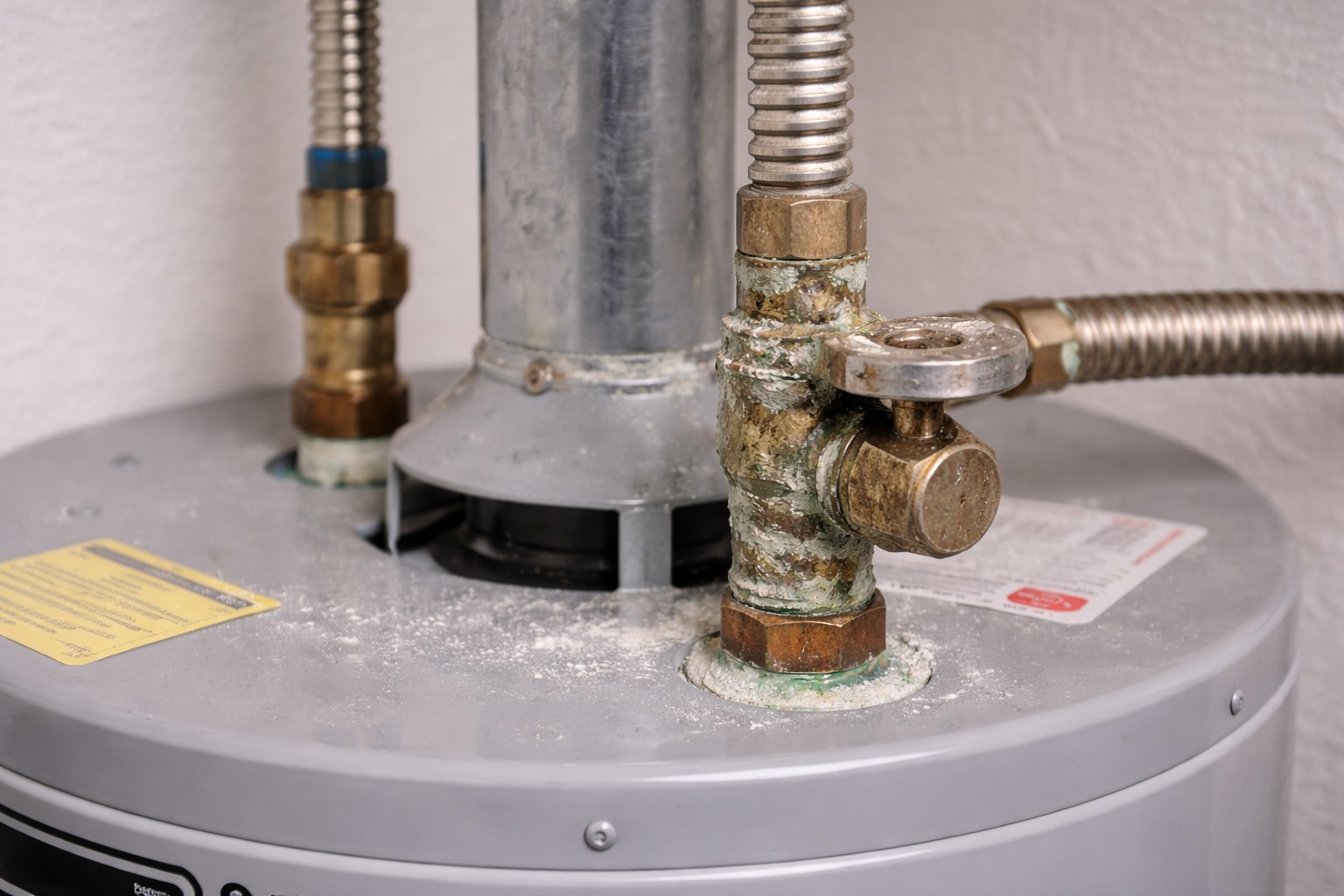
- Look at the shutoff valves at the heater (inlet and outlet). Make sure they are fully open.
- Check any nearby pressure-reducing valves or mixing valves for obvious settings or leaks.
- Inspect flexible connectors for kinks or tight bends.
Step 2 — Isolate the repaired component
- Close the isolation valves so you can test upstream and downstream separately. If the heater has unions, you can isolate the unit without draining the whole system.
- Label which side is supply (before) and which is hot outlet (after) so your measurements stay clear.
Step 3 — Measure pressure before and after the repair point
- Attach a simple pressure gauge to an accessible hose bib or spigot on the cold supply (this shows system pressure before the heater). Record the reading.
- Then measure at a hot tap downstream of the heater or at a hot-side hose connection if available. Compare the two numbers to see if there’s a significant drop across the heater/installed components.
- If you don’t have a gauge, compare flow: fully open the cold faucet then the hot at the same fixture and note the difference. That’s less precise but useful for a quick check.
Step 4 — Flush affected lines
- With the heater and isolation valves set as needed, open several hot fixtures (highest and lowest in the house) and let water run to flush out debris and air. Run cold as well to help move sediment out to a drain or hose bib.
- If the heater was opened or drained during install, flush the heater per the manufacturer’s instructions to remove loose sediment that can travel into lines.
- Check aerators, shower heads and faucet cartridges for debris; remove and clean them if flow improves when they’re off.
Step 5 — Recheck valves, devices and fittings
- Open the isolation valves fully again and re-measure pressures before and after the heater to confirm improvement.
- If a pressure-reducing valve or mixing valve was installed or adjusted, verify its settings and operation.
- If the pressure drop persists only on hot lines, the problem is likely on the hot side (heater, outlet fittings, or a device installed during replacement).
Step 6 — Restore and test
- Once pressure is back to normal, re-secure any access panels and reattach aerators or filters.
- Run hot water at multiple fixtures to confirm stable pressure and temperature.
What Not to Do
- Do not assume pressure will self-correct without flushing and inspection. That delay can let debris clog fixtures or damage valves.
- Do not force or over-tighten valves and fittings to try to “open them more” — that can damage internal seats and create leaks.
- Do not work on gas or electrically powered heaters without shutting off gas or power and following safe procedures; if you’re unsure, stop and call a pro.
When to Call a Professional
- If you find a leak you can’t safely isolate or stop.
- If pressure remains low on the hot side after isolating, measuring and flushing, especially if the pressure drop across the heater is large.
- If you’re uncomfortable shutting off gas or electrical power to the heater or if the heater needs internal repairs or replacement again.
Safety Notes
- Turn off the water supply before opening any threaded connections that will let water out. For any work on the heater itself, shut off power at the breaker for electric units or turn off the gas supply for gas units.
- Allow the heater and pipes to cool before touching them; hot water and steam can cause burns.
- If you have a gas heater and suspect a gas leak, evacuate the area and contact your gas utility or a licensed plumber immediately.
Common Homeowner Questions
- Why is cold water pressure normal but hot is weak? This usually means the restriction is on the hot side—valves, fittings, or debris downstream of the heater.
- How long should I flush after an install? Flush until the water runs clear and any air is bled out—often several minutes per fixture or until flow returns to normal.
- Can sediment from the old heater plug things after replacement? Yes. Sediment loosened during replacement can move into pipes and fixtures; cleaning aerators and flushing lines usually clears it.
Related Articles
If you’re troubleshooting a similar symptom, these guides may help:
For the full directory, see Pressure Loss After Plumbing Repairs.