Quick Answer:
If water pressure fell after the plumber finished a routine inspection, stay calm. Often the cause is a partially closed service valve, air in the lines, or an isolated component left off. Start by measuring pressure at an outdoor hose bib, isolate major components one at a time, and flush affected lines. These steps usually show whether the problem is simple (valve or trapped air) or needs professional follow-up.
Why This Happens
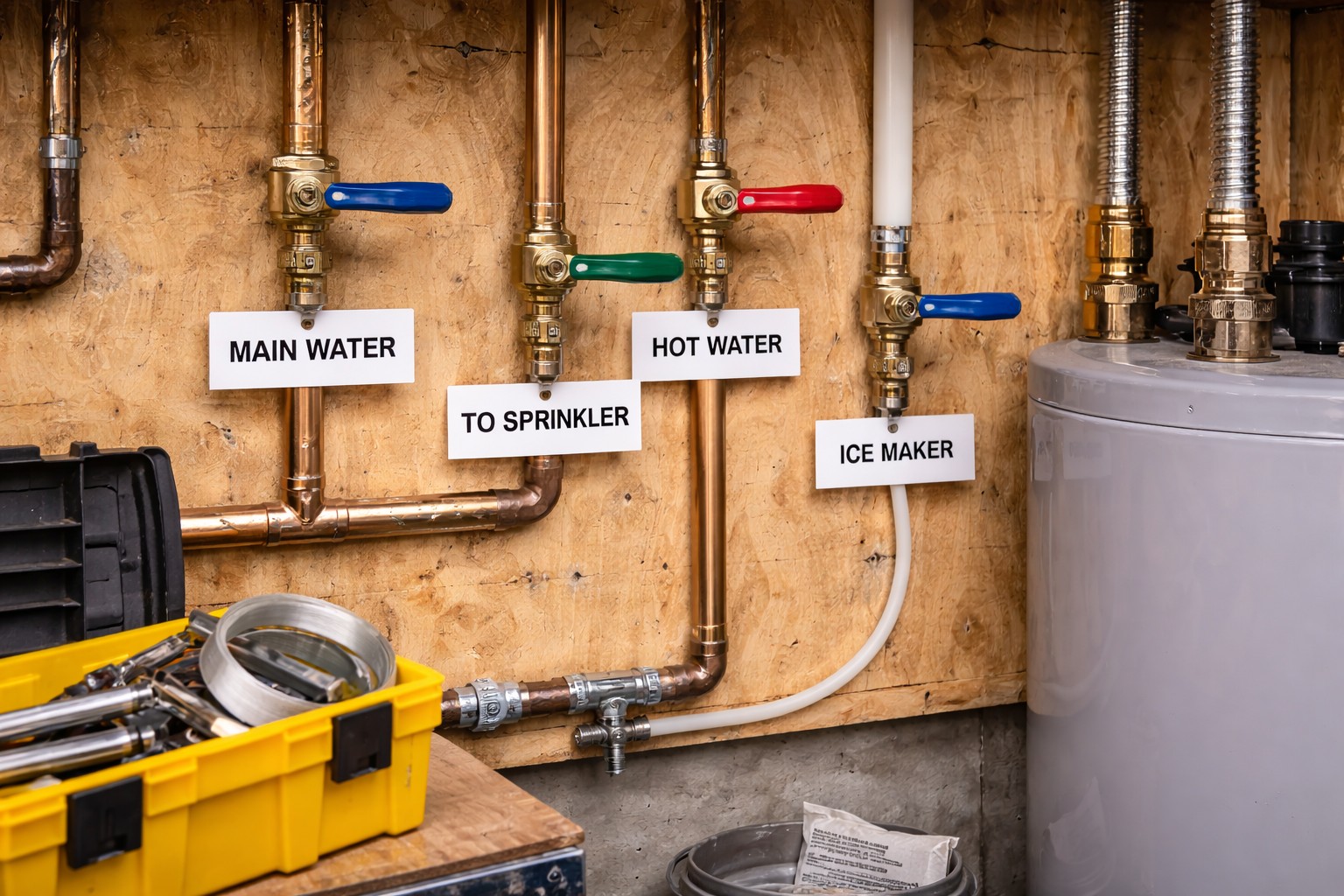
- Partially closed service valve or meter shut: During inspections a technician may briefly close the main or meter valve and not fully reopen it.
- Air trapped in the system: Opening and closing valves can introduce air, which reduces flow until lines are bled.
- Isolated component left closed: A shut-off to the water heater, pressure regulator, or irrigation system may have been left off.
- Sediment or debris loosened: An inspection can dislodge scale that temporarily restricts screens or aerators.
If the timing matches other recent work — for example, seeing similar symptoms after a break from home or equipment changes — consult related guidance like Pressure loss after long vacation or Pressure loss after water heater replacement.
Step-by-Step What to Do
1. Measure pressure at a hose bib
Get a simple pressure gauge that screws onto an outdoor hose bib and record the reading. Typical household static water pressure is about 40–60 psi. If the gauge shows low pressure at the hose bib, the issue is upstream (service or supply). If hose pressure is normal but indoor taps are low, the problem is likely inside the house.
2. Isolate main components
- Check the main shut-off valve and any meter valves. Confirm they are fully open.
- Turn off house zones or appliances one at a time (water heater, irrigation, pressure regulator) and re-check pressure after each change. This helps pinpoint a single faulty device or a closed isolation valve.
- Look for a pressure-reducing valve (PRV) near the entry; verify its adjustment and that it wasn’t bumped during the inspection.
3. Flush system appropriately
- Open an outdoor hose bib and a hot and cold indoor tap fully to help bleed air from the lines. Run until flow is steady and air sputter stops.
- If the water heater was involved, follow the manufacturer’s simple cold-water flush procedure to clear trapped air (only if you’re comfortable and the heater is off per its instructions).
- Remove and clean faucet aerators and shower screens if flow remains uneven; trapped debris can reduce pressure at fixtures.
4. Re-check and document
- Measure pressure again at the hose bib and at an indoor tap after each step. Note the readings and any time stamps — this helps a technician if you call one.
- If pressure returns after flushing or opening a valve, the cause was likely air or a partially closed isolation point.
What Not to Do
- Do not immediately replace fixtures without verifying service entry issues.
- Do not force valves that are hard to turn; forcing can break them and cause leaks.
- Do not attempt internal repairs on pressurized equipment you are unfamiliar with (e.g., taking apart a pressure regulator or meter without training).
When to Call a Professional
- If measured pressure at the hose bib is low and you suspect the municipal service or meter — contact your water supplier or a licensed plumber.
- If you find a damaged valve, leaking pipe, or can’t isolate the problem after the steps above.
- If pressure is normal at the hose bib but very low at multiple indoor fixtures, call a plumber to inspect internal valves, PRV, and hidden supply lines.
Safety Notes
- Shut off power to any electrical equipment near water if you need to work around it. For example, turn off the water heater circuit before working on the heater following its safety instructions.
- Relieve pressure before loosening fittings: open a faucet to reduce line pressure before disconnecting anything.
- If you smell gas, see active leaks, or encounter collapsed piping, leave the area and call appropriate emergency services or a licensed professional.
Common Homeowner Questions
- Why did my pressure drop right after an inspection? Often a valve was partially closed or air was introduced; measure and isolate to confirm.
- Can I fix low pressure myself? Yes for simple issues: check valves, bleed air, clean aerators. Stop and call a plumber if you find leaks or are unsure.
- How long should it take to restore pressure? If it’s just air or a partly closed valve, pressure can return in minutes once bled or reopened; complicated issues may take longer and need a pro.
For more related articles, see the Whole-House Low Water Pressure hub.