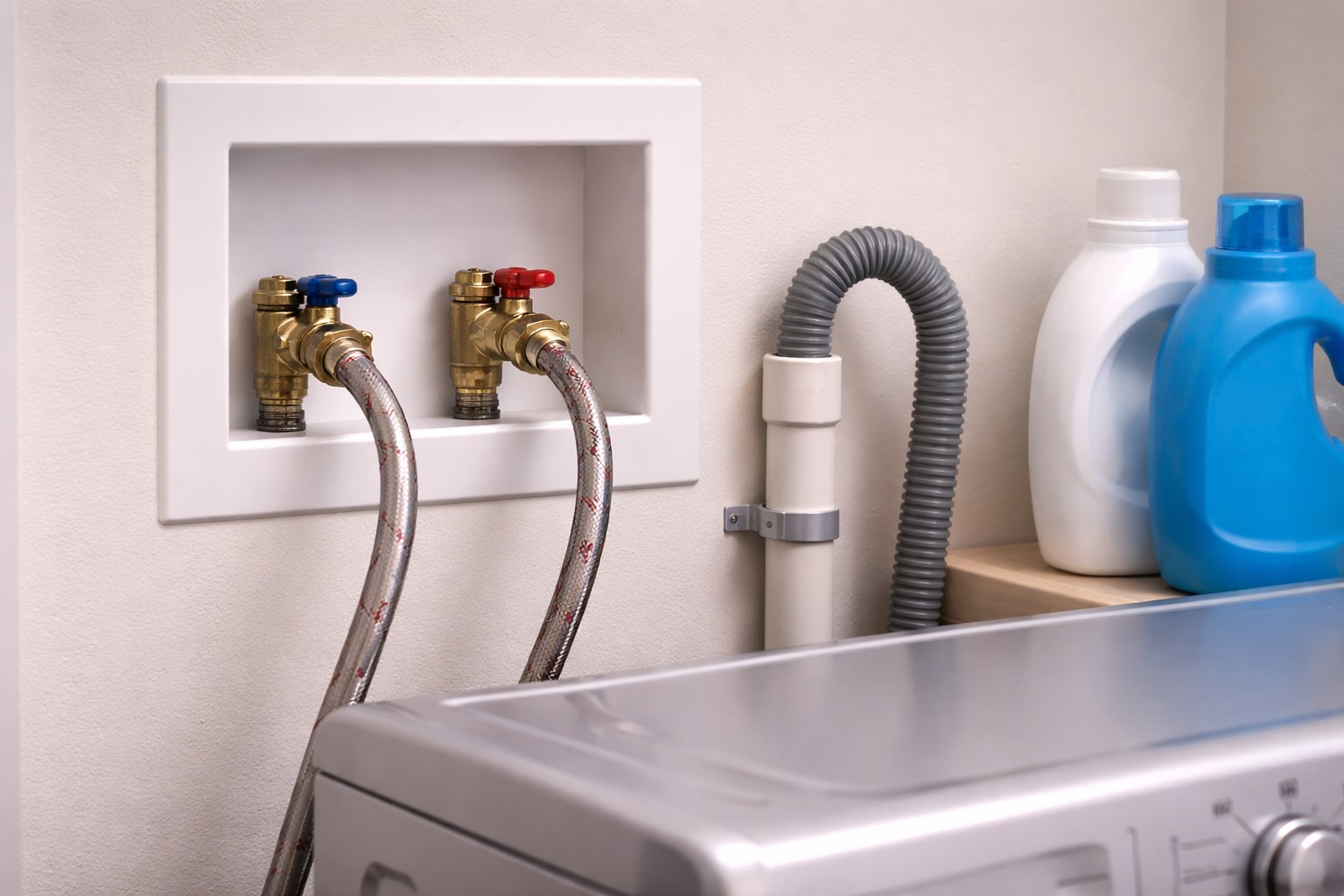
Quick Answer:
When pressure falls right after installing a new appliance, start with simple checks: measure pressure at an outdoor hose bib with a gauge, shut off and isolate the new appliance to see if the house pressure returns, and flush the affected lines to clear any debris. Many cases are a closed isolation valve, a clogged strainer, or trapped debris from the install—not a failed main supply.
Why This Happens
- Partially closed isolation or service valves left by the installer reduce flow immediately after the work.
- Work on the pipes can dislodge sediment and debris that then lodges in aerators, faucet screens, or appliance strainers.
- Some appliances have built-in check valves or filters that restrict flow until flushed or opened fully.
- Pressure regulator or service-entry problems can also cause a drop; if you see odd fluctuations over days, it may be a supply issue—think about local supply variation or meter problems linked to weather or main work. See Pressure changes with weather for more on supply-side causes.
- If only the hot side is weak after installing something on the hot line, the issue is often related to the new appliance or hot-side plumbing. See House pressure low only on hot water for focused checks.
Step-by-Step What to Do
1. Measure pressure at a hose bib
Attach a simple pressure gauge to an outdoor hose bib or laundry faucet and read the static pressure. Typical household pressure is roughly 40–60 psi. If the reading is well below this (for example under 30 psi), you have a service or regulator issue. If pressure at the hose bib is normal, the problem is confined to the new appliance or nearby valves.
2. Isolate main components
- Turn off the supply valve to the newly installed appliance (shut the isolation valve at the appliance).
- Close any new shutoffs you installed, then re-check the hose bib pressure. If pressure returns to normal, the appliance or its fittings are likely the cause.
- If possible, isolate the water heater (for hot-water issues) and check pressure on the cold side and hot side separately.
3. Inspect and flush the immediate lines
- Remove and check faucet aerators and appliance strainers for debris. Clean them and test flow.
- Open the affected fixture fully for several minutes to flush out loose debris. For hot-water work, run both hot and cold until clear.
- If the appliance has a filter or inline strainer, follow the manufacturer’s flush instructions to clear trapped material.
4. Check valves and visible fittings
- Make sure angle stops and ball valves are fully open. A valve left half-closed during install is a common cause.
- Look for kinked flexible connectors or damaged fittings that can restrict flow.
5. Re-test and narrow the source
- After isolating and flushing, re-measure pressure at the hose bib and at the fixture supply (if you have a gauge adapter for the fixture). Compare results to pinpoint whether the restriction is at the appliance, inside the house, or at the service entry.
- If pressure is low at the hose bib after all internal checks, the issue is likely upstream (regulator, meter, or main). Stop and call the utility or a plumber.
What Not to Do
- Do not immediately replace fixtures without verifying service entry issues.
- Don’t remove or adjust a pressure regulator at the service entry yourself—this can be dangerous and may be the utility’s responsibility.
- Avoid chopping into the service line or meter area; those are municipal or licensed-plumber zones.
When to Call a Professional
- If pressure is low at the hose bib after you’ve isolated and flushed interior lines.
- If you find a stuck or leaking pressure regulator, or if the meter area appears damaged.
- If you can’t find the source after isolating the appliance, or if the fix requires soldering or working on the service line.
Safety Notes
- Turn off water to the appliance before disconnecting supply lines. Catch water in a bucket and protect surrounding surfaces.
- When working around electrical controls (dishwashers, water heaters), shut off power at the breaker if you need to access wiring or internal components.
- Do not attempt to adjust or bypass a municipal meter or pressure-reducing valve; contact your water utility or a licensed plumber.
Common Homeowner Questions
- Why did pressure drop right after the install?
Often a valve was left partially closed or debris lodged in a strainer during the work. - Can I clear the problem myself?
Yes for many cases: measure at the hose bib, isolate the appliance, clean aerators and flush lines. Stop and call a pro if upstream pressure is low. - How long should I run water when flushing lines?
Run fixtures at full flow for several minutes or until water runs clear; follow any appliance-specific flushing steps from the manufacturer.
For more related articles, see the Whole-House Low Water Pressure hub.