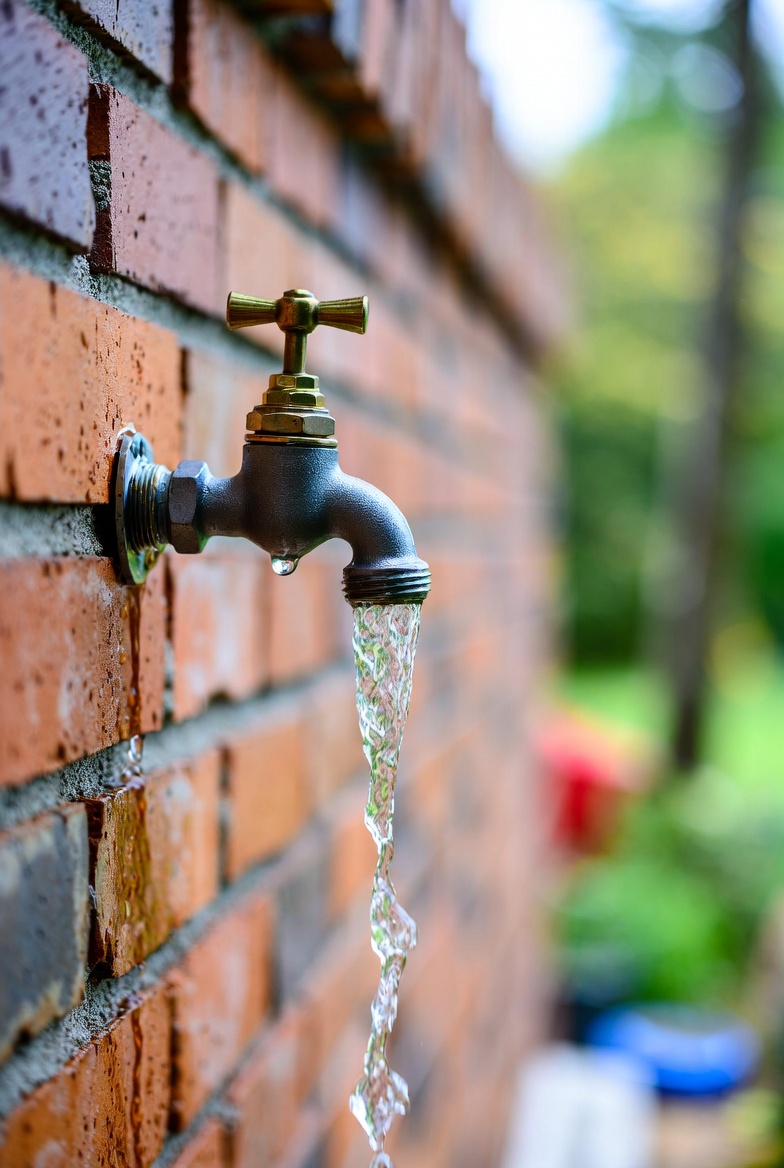
A leak that worsens during an actually measured high-pressure condition deserves both leak repair and source assessment. Appliance timing alone is not a pressure reading, and a preferred pressure range does not prove a failed PRV.
Keep away from wet electrical equipment. Do not touch wet appliances, plugs or switches, or enter water to reach a breaker. When no gas leak is suspected, power may be isolated only from a safely accessible dry location; otherwise call an electrician or emergency help. Wet equipment needs qualified assessment before it is used again.
Contain the existing leak
For an active leak, stop use and use a known effective safely accessible homeowner supply control. Keep suspected damage isolated; do not reopen it to collect proof. Obtain urgent help for uncontrolled flow, water entering the building or unsafe access. Do not force a valve or operate utility equipment from its location alone.
Measure the real event appropriately
Use existing suitable readings where possible. A new measurement needs a sound identified connection, a water-rated gauge and fittings suitable for its pressure, temperature and potable contact, and the actual owner procedure. Do not substitute an unspecified compressor gauge or connect to a relief valve or backflow test cock. Record the point relative to regulator/branches, units, demand, heating/pump state and whether the reading is current or a retained maximum. Before removing the gauge, isolate its feed and safely relieve and verify the actual trapped gauge segment; closing the faucet alone can leave it pressurized. Do not loosen the coupling to bleed it. Obtain qualified measurement if the safe connection or relief method is uncertain.
A no-flow static reading, a flowing reading and a retained maximum describe different conditions. An outdoor connection may be on either side of the regulator. A peak-hold pointer can retain an earlier event rather than show current pressure. Do not create a large washer fill or repeated pump/fixture cycles through a known leak for data.
Do not use another fixture as pressure control
A showerhead restriction is not a general control for pressure surges at an outdoor branch. Reducing demand can change loaded pressure differently from reducing regulated static pressure. A temporary inline device at one outlet does not diagnose or protect every shared branch. Do not adjust a regulator by drip response or bypass it.
Assess source and containment separately
Use the real ratings, site requirements and measured regulator/pump/heating conditions to distinguish supply pressure, thermal expansion, a transient and a damaged local component. A pressure change alone cannot select a PRV replacement. Actual overpressure and actual seal/body defects may both need correction.
Before removing a bonnet, packing, operating rod, cartridge or pressure-retaining breaker part, identify the exact model and its approved service procedure. Close a known effective homeowner supply control for every feed, control other connected inputs, and relieve and verify pressure at the actual serviced segment. A different indoor tap may not relieve an isolated outdoor branch. Stop if flow continues, the control is uncertain or parts bind. Use compatible approved parts and fully secure all pressure-retaining and protective components before an attended restoration. Re-isolate and verify relief before further disassembly. Cosmetic handle trim and maker-permitted external packing adjustment are different operations; neither authorizes loosening an unknown retainer under pressure.
After appropriate correction
A justified check after correction needs every pressure-containing and protective part fully secured, sound known containment, safe water-use conditions and an accepting discharge path. Follow the actual controlled restoration procedure and attend accessible connections. Stop and re-isolate for renewed leakage, binding or other unsafe change; verify relief before further internal work. A short successful run does not certify a concealed cavity or future duty.
Related situations
- Pressure measurement and gauge release
- Leak after a reported pressure change
- Pressure-reducer scenario directory
Browse the existing Outdoor Spigot Leaks Under Load group. These are distinct triggers and water paths, not proof of the same failed part.