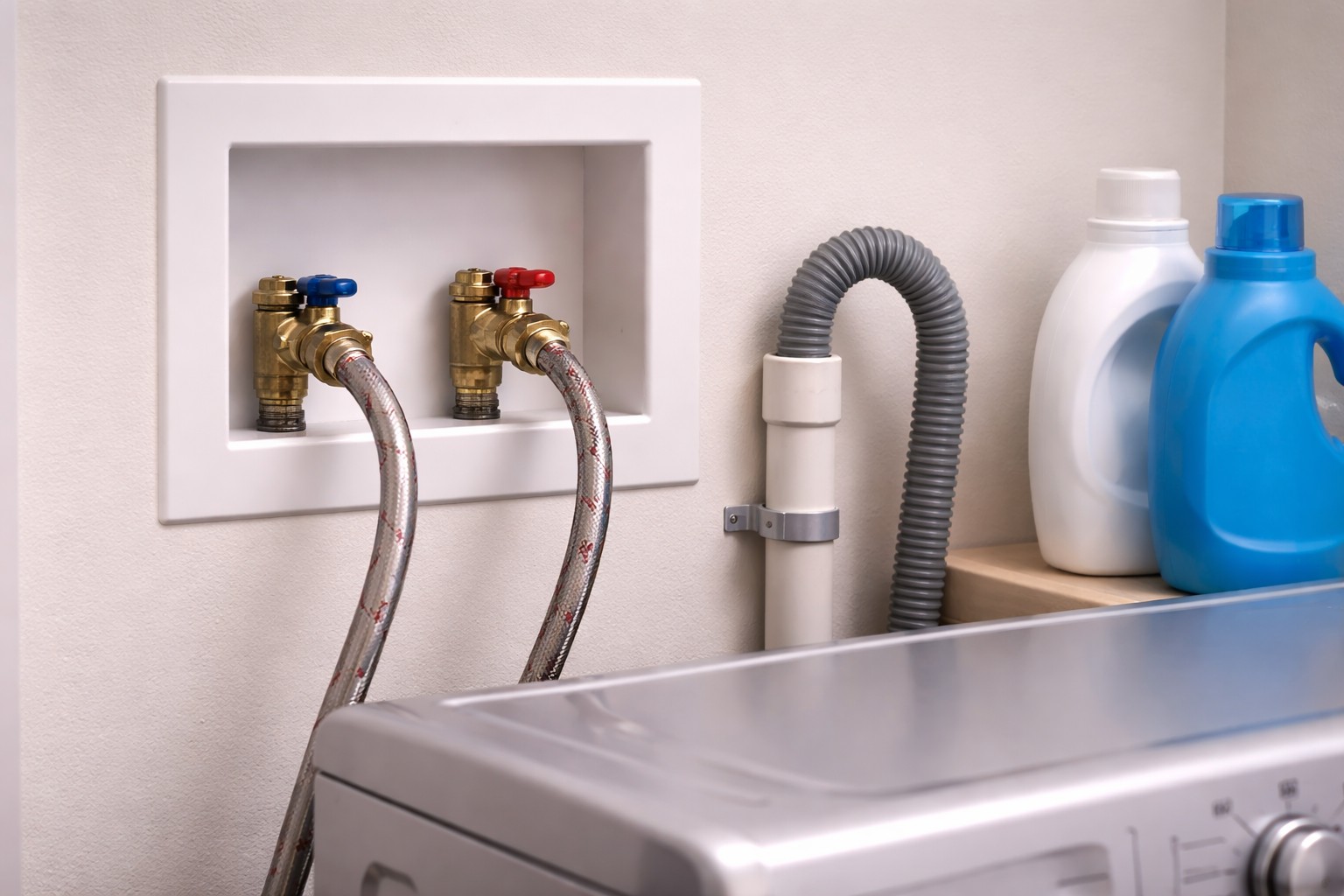
Quick Answer:
If the kitchen sink only loses pressure while the clothes washer is filling, the washer is drawing most of the available flow. Start by testing pressure with fixtures isolated, observe your water meter while the washer runs, and check the PRV setting at the main. These checks usually show a demand-related drop rather than a broken sink fixture.
Why This Happens
Household plumbing delivers a limited flow rate from the street through the meter, main supply, and your home piping. When the washer opens its inlet valve to fill, it can demand a large fraction of that available flow. That leaves less flow for a nearby fixture like the kitchen sink and causes a noticeable pressure drop at that tap.
This scenario is similar to situations described in Pressure collapse when irrigation starts and is also like cases of Pressure only weak when demand is high. The common thread is high simultaneous demand, pipe sizing, or a pressure-regulating device limiting downstream pressure.
Step-by-Step What to Do
Confirm the pattern
- Run the washer fill cycle and open the kitchen sink tap. Note whether the sink is reduced only while the washer runs, and whether other taps behave the same way.
- If the sink pressure is normal when the washer is off, the issue is likely demand-related rather than a local fixture failure.
Test pressure with fixtures isolated
- Shut off other indoor fixtures (dishwasher, other faucets) and test the sink pressure alone. Use a simple flow test (bucket and stopwatch) or a pressure gauge at the sink if you have one.
- Then shut off the washer supply valve and compare the sink pressure. A clear difference confirms the washer fill is stealing flow.
Observe meter flow patterns
- Watch the main water meter while the washer fills. A visible surge or rapid spinning indicates high flow demand; if the meter hardly moves while pressure still drops, the restriction may be downstream (a clogged line or failing PRV).
- Note whether the meter behavior matches the times you see low pressure—this helps distinguish supply limits from isolated fixture problems.
Confirm PRV setting
- Locate the pressure-reducing valve (PRV) near the main shutoff. Measure system pressure at the kitchen sink when no other fixtures are running.
- If static pressure is lower than expected or the pressure falls off quickly under load, the PRV may be set too low or starting to fail. Small adjustments are possible on some PRVs, but if unsure, call a pro to avoid misadjustment.
Try a temporary workaround
- When you need sink flow while the washer runs, schedule the washer for times you don’t use the sink or use the washer’s smaller-load settings to reduce fill rate.
- These are short-term measures while you decide whether a permanent change (pipe sizing, PRV service, or water main upgrade) is needed.
What Not to Do
- Do not assume fixture failure when pattern is demand-related.
- Don’t dismantle the PRV or other pressure devices unless you are trained—incorrect actions can cause flooding or lost service.
- Avoid replacing sink parts (aerators, cartridges) as your first step if the issue only appears during washer fill—those parts are unlikely to be the cause.
When to Call a Professional
- If the PRV appears to be malfunctioning or you can’t identify a clear demand pattern, call a licensed plumber to test and, if needed, replace or adjust the PRV.
- Call a professional if meter observation suggests the street supply is limiting flow; they can advise on service upgrades or coordinate with the water utility.
- If you suspect a restricted main line or pipe corrosion that reduces capacity, get a plumber to inspect and recommend permanent fixes.
Safety Notes
- Turn off the main shutoff before working on the PRV or main piping. If you’re unsure where it is or how to operate it, stop and call a pro.
- Avoid making large PRV adjustments while you’re away; improperly set pressure can damage appliances or cause leaks.
- When observing the meter, do not tamper with the cover or mechanical parts—only watch operation from a safe position.
Common Homeowner Questions
- Why does the sink only lose pressure while the washer fills? — The washer uses a large share of available flow, causing a pressure drop at nearby fixtures.
- Will replacing the sink faucet fix this? — No; if the problem only occurs during washer fill, replacing the faucet is unlikely to help.
- Can I fix the PRV myself? — Minor adjustments may be possible if you’re comfortable and follow instructions, but replacement or diagnosis is best left to a plumber.
For more related articles, see the Pressure Drops When Multiple Fixtures Run hub.