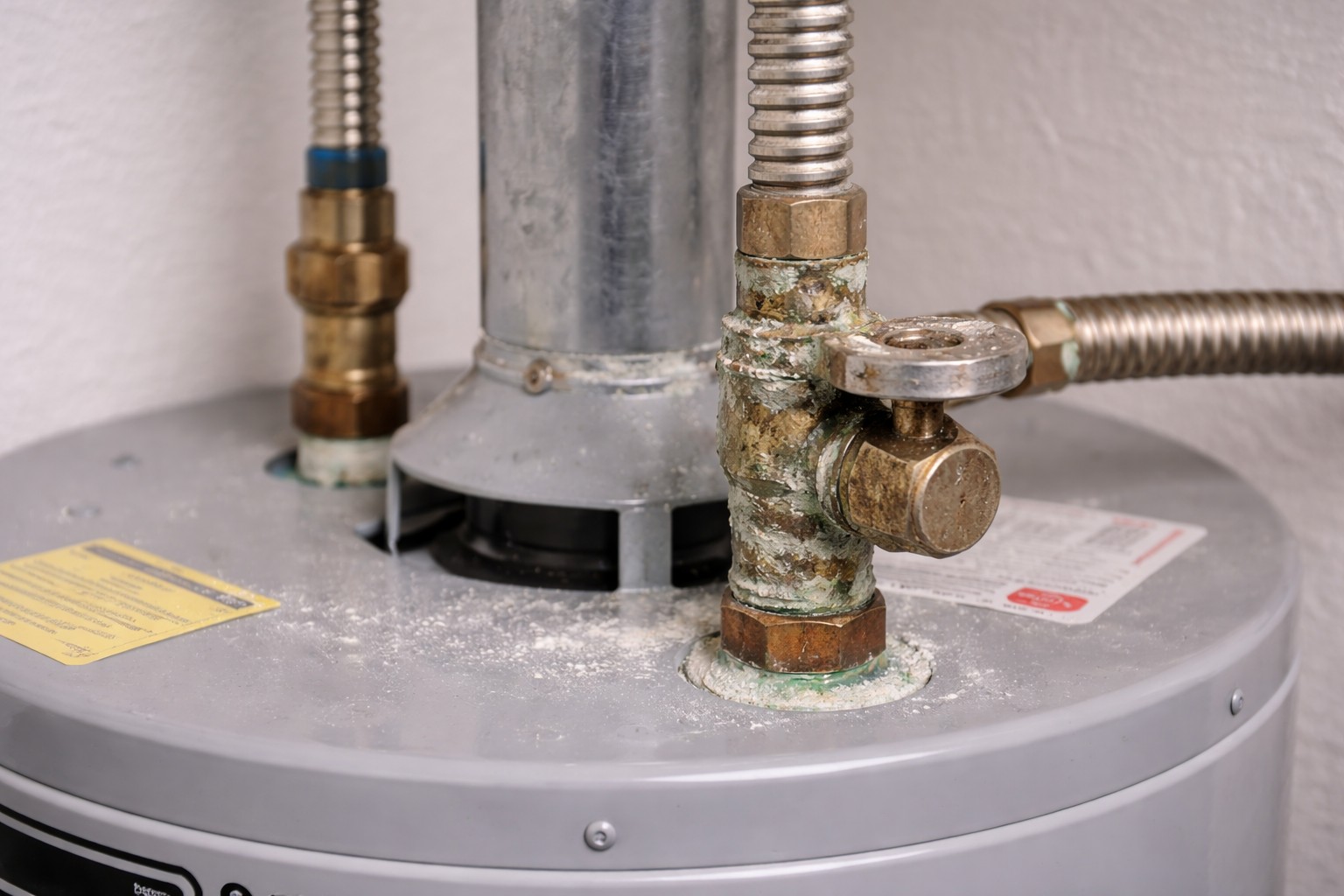
Check for an emergency first
If you smell fuel gas or suspect a gas leak, leave the building or affected area immediately and take others with you. Do not operate switches, plugs, phones, appliances, thermostats or valves in the affected area, light flames, or stay to ventilate or investigate. From a safe location well away, call the local gas emergency service or emergency services. Do not re-enter until responders say it is safe. Plumbing checks and normal maintenance must wait.
If a carbon monoxide alarm sounds or you suspect carbon monoxide exposure, get everyone outside immediately and call emergency services from safety. Carbon monoxide has no smell; an odor comparison cannot rule it out. Do not restart or repeatedly cycle a fuel-burning heater to investigate a possible combustion problem.
Keep away from wet electrical equipment. Do not touch wet appliances, plugs or switches, or enter water to reach a breaker. When no gas leak is suspected, power may be isolated only from a safely accessible dry location; otherwise call an electrician or emergency help. Wet equipment needs qualified assessment before it is used again.
Hot water that sputters at first use needs its timing and heater history recorded. Recent draining or installation can be relevant, but a hot-only report does not prove a trapped-air pocket or a failed check valve. Do not repeatedly run hot taps or handle hot pipes to recreate it.
Useful details to record
- Whether the heater was recently drained, replaced or left unused for a long period.
- Which outlets were affected during ordinary use, including any temperature change or unusual odor already noticed.
- Heater model, commissioning history and any existing alarm or error code. Do not open covers to obtain them.
What the pattern can tell you
- It began after draining or refill. Ask whether the actual fill and purge procedure was completed before restart; an electric tank must not be energized partly empty.
- It follows a long period of nonuse. Check the actual heater’s long-idle warning before using connected appliances. Some manuals warn of flammable hydrogen under those conditions; sputtering must not automatically be called harmless air.
- It returns during ordinary use. Provide the pattern to a qualified technician. A sequence of heater sounds and sputtering is not proof of a particular valve fault.
What to do next
- Keep away from unexpectedly hot delivery and respond to suspected gas, carbon monoxide or electrical hazards before plumbing checks.
- For known safe conditions after ordinary service, follow the actual model’s prescribed fill and air-purge method. Use its specified discharge and supervision rather than a generic open-hot-until-clear instruction.
- For long-idle conditions, follow the actual manufacturer’s precautions, including keeping smoking and flames away. Ask for help if the procedure or gas concern is uncertain; do not diagnose gas by smell.
- Keep check, relief and mixing devices effective. Do not remove parts, adjust temperatures or repeatedly cycle the heater to see whether the sputtering disappears.
Does normal cold flow prove the heater is the cause?
It makes the hot-water path relevant, but does not identify a fault or clear other parts of the system. Report whether one or several outlets were affected, and distinguish the startup after a drained tank from ordinary daily hot-water use.
Related guides
- Air blasts from faucet after water restored
- Air sputters after main shutoff used
- Why Your Water Heater Isn’t Working After Turning the Water Back On
- Air in Pipes After Shutoff