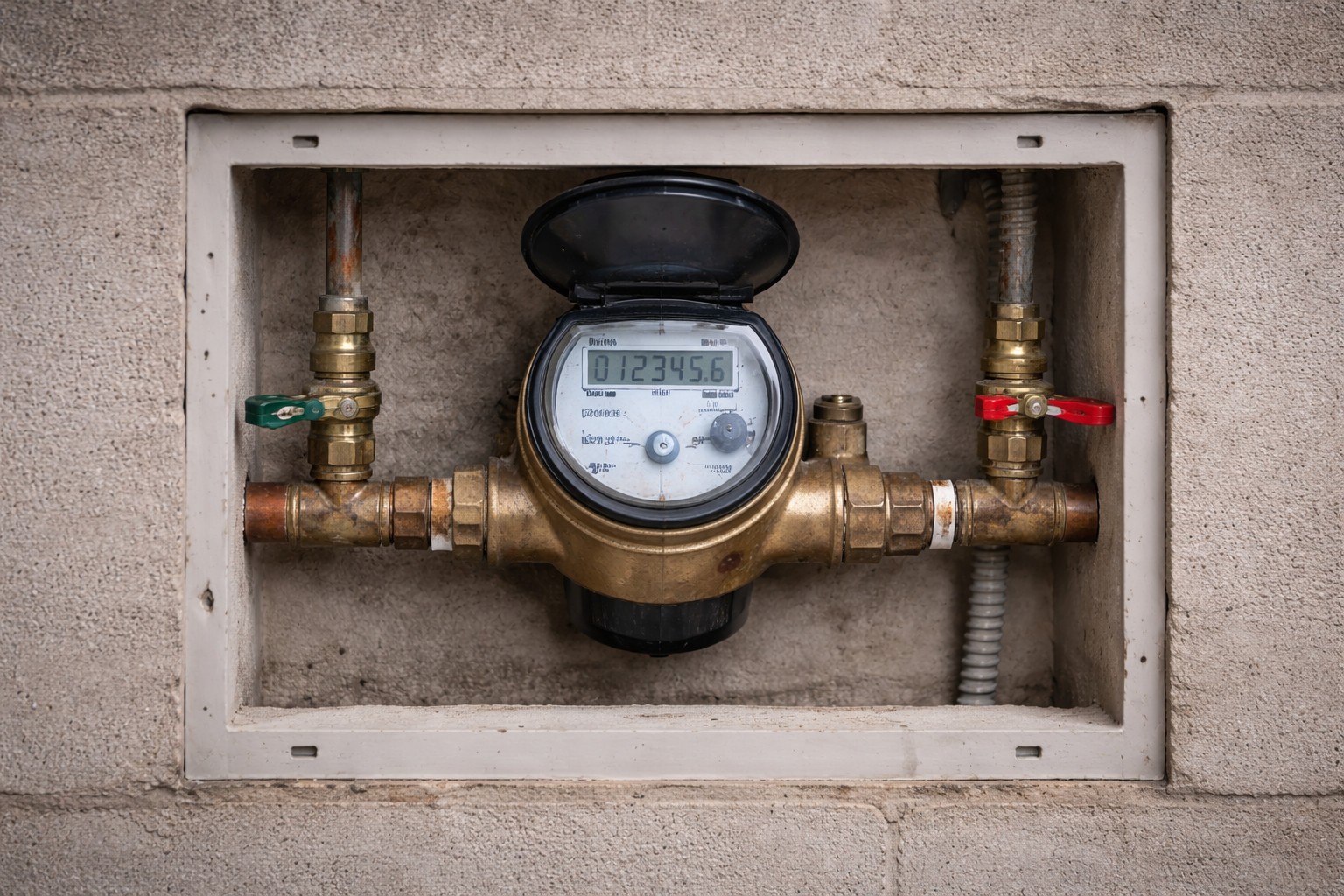
After a city-water outage, use the utility’s current notice and restoration directions before resuming normal water or appliance use. Air or sputtering can follow the event, but neighbors’ reports and a moving meter do not by themselves identify the cause or prove whether the problem is public or private.
Before a purge or appliance test
Check current water-supplier notices and the installer’s return-to-service instructions. Use only a known, permitted control and a safely accessible, attended outlet with an accepting receiver. Control hot temperature and spray. Stop for leakage, unsafe electrical conditions, poor drainage or a new water-quality concern. Do not use clear or steady flow as proof that water is safe or equipment is ready.
Keep the original event record
- The outage address/area and restoration notice, including any boil, do-not-drink or do-not-use restriction.
- The original fixture pattern, hot/cold side, loss of supply, visible leakage and new color or odor.
- Any service information already supplied by the utility or building manager. A neighbor’s similar observation is supporting context, not proof of a shared fault.
What to do now
- Contact the utility for an unclear notice, new quality change, severe loss or ongoing problem. A return of flow does not lift an advisory, and you do not need to wait an hour or two to ask for help.
- Follow the actual selected flushing outlet and sequence. Denver Water, for example, gives cold bathtub or weather-permitting outside-spigot instructions for its service events. That example is not a universal hot/cold appliance startup recipe.
- Keep water-using equipment subject to its own startup and water-use restrictions. Do not disconnect wet electrical appliances or turn unfamiliar valves to prepare a meter test.
- Do not operate utility curb stops, disassemble meters or force locked boxes. Let the provider identify and service its equipment. In a shared building, include the manager in the restoration check.
What a meter observation means
If the meter is already safely visible and you understand its display, a change can indicate measured flow under the conditions at that time. Toilets, ice makers, treatment cycles, irrigation or shared demand can use water without a faucet being open. A meter is not a pressure gauge. Unexplained flow deserves assessment, but the display alone does not locate a leak, assign ownership or establish street pressure.
After the notice is resolved
If the utility confirms its service condition but the home still has a problem, give a plumber the notice, restoration steps and actual observations. Avoid a diagnosis based only on which faucet was opened first. Persistent gas, leaks or severe noise require assessment rather than larger repeated purges.
Related guides
- Air blasts from faucet after water restored
- Air sputters after main shutoff used
- Hot water spits air first
- Air only after long periods of no use
- What to Do If Water Smells or Looks Dirty After a Shutoff
- Air in Pipes After Shutoff