Quick Answer:
If pipes squeal or hiss, high water pressure pushing past a restriction (a partially closed stop, a valve cartridge, an aerator or a failing PRV) is the most common cause. Find where the noise is, reduce supply pressure first, then clean or open the restriction.
Why This Happens
When water flows very quickly through a narrow opening or past a damaged component, the change in velocity creates turbulence and vibration that you hear as a high-pitched squeal or a steady hiss. Typical offenders are:
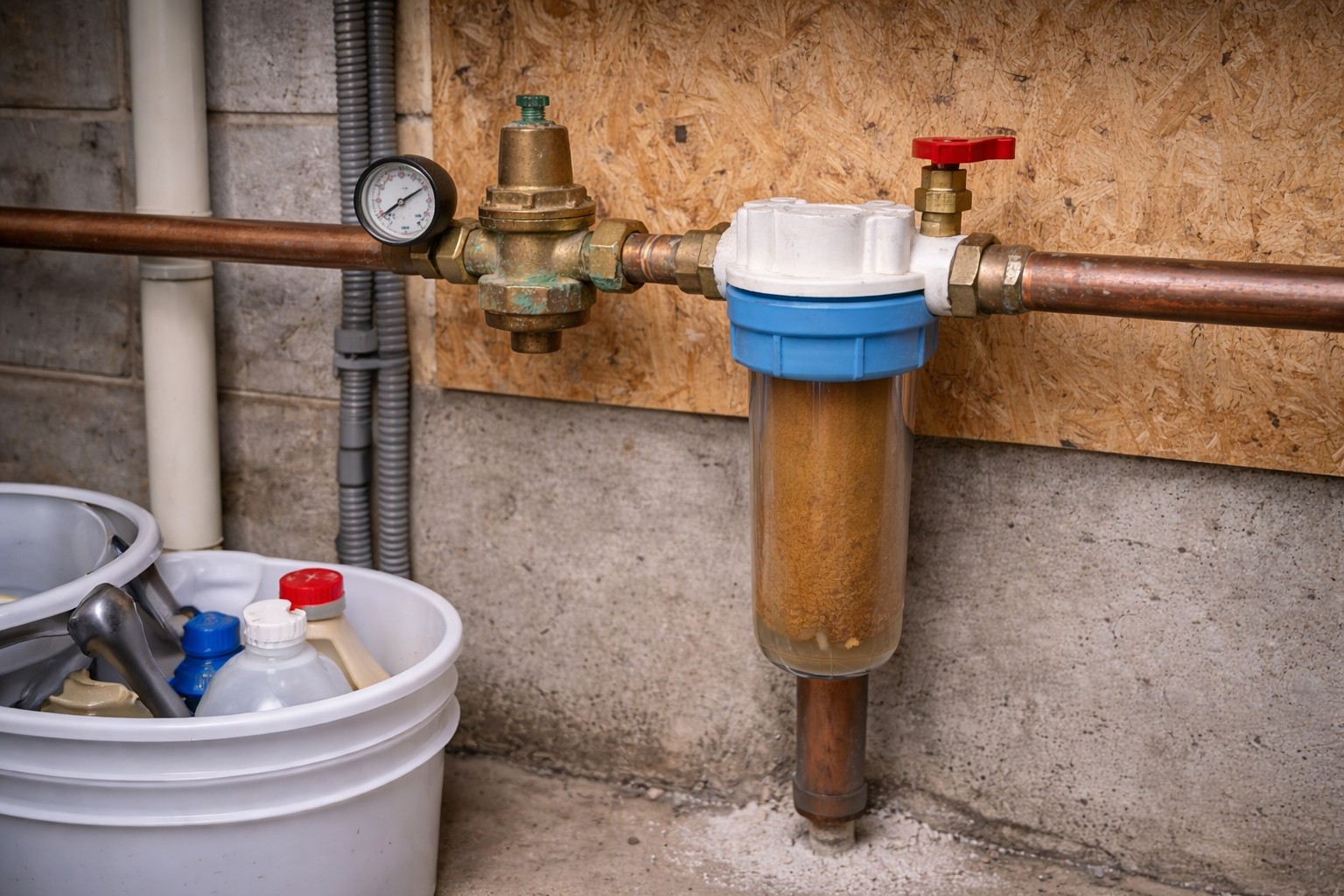
- Pressure reducing valve (PRV) that is worn or set too high.
- Throttled or partially closed stop valves under fixtures.
- Aerators and cartridge valves that are clogged or damaged.
Persistent high pressure can also accelerate wear in in-line components — see High pressure damages filters for more on long-term effects.
Step-by-Step What to Do
1. Identify where the noise occurs
- Listen around the house to locate the loudest area: near the main PRV, under a specific sink or toilet, or at a fixture.
- Turn fixtures on and off one at a time to confirm which one makes the noise and whether it is present only when flow is restricted.
2. Confirm water pressure is in the normal range
- Attach a pressure gauge to an outside spigot or a hose bib near the PRV and read static pressure. Residential pressure is commonly 40–60 psi; if it’s consistently above that, it’s high.
- If you have a PRV, note whether output pressure matches the set value; a failing PRV can let pressure spike at fixtures.
3. Control pressure before touching internal parts
- If pressure is high, reduce it at the PRV to a safe working range before removing aerators or cartridges.
- If you don’t have a PRV or can’t adjust it, shut off the house main to avoid sudden flow while you work.
4. Remove and clean aerators and cartridges
- After pressure is controlled, unscrew aerators and rinse out debris. If the faucet has a cartridge, remove it and inspect for mineral buildup or damage; clean or replace as needed.
- Reinstall and test at normal pressure to see if the noise is gone.
5. Check and fix throttled stop valves
- If noise clearly comes from a shutoff or stop under a fixture, open the stop fully. A partially closed stop increases flow velocity and noise.
- If the stop valve is stiff, damaged, or consistently noisy even when fully open, replace it with a proper quarter-turn stop.
6. Address PRV or system-wide pressure problems
- If adjusting the PRV lowers the noise and stabilizes pressure, fine. If the PRV continues to chatter or fail, it should be serviced or replaced.
What Not to Do
- Don’t partially close stop valves to ‘quiet’ pipes—throttling increases velocity noise and can worsen wear or damage.
- Don’t remove cartridges or aerators without first reducing pressure at the PRV or shutting off the main.
- Avoid hitting or forcing fittings to silence the noise; that can break components and cause leaks.
When to Call a Professional
- Call a plumber if the noisy area is at the PRV and adjusting or replacing it is beyond your comfort level.
- Call if you find unusually high system pressure that you cannot correct, or if the noise persists after cleaning aerators and opening stops.
- If toilets keep acting up along with noisy pipes, consider a deeper diagnosis — Toilet fill valves failing repeatedly can be related and may require a plumber’s help.
Safety Notes
- Always control or shut off water pressure before disassembling faucet aerators, cartridges or valves.
- Wear eye protection when flushing debris from aerators or when loosening pressurized fittings.
- If you are unsure about adjusting a PRV or replacing a valve, hire a licensed plumber to avoid water damage or incorrect installation.
Common Homeowner Questions
- Why does the noise start suddenly? A sudden change usually means a component shifted (a valve partially closed) or a buildup loosened and is now causing turbulence.
- Can I fix it myself? Yes for simple fixes: confirm pressure, open stops, and clean aerators. Stop and call a pro if you must work on the PRV or if noise persists.
- What pressure should my home have? Aim for about 40–60 psi; consistently higher readings suggest a need for PRV adjustment or replacement.
Related Articles
If you’re troubleshooting a similar symptom, these guides may help:
For the full directory, see High Pressure Causing Fixture Damage.