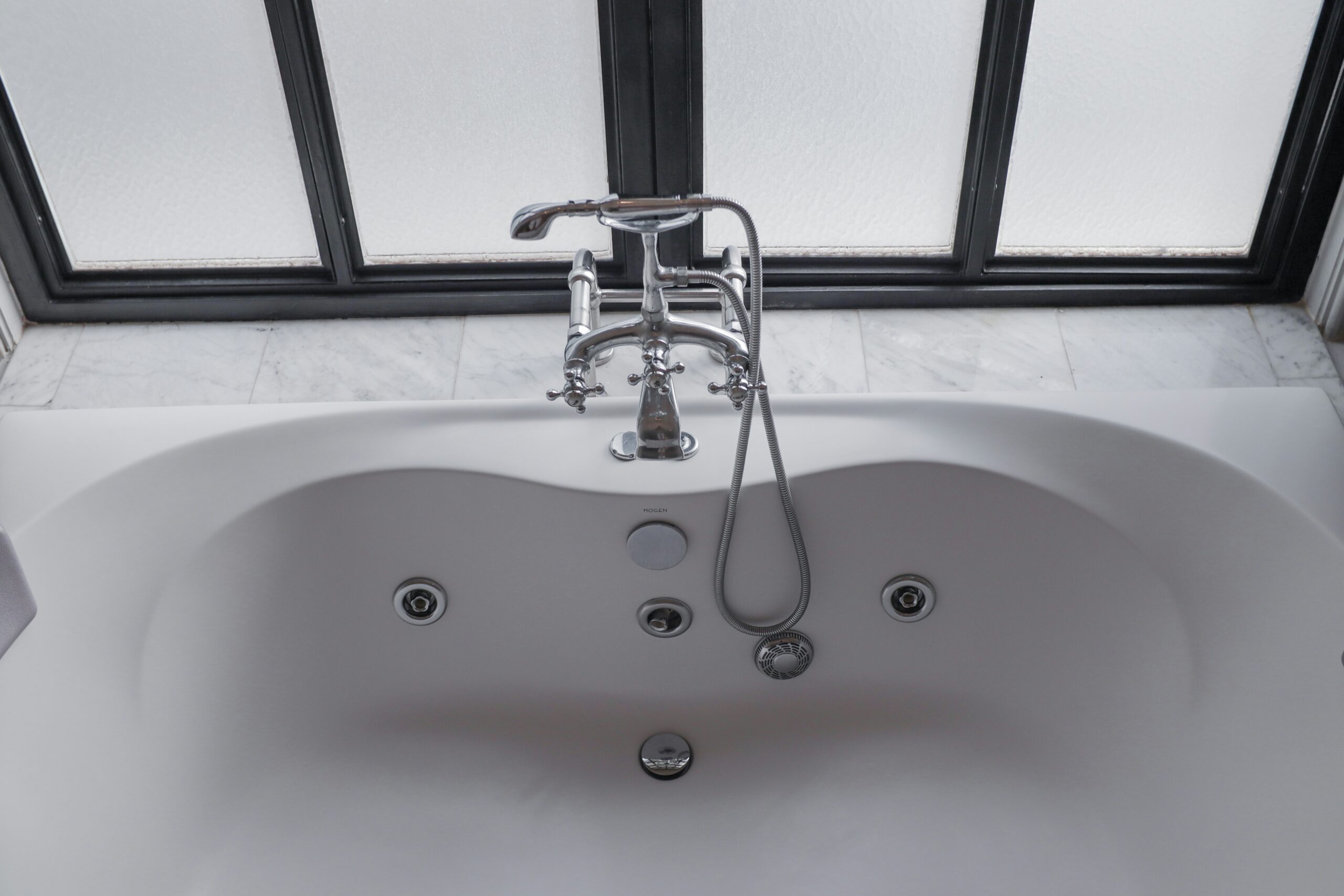
For a bathtub-drain gurgle, distinguish a sound during the tub’s own drainage from a response to a toilet, sink or appliance discharge. Do not fill and dump a bath to reproduce it. Record the original drainage and any actual rise or leakage.
Check the condition before adding water
For strong, widespread or unexplained gas-like fumes, exposure symptoms, or suspected high sewer-gas concentrations in an enclosed space, leave the building immediately and call the fire department or emergency services from outside. Avoid flames, switches and other ignition sources; do not remain to ventilate, sniff drains or investigate. Smell intensity does not measure the concentration. A faint localized drain odor without those warning signs calls for a different plumbing investigation; it does not automatically establish a fuel-gas leak.
If fuel gas is suspected, leave the building or affected area immediately. Do not operate valves, switches, plugs, appliances or phones there. Call the gas emergency service from a safe location well away, and wait for responders’ clearance.
Keep away from wet electrical equipment. Do not touch wet appliances, plugs or switches, or enter water to reach a breaker. When no gas leak is suspected, power may be isolated only from a safely accessible dry location; otherwise call an electrician or emergency help. Wet equipment needs qualified assessment before it is used again.
If wastewater rises, spills or returns through another fixture, stop adding water. Stop connected appliance discharges using safely accessible dry controls only when no gas emergency is suspected. Avoid sewage contact, keep children and pets away and arrange prompt drainage help. In a shared building notify management; contact the sewer provider when public-system involvement is suspected. Do not repeat flushes or fill basins to find the limit.
Identify the bathtub parts before removing anything
- Was the stopper open, partly open or closed during the original event? Was the tub already slow?
- Did the sound follow the tub emptying or an event at another fixture? Note any actual return without repeating that event.
- Record the stopper style, recent overflow/stopper work and any cleaner used. An overflow plate can retain a linkage or a gasketed connection; it is not automatically a removable strainer.
Choose the next step from the actual condition
- In an isolated ordinary surface-hair case with no return, fumes, hazardous residue or uncertain fitting, clean only the intended accessible strainer or stopper according to its actual retention. Do not pull an unknown linkage or loosen the overflow plate with pliers. Capture debris outside the drain, then fully refit the part.
- A plunger may be appropriate for some ordinary local clogs after the fixture, product history and connections are understood. A gurgle or a shared tub-and-sink route alone does not establish those conditions. Do not automatically progress to a cable, boiling-water flush or trap disassembly.
- After suitable local surface care, only a small attended cool-water leak/drainage check with the assembly fully connected is appropriate. Stop for leakage, rising water or movement. Do not run other fixtures simultaneously as a challenge test. Recurring gurgles or cross-fixture effects need the actual drainage arrangement assessed.
What a gurgle can—and cannot—show
A gurgle records an air-and-water event, but its tone cannot uniquely separate a vent fault from a restriction. A visible toilet-bowl level is different from water hidden inside an opaque sink P-trap. Do not loosen a trap or cleanout to see its level, put your ear or face near a drain, or use a hose as a listening tube. Keep cleanouts closed and leave roof vents, enclosed pits and tanks to the appropriate qualified provider.
Before ordinary local drain care
Identify any cleaner already used and follow its actual label. Do not mix products or add bleach, acid, ammonia, vinegar or an improvised neutralizer. Do not plunge, cable or open a trap while hazardous residue may remain; tell the provider the product and when it was used. Rinsing or waiting alone does not prove residue is gone. A maintenance product and a caustic drain opener can have different instructions.
Does removing the overflow plate give access to every tub clog?
No. Tub waste, overflow, stopper and trap arrangements differ. Removing retained parts without identifying the assembly can disturb concealed connections and does not establish the condition of the downstream receiver.
Related situations
- Bubbling noise after flushing toilet
- Bubbling noise after water heater refill
- Gurgling Sounds From Drains or Fixtures
Sources and equipment limits
- Wisconsin DHS: Sewer Gas
- Con Edison: suspected gas leaks
- CDC: electrical hazards near water
- Madison Metropolitan Sewerage District: handling sewer backups
- Drano Liquid Drain Cleaner: actual product precautions
Sources describe the stated hazards and equipment principles; they do not identify the installation in your home. Use the actual product instructions and local requirements for a proposed repair. Independent professional review and field testing have not been obtained.