Quick Answer:
If the disposal grinds normally but water backs up or drains slowly past the cabinet, the clog is likely in the pipe beyond the P‑trap. Remove and clear the trap, then test the flow at the wall connection by removing the trap arm and letting a short burst of water run into a bucket. If that flow is slow, the restriction is farther down the branch and a proper drain snake or accessing a cleanout is the correct next step — don’t just assume it’s harmless or ignore it.
Why This Happens
- Food, grease and small solids can pass the disposal but catch farther down the branch where the pipe slope, fittings or a junction slow the flow.
- Grease and soap scum build up gradually and narrow the pipe diameter; a disposal that runs doesn’t guarantee the downstream line is clear.
- Debris can collect in the trap or at the trap arm; if those are clear but flow is still restricted, the problem is usually past the cabinet wall.
Step-by-Step What to Do
1. Prepare and stay safe
- Turn off power to the disposal at the switch and unplug it or shut off the breaker. Never work on plumbing while the unit could start.
- Place a bucket and rags under the sink to catch water. Wear gloves and eye protection where possible.
2. Check and clear the P‑trap
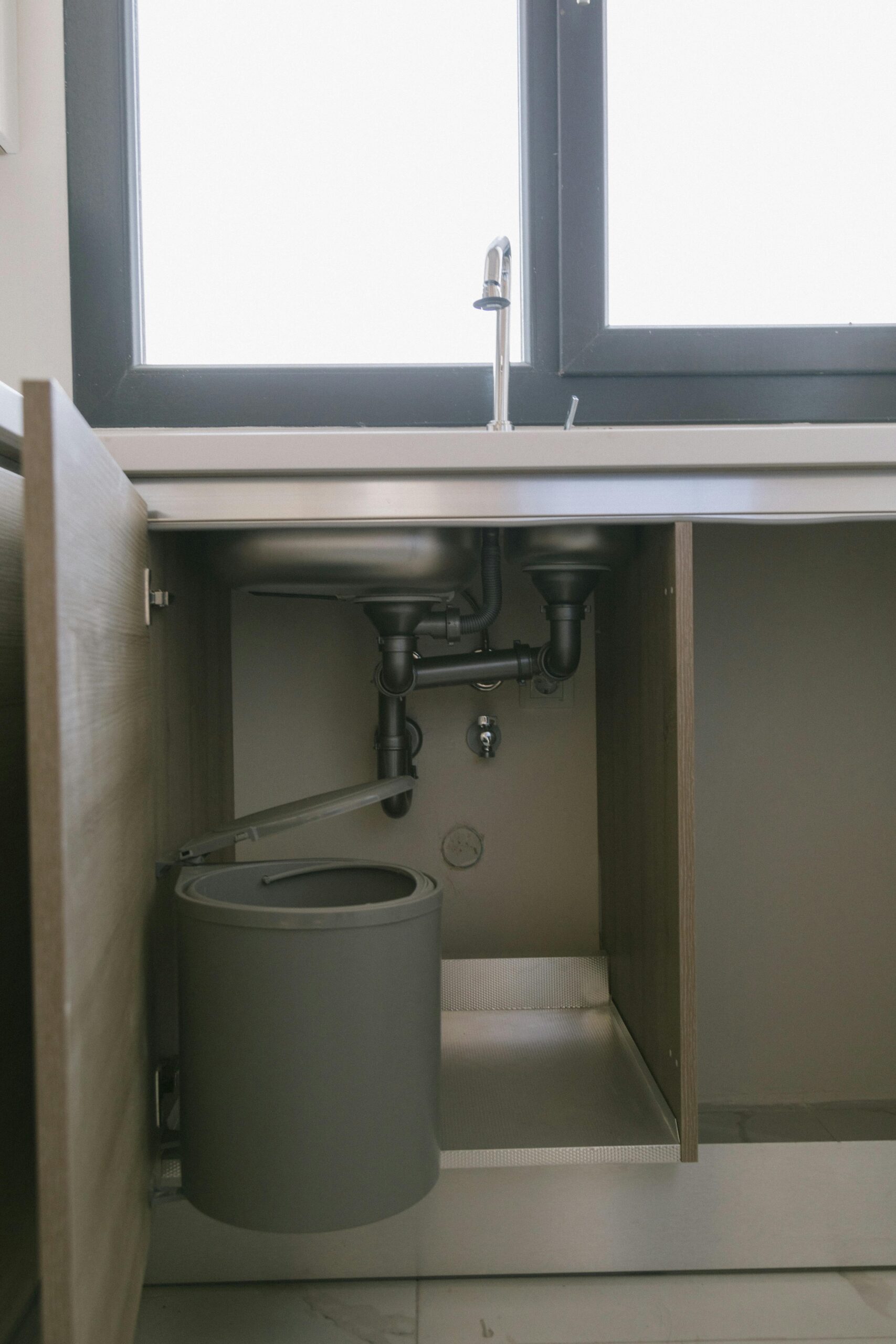
- Loosen the slip nuts on the P‑trap and remove it. Empty contents into the bucket and visually inspect for obstructions.
- Clean the trap and give it a rinse. Reinstall loosely while you test flow downstream.
3. Test flow at the wall connection
- Remove the trap arm (the short horizontal section that connects the trap to the wall stub) so water will run directly out of the wall connection into your bucket.
- Run cold water briefly into the sink so it flows through the wall stub and into the bucket. This is the trap arm off, brief flow into bucket check.
- If the water is fast and free-flowing, the clog was likely in the trap. If the flow is slow or restricted at the wall opening, the clog is past the cabinet wall — farther down the branch.
4. Next step: snake or cleanout
- When testing shows a restriction beyond the trap, a proper hand auger (drain snake) or access at the nearest cleanout is the right next step to reach the branch line.
- Use a snake sized for sink lines (typically a 1/4″–3/8″ hand auger) and feed it into the waste stub or the cleanout. Rotate and push to break or pull the blockage, then flush with water.
- If you hit resistance that won’t budge or you’re unsure how to proceed, stop and call a pro rather than forcing tools that can damage fittings.
5. Reassemble and test fully
- Reinstall the trap and trap arm securely. Restore power to the disposal.
- Run water and operate the disposal briefly to confirm normal flow. If problems continue, the obstruction may be deeper in the branch or main line.
What Not to Do
- Don’t assume the clog is “somewhere in the wall” and ignore it — branch clogs worsen and can lead to larger backups or odors.
- Don’t leave the trap removed for long or run the disposal into an open trap arm; that’s messy and unsafe.
- Don’t rely on harsh chemical drain cleaners; they can damage pipes and won’t always clear solid blockages. If testing shows restriction beyond the trap, a plumber is appropriate.
When to Call a Professional
- If the wall connection test shows slow flow and a hand auger doesn’t clear the line, call a plumber — branch clogs can require a longer snake, a camera inspection or a main-line cleanout.
- If you’re uncomfortable working under the sink, dealing with the disposal power, or using a snake, hire a pro. Proper tools and experience reduce the risk of damage.
- If you see repeated clogs after clearing, a plumber can inspect for slope problems, junction blockages, or tree roots in older lines.
Safety Notes
- Always disconnect power to the disposal before working on plumbing near it.
- Catch wastewater with a bucket and avoid skin contact with debris — wear gloves and eye protection.
- Use the right snake for the job; too large or aggressive a tool can harm plastic traps and fittings.
Common Homeowner Questions
- Sink backs up when disposal restarts: That symptom can mean a partial downstream restriction; test the trap and wall connection as described to locate it.
- Disposal works but grease clog remains: Grease often builds beyond the disposal; a snake or cleanout access is usually needed to remove hardened grease further down.
- How long should the wall connection flow test run?: A few seconds of steady water is enough to judge flow — you’re checking whether water exits quickly or trickles, not performing a full flush.