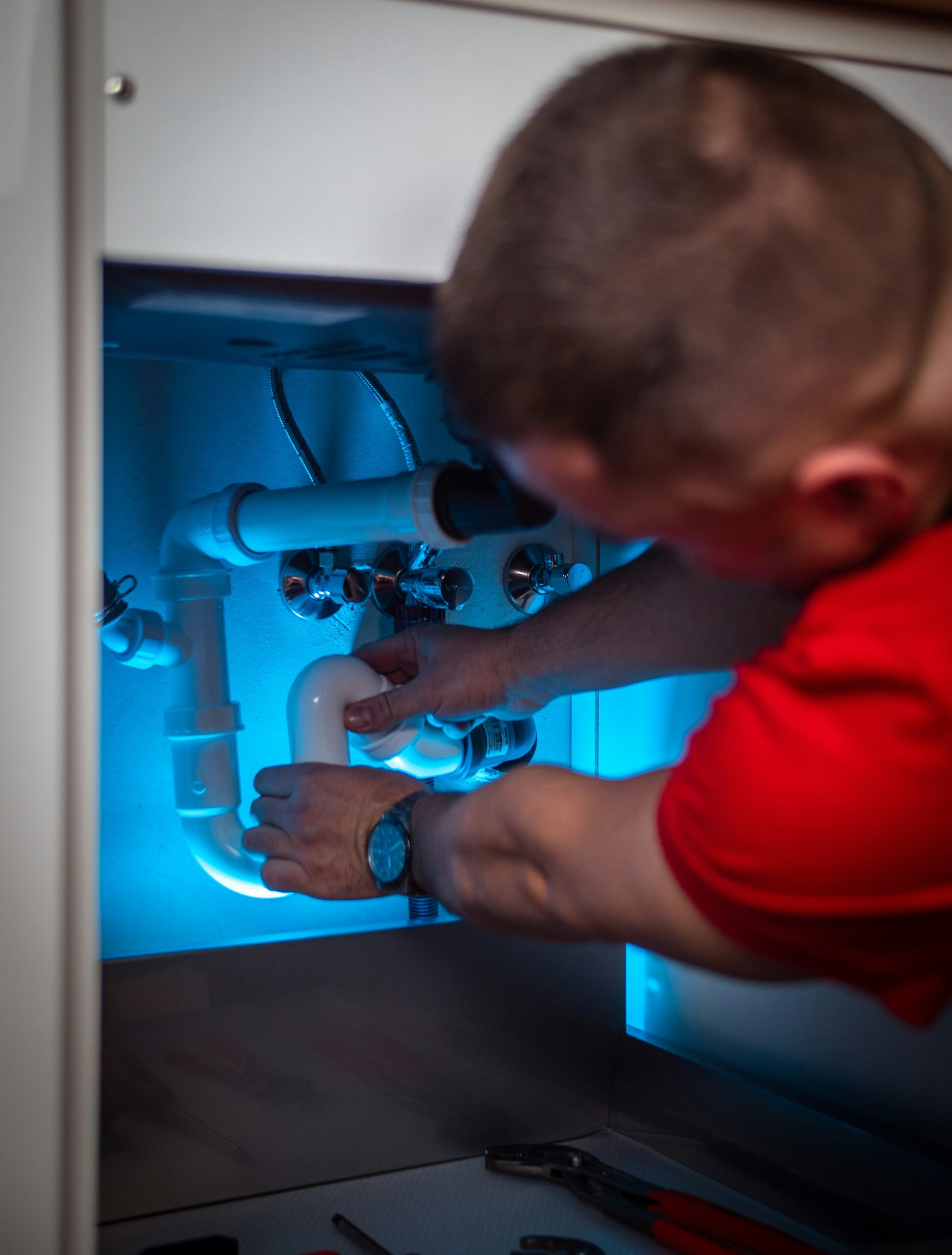
When the sink floods even though the disposal seems to run, stop added water and the motor using safe controls. Treat the overflow as an immediate damage risk without claiming the filling rate measures how completely the drain is blocked.
Stop a backup before investigating
If water rises or will not drain, stop the faucet and leave the disposal off. Keep connected appliances from discharging, using safely reachable dry controls only. Do not reproduce the event with another bowl, a full basin, strong hot or cold flow, or another motor cycle. Keep children and pets away from wastewater. Sewage return, several affected fixtures, continuing overflow or unsafe leakage needs prompt service.
Stay out of water near electrical equipment; do not touch wet plugs, switches or appliances. Use qualified electrical help when safe isolation is unavailable. For strong or widespread gas-like fumes, exposure symptoms or suspected dangerous sewer gas, leave and call emergency services from outside. If fuel gas is suspected, leave without operating switches, valves or phones there and call from well away.
An open tailpiece cannot diagnose the disconnected branch
- Water is still in the basin: Do not automatically bail unknown, hot or chemically treated contents. Identify hazards first and arrange appropriate handling and disposal; reducing the level does not make trap work safe by itself.
- The trap is disconnected: Captured water from the upstream tailpiece has not entered the downstream branch. Poor upstream capture cannot be blamed on an unconnected wall pipe.
- Flooding or shared return continues: Get prompt plumbing or sewer-service help rather than repeating trap-off trials. Pipe replacement, cleaning method and public versus private responsibility need actual evidence.
Before tools, cleaners or opening a connection
Identify any drain opener or other product already added. Follow its actual label and tell the service provider. Do not plunge, snake, open plumbing or run the disposal while hazardous residue may remain; do not mix products or improvise a neutralizer. A guessed wait, clear appearance or rinse does not establish safety. A product’s disposal-safe claim also needs compatibility with the actual disposal maker’s instructions.
Never put hands or fingers inside the disposal, even with power disconnected or gloves on. Before permitted owner maintenance, safely isolate its power; the wall switch alone is not isolation. Use the installed model’s specified tools and procedure. Remove tools and restore required guards before any authorized operation. Disconnect power again before returning to maintenance after a powered check.
Bounded local care and return to use
Only an isolated ordinary-water case without sewage, hazardous residue, wet electrical equipment or unsafe leakage is suitable for local owner care. Collect accessible surface debris outside the chamber. For a serviceable trap, keep faucet and connected appliances inactive, let hot contents cool, support the parts and provide capture for all retained liquid, including water in both bowls. A bucket does not establish that a full sink can be released safely. Leave glued parts, unknown caps and damaged or corroded fittings to a plumber.
Clean removed parts separately; retain the correct seals, supports and joint instructions. Complete secure reassembly before a small attended cool-water leak check into a known accepting drain, with the disposal off. Stop for a rise or leak. Do not start with a basin dump. Do not feed a cable through the disposal chamber or choose a toilet auger or cable diameter as a universal kitchen-drain tool. Appropriate branch access and equipment depend on the actual piping; do not force a cable or use a main-line machine as an experiment.
See Ordinary kitchen-sink cleaning after hazards are excluded for the bounded local procedure. A persistent or recurring problem needs assessment. Normal maker-approved cold-water food grinding, approved warm maintenance and hot drainage between grinding periods are separate from clearing a known backup; use the actual model instructions only after the drainage and equipment are ready.
Related situations
- Disposal works but pipe clogged downstream
- Sink backs up when disposal restarts
- Disposal Works but Drain Still Backs Up
Sources and limits
- InSinkErator Complete example: use, jam and maintenance instructions
- Moen INS10477C example: isolation, no hands and task-specific tools
- Oatey HDC9123AB example: identified parts and leak checks
- Example drain-opener label: mechanical-method and disposal restrictions
- Madison Metropolitan Sewerage District: sewer-backup response
- CDC: electrical hazards near water
- Wisconsin DHS: sewer-gas hazards
Manufacturer examples do not identify your installed unit or pipe layout. These guides do not substitute for an inspection; professional review and household field tests have not been obtained.