Quick Answer:
If the grinder clears solids but the sink still fills or backs up, the disposal is doing its job but the water can’t flow past a partial obstruction farther down. First check whether the backup happens only during high-volume flows, clear the trap first, and try a controlled test. Plunging can shift a clog temporarily, but if solids go and water still pools, the blockage is behaving like a dam in the branch line and usually needs a deeper clean or a pro.
Why This Happens
- The disposal chops solids into small pieces, but water needs a continuous path through the trap and branch line. A partial clog can let solids move through while still restricting flow.
- Grease, fibrous food (onion skins, celery), and mineral buildup can form a wedge that slows water—this is why the clog can act like a dam rather than a solid plug.
- Poor venting or a long, shallow drain run can make slow drainage worse at high flow rates; test with a steady high volume to see the pattern.
- If plunging or snaking makes the problem improve only for a short time, that’s a sign the clog is movable and sitting down the branch line instead of trapped in the P-trap.
- For related symptoms, see topics like sink floods or pipe clogged downstream.
Step-by-Step What to Do
1. Confirm when the backup happens
- Run a full tap and then the disposal to reproduce the issue. Note whether the sink only backs up under heavy flow (both hot and cold) or during normal use.
- If it’s only under high volume, the problem is likely a partial restriction farther down rather than the disposal itself.
2. Clear the trap first
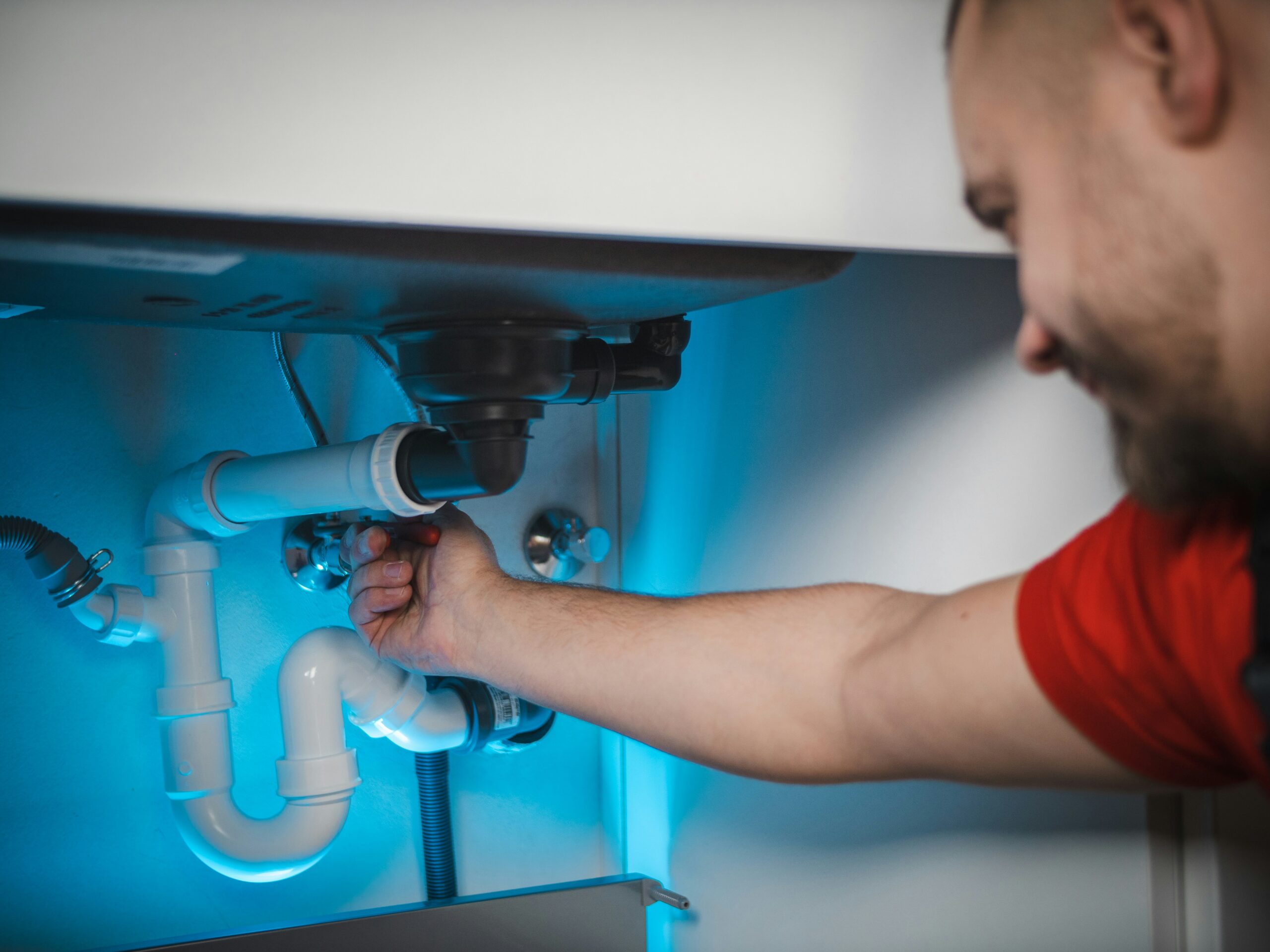
- Put a bucket under the P-trap, loosen the slip nuts and remove the trap to clear debris. This is quick and often solves many sink clogs.
- Inspect the trap and the short tailpiece for obvious obstructions and clean them out before reassembling.
3. Test, then try controlled plunging
- Reassemble the trap, run water to test. If water still backs up, try a sink plunger with a firm seal on the sink bowl (block the other side if you have a double sink).
- Plunging can move a clog temporarily—note whether plunging makes drainage better only for a short period. That temporary change is a clue the clog is movable down the branch line.
4. Use a hand auger / snake if comfortable
- Feed a 3/8″–1/2″ hand auger through the sink drain or from the trap access after clearing the trap. Rotate and push gently to break up or pull back buildup.
- If the auger passes through and water flow improves, run plenty of water to flush loosened material. If flow remains restricted, the dam-like blockage is likely further in the branch or main line and won’t stay cleared with just a snake.
5. Avoid makeshift fixes and observe results
- After any clearing, run a high-volume test (both hot and cold run together) to confirm whether the path stays open at real-world flow rates.
- If solids clear but water still pools, the blockage is acting like a dam in the branch line and will often re-form without a professional-grade cleaning.
What Not to Do
- Don’t rely on plunging as the main fix—movable clogs often return and plunging can give only temporary relief.
- Don’t keep running the disposal to “push through” a slow drain; that can grind more material into the restriction and make it worse.
- If solids clear but water still backs up, don’t assume household tools will solve it—professional drain cleaning is appropriate in that situation.
When to Call a Professional
- Call a plumber if the sink still backs up under normal or high-volume use after you’ve cleared the trap and tried a snake. That pattern suggests a deeper branch or main-line restriction.
- Also call if multiple fixtures are slow or backing up, if you detect sewage smells, or if you can’t access the clog safely.
- A professional drain-cleaning service can use powered augers or hydro-jetting to remove dam-like buildups that household methods won’t reliably fix.
Safety Notes
- Always disconnect power to the disposal before reaching near or inside it. Unplug it or turn off the circuit breaker.
- Wear gloves and eye protection when working on the trap or using a hand auger. Use a bucket to catch water and debris.
- Do not put your hand into the disposal chamber. Use tools designed for the job and follow manufacturer instructions.
- Avoid mixing or pouring harsh chemical drain cleaners down a disposal—they can damage pipes, harm the disposal, and create hazardous fumes.
Common Homeowner Questions
- Why does the disposal seem fine but the sink still fills?
Because the disposal can reduce solids while a partial clog farther down still restricts water flow. - Will a plunger fix it?
It can provide temporary relief, but movable clogs often return and plunging is not a reliable long-term fix. - When is a plumber needed?
When trap clearing and snaking don’t restore steady, high-volume drainage or when the problem keeps coming back.