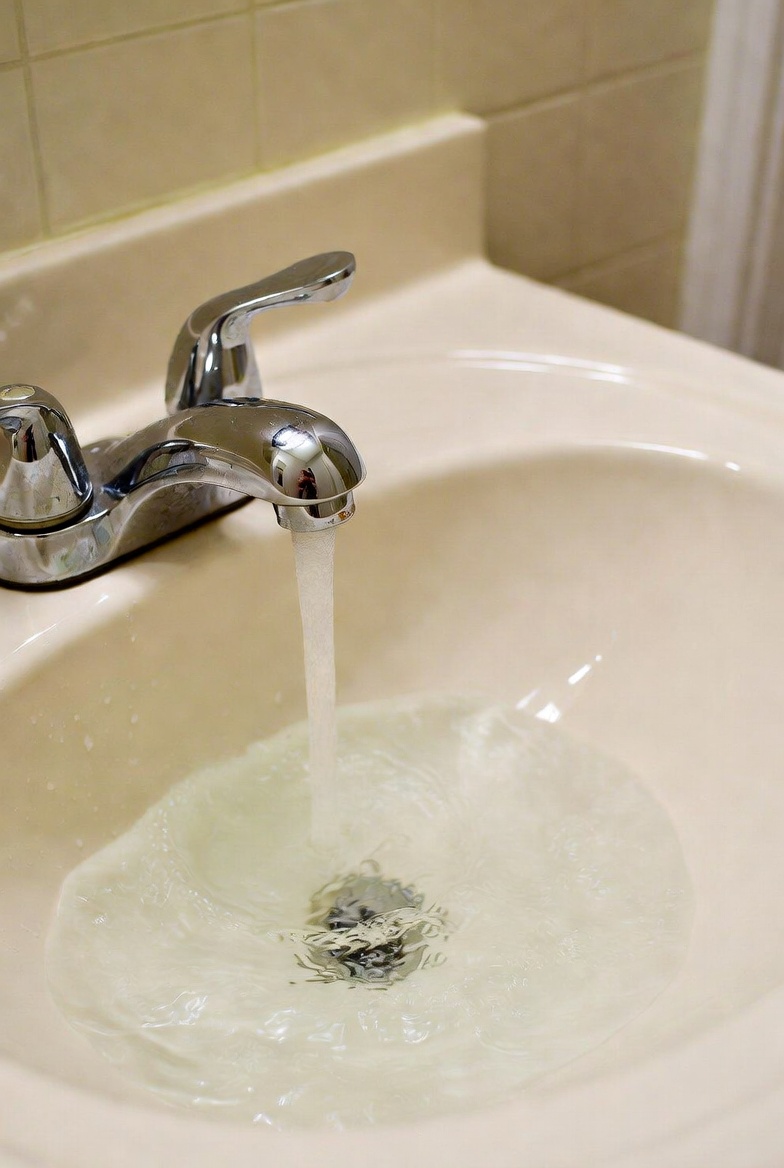
A bathroom sink that seems slow in the morning needs comparable observations. Prior use, water amount, stopper opening and faucet delivery can differ; the clock does not establish overnight settling, cold soap or a blocked vent.
For strong, widespread or unexplained gas-like fumes, exposure symptoms, or suspected high sewer-gas concentrations in an enclosed space, leave the building immediately and call the fire department or emergency services from outside. Avoid flames, switches and other ignition sources; do not remain to ventilate, sniff drains or investigate. Smell intensity does not measure the concentration. A faint localized drain odor without those warning signs calls for a different plumbing investigation; it does not automatically establish a fuel-gas leak.
If fuel gas is suspected, leave the building or affected area immediately. Do not operate valves, switches, plugs, appliances or phones there. Call the gas emergency service from a safe location well away, and wait for responders’ clearance.
For wastewater rising from a drain or affecting several fixtures, stop adding water and keep affected appliances from discharging using only safely accessible dry controls when no gas emergency is suspected. Avoid sewage contact, keep children and pets away and arrange prompt drainage help. Notify building management or the sewer agency as appropriate. Do not run fixtures to locate a shared blockage.
Record the original situation
- Original time, prior ordinary use and approximate water amount/rate.
- Stopper position and actual level/emptying behavior, without another forced comparison.
- Recent work, leaks, other affected fixtures and products used.
What the evidence means
Equal times are not necessarily equal volumes, and a later test may follow earlier cleaning or changed starting conditions. A morning/day difference is a clue; it cannot uniquely identify the material or prove a local versus shared fault.
Before tools or more water
If a cleaner may be present, identify the exact product and follow its label. Do not add another cleaner, acid, bleach, ammonia, vinegar or an improvised neutralizer. Do not plunge, snake or open the trap while hazardous residue may remain; tell the provider what was used. A rinse or elapsed time is not proof all residue is gone.
What to do next
- Use existing ordinary-use observations first. Do not make repeated morning/midday jug pours a prerequisite for help.
- For a sound isolated case, intended stopper care may be useful under the actual retention method. Do not follow it with a minute of hot flushing to move residue.
- Do not run other fixtures to listen for venting or open a trap until its actual residue, retained volume, inputs and refitting conditions are established.
- If a suitable optional drainage measurement is used after safe care, keep the amount modest and attended, record equal volume and stopper conditions, and stop for rising water or leaks. It is not a fault-location test.
If this is an ordinary isolated plain-water sink without warning conditions, the local bathroom-sink guide explains intended stopper, suitable plunger and serviceable-trap care. Those options require the actual design, inactive connected inputs and full reassembly before a small attended check; they are not a diagnostic challenge for shared backup or unknown residue.
Does faster afternoon drainage prove debris moved overnight?
No. Report the actual conditions and result rather than assigning an unobserved mechanism. Recurrence or associated warning signs justify assessment without another day of tests.
Obtain appropriate plumbing help for persistent or recurrent restriction, leakage, damaged fittings, an inaccessible object or several affected fixtures. Do not choose a camera, pipe replacement, vent change or deeper cable from the timing alone. Keep existing findings and work records so the next assessment starts with evidence.
Related guides
Safety sources
- Wisconsin DHS: sewer-gas exposure and emergencies
- Con Edison: suspected gas leaks
- Madison Metropolitan Sewerage District: stop discharge and report sewer backup
- Example drain-opener label: restrictions on plunging, disposal operation and mixing
- Delta example: a retained bathroom stopper needs its actual removal method
- Manufacturer sink guide: strainer, plunger and full trap reassembly sections