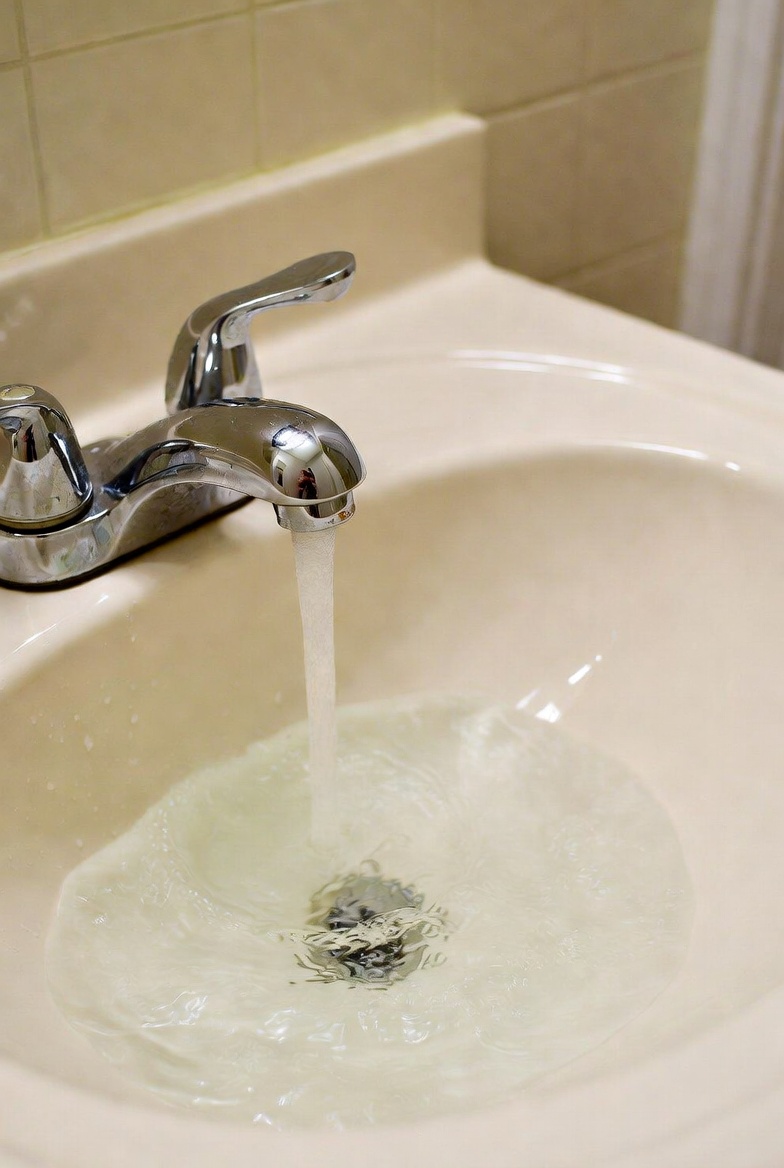
For a slow bathroom sink, first separate poor faucet delivery from water that actually fails to drain. A stopper restriction or accessible debris may be suitable for ordinary owner care, but timing, one affected fixture or a quick improvement does not locate every fault.
For strong, widespread or unexplained gas-like fumes, exposure symptoms, or suspected high sewer-gas concentrations in an enclosed space, leave the building immediately and call the fire department or emergency services from outside. Avoid flames, switches and other ignition sources; do not remain to ventilate, sniff drains or investigate. Smell intensity does not measure the concentration. A faint localized drain odor without those warning signs calls for a different plumbing investigation; it does not automatically establish a fuel-gas leak.
If fuel gas is suspected, leave the building or affected area immediately. Do not operate valves, switches, plugs, appliances or phones there. Call the gas emergency service from a safe location well away, and wait for responders’ clearance.
Keep away from wet electrical equipment. Do not touch wet appliances, plugs or switches, or enter water to reach a breaker. When no gas leak is suspected, power may be isolated only from a safely accessible dry location; otherwise call an electrician or emergency help. Wet equipment needs qualified assessment before it is used again.
For wastewater rising from a drain or affecting several fixtures, stop adding water and keep affected appliances from discharging using only safely accessible dry controls when no gas emergency is suspected. Avoid sewage contact, keep children and pets away and arrange prompt drainage help. Notify building management or the sewer agency as appropriate. Do not run fixtures to locate a shared blockage.
Record the original situation
- Original water amount/activity, stopper opening and whether the level was merely slow or rising.
- Recent stopper/faucet/trap work, visible leaks and objects that may have entered.
- Other drainage effects already noticed and the exact chemical history.
What the evidence means
More faucet flow can make an unchanged drain appear worse. A clean stopper or trap does not prove the rest of the path clear, and one quiet neighboring fixture does not exclude a shared condition. Do not start by half-filling and timing a basin or progressing automatically to a wall cable.
Before tools or more water
If a cleaner may be present, identify the exact product and follow its label. Do not add another cleaner, acid, bleach, ammonia, vinegar or an improvised neutralizer. Do not plunge, snake or open the trap while hazardous residue may remain; tell the provider what was used. A rinse or elapsed time is not proof all residue is gone.
What to do next
- Stop added water for actual rise/return, leaks or unsafe access. Check the product history before touching retained water or any connection.
- For a safe ordinary local case, identify the actual stopper/strainer. Use only its intended removal method and wipe accessible hair/debris into suitable waste.
- A suitable plunger or serviceable-trap clean may be appropriate within the limits below. Choose the actual task and stop conditions instead of doing every step as a checklist.
- After correct clearing/refitting, use a small attended leak check. Do not follow mechanical care with a generic cleaner mixture, boiling water or hottest-tap flush.
Limits for ordinary local care
For a sound isolated plain-water sink only, with no chemical, sewage, gas, electrical or damage concern: keep the faucet off and connected appliances inactive, and use the actual fixture instructions for an owner-removable stopper/strainer. Some pop-ups are retained by a horizontal rod; do not force or unscrew an unidentified drain body. Clean the removed part separately and put captured debris in appropriate waste, rather than rinsing it down another drain.
A suitable cup plunger may be used only under the tool/fixture instructions, with enough cool plain water for its seal and the actual overflow/second-bowl arrangement accounted for. Use controlled strokes; stop for leakage, movement, rising water or no improvement. Do not escalate force or fill a slow basin repeatedly.
Open only an identified accessible sound serviceable slip-joint trap whose removal, support and reassembly you understand. Keep every connected input inactive and contain retained cool plain water; a full basin can release more than the trap contents. Do not open glued, corroded or unidentified fittings or a cleanout. Clean a removed trap away from the sink. Never run the faucet into a disconnected drain. Refit correct washers/alignment under the actual tightening instructions, then perform a small attended cool-water leak check with an accepting drain. Stop if water rises or any joint leaks.
Must I snake the wall if the stopper and trap look clear?
No. Those observations do not identify a deeper obstruction, access route or safe cable. An appropriate provider should assess persistent failure; do not insert an arbitrary tool into an unknown path.
Obtain appropriate plumbing help for persistent or recurrent restriction, leakage, damaged fittings, an inaccessible object or several affected fixtures. Do not choose a camera, pipe replacement, vent change or deeper cable from the timing alone. Keep existing findings and work records so the next assessment starts with evidence.
Related guides
- Slow drain only in bathroom sink
- Bathroom sink drains slower over time
- Slow Bathroom Sink Drain Behavior
Safety sources
- Wisconsin DHS: sewer-gas exposure and emergencies
- Con Edison: suspected gas leaks
- Madison Metropolitan Sewerage District: stop discharge and report sewer backup
- Example drain-opener label: restrictions on plunging, disposal operation and mixing
- Delta example: a retained bathroom stopper needs its actual removal method
- Manufacturer sink guide: strainer, plunger and full trap reassembly sections
- CDC: electrical hazards near water