Quick Answer:
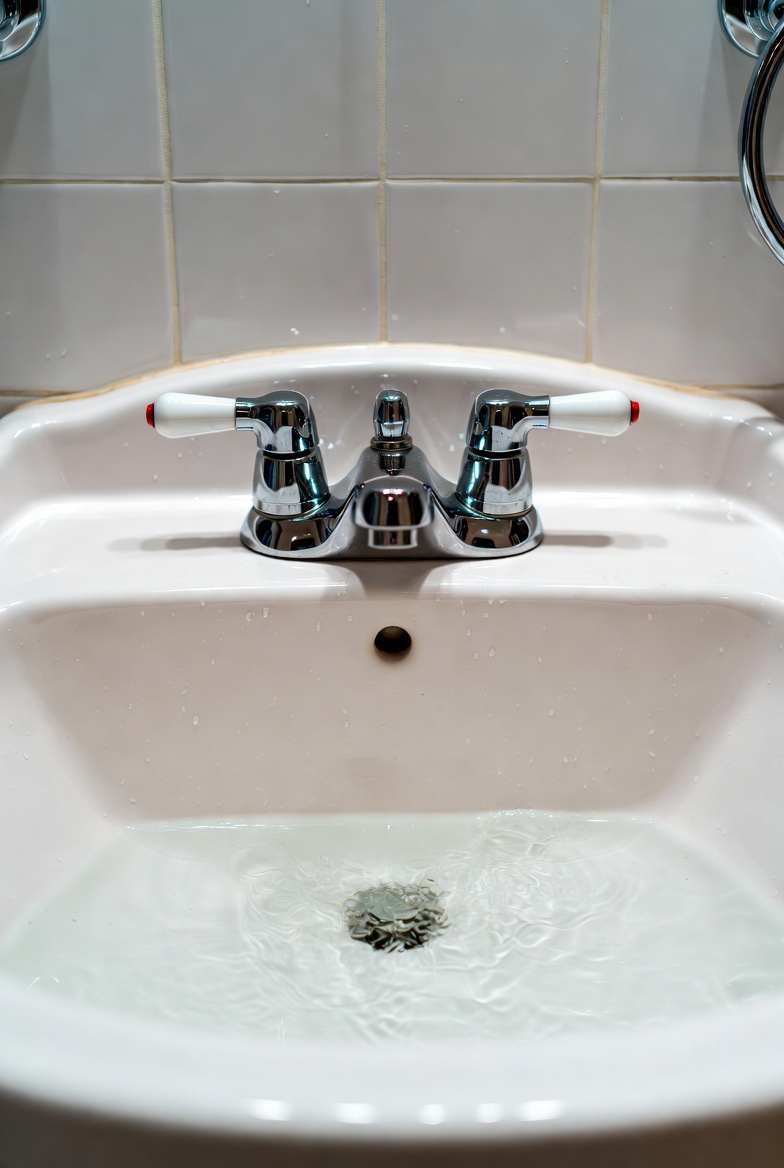
If water sits in the basin and then suddenly rushes out when you unplug or lift the stopper, you likely have a partial blockage in the drain that is temporarily holding water. This behavior often means debris is catching and releasing or that an air pocket is moving. Do a simple fill-and-release test and a few basic checks before assuming the worst.
Why This Happens
- Hair, soap scum, toothpaste, and small solids can form a partial clog that traps water until pressure forces it past the obstruction.
- An improperly seated pop-up stopper or a misaligned overflow can hold water briefly and then let it surge.
- Air pockets in the trap or partial venting problems can change flow suddenly when pressure equalizes.
- If the sink behaves this way after recent work or after time away, the cause may be related to those events — check **Slow drain after plumbing repair** or **Slow drain after long vacation** for specific triggers.
Step-by-Step What to Do
1. Prepare and observe
- Clear the area under the sink and have a bucket and towel ready for small spills.
- Remove visible debris from the sink drain opening and the stopper if you can do so without tools.
2. Fill the sink then release to observe surge
- Close the drain stopper and fill the basin with about 2–3 inches of water.
- Open or lift the stopper and watch how the water leaves: note whether it moves slowly at first then suddenly rushes, and whether gurgling or bubbling occurs.
- These observations tell you if the blockage is partial and where it might be (near the sink strainer, in the trap, or further down).
3. Try the simplest fixes first
- Use a cup or a small sink plunger to plunge the drain (seal over the overflow with a rag if needed to create pressure).
- Remove and clean the pop-up stopper or strainer—hair and gunk often accumulate there.
4. Check the P-trap
- Place a bucket under the trap, loosen the slip nuts, and remove the P-trap to inspect and clean it. This is a common place for partial clogs.
- Reassemble carefully, hand-tightening nuts and checking for leaks when you run water again.
5. If the block is farther down
- Use a small hand auger (plumbing snake) designed for sink drains to reach further into the line. Do not force metal tools if you feel strong resistance.
- If plunging and a short snake don’t clear it, the blockage may be past the trap and is a reason to call a pro.
What Not to Do
- Do not ignore partial block signs — delays can let the clog worsen or lead to backups.
- Do not pour concentrated chemical drain cleaners into the sink; they can damage pipes and are hazardous to handle.
- Avoid forcing metal tools into the plumbing; twisting or prying can damage fixtures and seals.
When to Call a Professional
- If the trap cleaning and a short auger don’t fix the surge behavior.
- If you detect sewage odors, repeated backups, or gurgling throughout other drains in the house.
- If you’re unsure about removing parts or you see signs of corrosion or damaged pipe fittings.
Safety Notes
- Wear gloves and eye protection when working under the sink. Have a towel and bucket ready for spills.
- If you use any commercial cleaner despite the warning, follow the product directions exactly and avoid mixing chemicals.
- Turn off water supply valves if you need to disconnect plumbing and know how to stop the flow before loosening connections.
Common Homeowner Questions
- Why does the water surge instead of draining slowly?
Because a partial blockage holds water until pressure or a change in flow pushes it past the obstruction. - Can I fix this myself?
Often yes: cleaning the stopper and P-trap or using a plunger or short auger will clear many partial clogs. - Are chemical drain cleaners okay to use?
No—avoid them for sinks; they can harm pipes and create safety hazards.