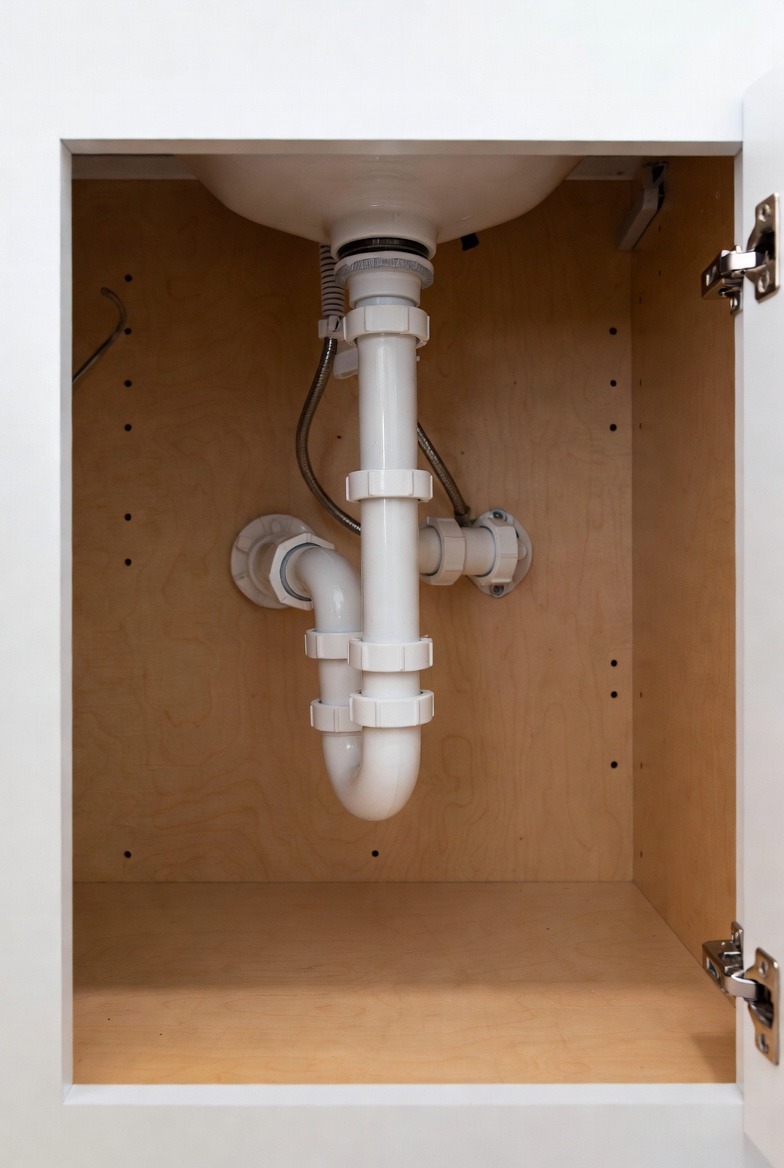
Check for an emergency first
For strong, widespread or unexplained gas-like fumes, exposure symptoms, or suspected high sewer-gas concentrations in an enclosed space, leave the building immediately and call the fire department or emergency services from outside. Avoid flames, switches and other ignition sources; do not remain to ventilate, sniff drains or investigate. Smell intensity does not measure the concentration. A faint localized drain odor without those warning signs calls for a different plumbing investigation; it does not automatically establish a fuel-gas leak.
If fuel gas is suspected, leave the building or affected area immediately. Do not operate valves, switches, plugs, appliances or phones there. Call the gas emergency service from a safe location well away, and wait for responders’ clearance.
Keep away from wet electrical equipment. Do not touch wet appliances, plugs or switches, or enter water to reach a breaker. When no gas leak is suspected, power may be isolated only from a safely accessible dry location; otherwise call an electrician or emergency help. Wet equipment needs qualified assessment before it is used again.
A sink becoming slow after a repair should be reported with the work record and observed change. The timing is relevant, but it does not prove a misaligned trap, debris or a loose seal. Start with a visual and functional history; do not tighten every nut or dismantle the installer’s work to find a cause.
Useful details to record
- What was repaired, which parts were replaced and when the slowdown first appeared.
- The stopper’s opening and any visible leakage or connection movement already apparent from a safe position.
- Other affected fixtures, chemical use and any photos or instructions supplied with the work.
What the pattern can tell you
- The stopper no longer opens normally. Ask the installer to check its actual linkage and retention. A retained stopper must not be forced out.
- A connection looks displaced or leaks. Stop using the sink and request an installation check. Generic extra wrench turns can damage a seal or fitting.
- The trap was cleared but the sink remains slow. Report that result; it does not automatically identify a deeper clog or prove the visible installation is correct.
What to do next
- Before using a tool, ask whether a drain opener or other chemical was added. If so, follow the exact product label and tell the plumber what was used. Do not plunge, snake, open the trap, run the disposal or try a neutralizer while hazardous residue may remain. Waiting a generic number of hours or rinsing by guesswork does not establish that the drain is safe to handle.
- Contact the installer with the before-and-after observations and ask which connection and functional checks apply to the actual parts.
- For a sound, ordinary sink with no hazard, owner removal of surface debris may be appropriate under its design instructions. Use the linked bounded cleaning guide if further local care is suitable.
- If a trap is opened, keep faucets off and connected appliances inactive, contain retained water and fully reassemble before any use. Do not run water to watch a restriction while the drain is disconnected.
- Use a qualified provider for damaged or unidentified fittings, ongoing leakage, recurrence or multi-fixture effects. Do not add a hot-water, chemical or nearby-fixture test to force a result.
Should a loose-looking drain nut just get another wrench turn?
Identify the connection and its required washer, alignment and tightening procedure first. More torque can conceal misassembly or damage a plastic part. A clear installation record and small controlled leak check after proper reassembly are more useful than tightening by habit.
Related situations
Safety sources
- Con Edison: suspected gas leaks
- Wisconsin DHS: sewer-gas exposure and emergencies
- CDC: electrical hazards near water
- Delta example: identifying and removing a retained sink stopper
- Example drain-opener label: restrictions on plunging, disposal operation and mixing
- Manufacturer kitchen-sink guide: strainer, plunger and reassembly sections