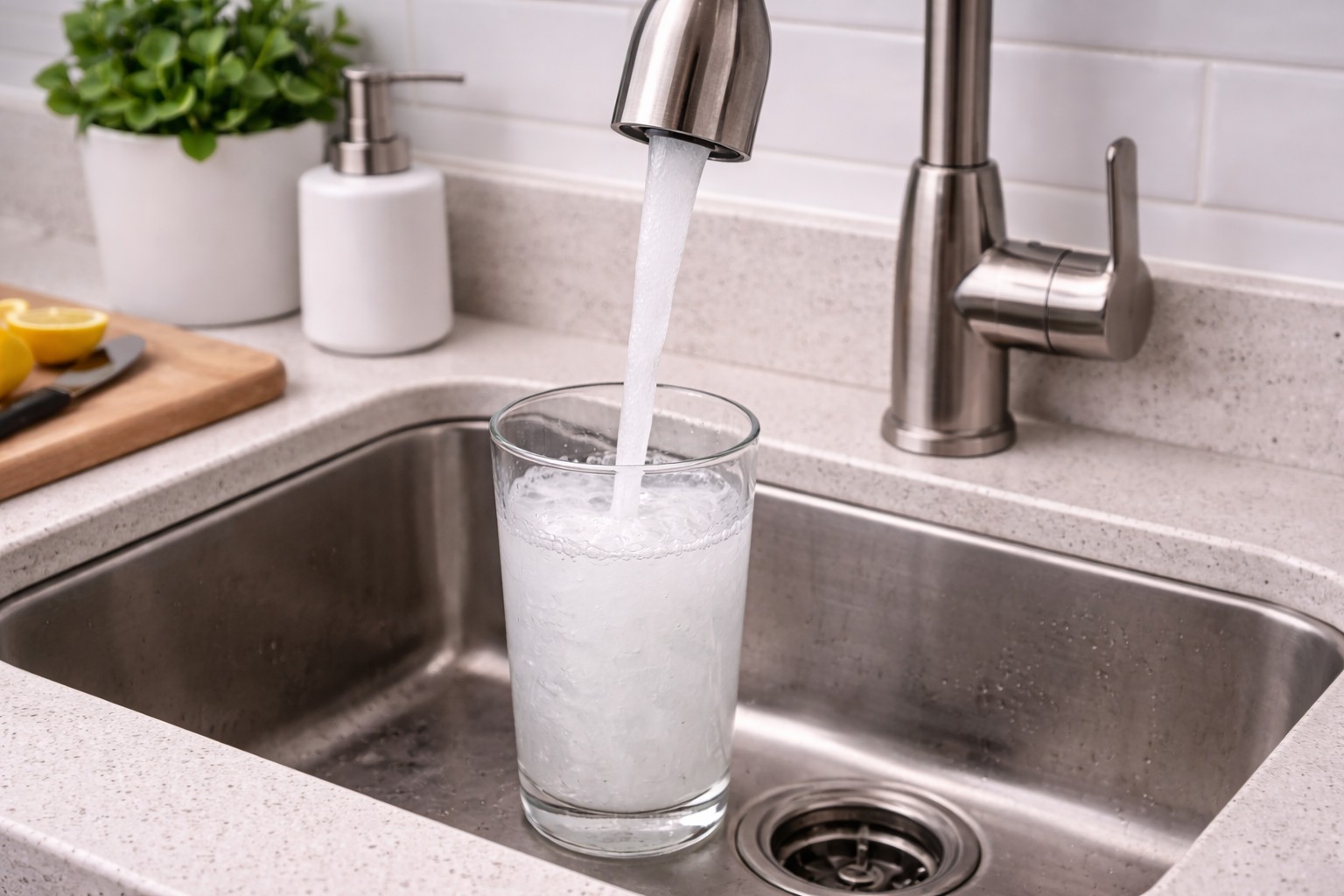
Check for an emergency first
For a new, unexplained water-quality change: do not deliberately taste the water. Use bottled water or another known-safe supply for drinking, food preparation, teeth brushing and ice while you contact the supplier. Follow the actual local notice for other uses. Boiling does not make chemically contaminated water safe, and clear appearance or a fading odor does not certify safety.
A backflow concern after repair needs the exact work and connection history. Do not automatically flush every hot and cold outlet, taste to monitor recovery or use boiled unknown water while waiting. Repair timing does not prove backflow, but a plausible cross-connection concern deserves prompt supplier and health guidance.
Useful details to record
- What was repaired, temporary hoses or connections used and the provider’s commissioning record.
- Potential non-potable sources, products and the actual backflow device or assembly.
- First ordinary observation, affected locations and any isolation or flushing already performed.
What the pattern can tell you
- A repair involved irrigation, a boiler or another separate system. Give the provider the actual connection and product details; do not assume one generic disinfecting recipe applies.
- Water appears normal after a flush. That is not evidence every possible contaminant is absent.
- The supply is isolated. Do not open outlets to perform a flowing test that conflicts with isolation, or reopen service because a timer elapsed.
What to do next
- Stop suspect use and contact the supplier or local health authority promptly for the appropriate restrictions and response. Notify the installer with the work record. Keep consumption on known-safe water and ask about contact uses and appliances.
- Use only an identified safely accessible owner isolation under its actual instructions if advised or needed to control an ongoing source. Do not cap an unidentified pressurized pipe, alter a protective assembly or operate a utility valve.
- Arrange any needed tests with a state-certified drinking-water laboratory or the supplier. Ask which substances, locations and collection conditions fit the history. Use the laboratory’s supplied containers and exact handling directions. Before flushing, removing an aerator or changing treatment, ask whether a first-draw or other specific sample is required.
- Have the actual cross-connection and required protective functions checked by appropriately qualified personnel. A visual inspection or single negative home test is not an assembly field test or comprehensive water clearance.
- Follow the actual response plan for source correction, sampling, cleaning, disposal and recommissioning. Do not flush irrigation, a heater and appliances through a generic highest-to-lowest sequence.
- Flavor, odor, feel, clear appearance or a normal home strip cannot certify water quality. A laboratory result covers the substances, locations and conditions actually assessed. Ask the supplier or health authority how the findings apply to use; do not resume consumption through a sensory test or a fixed waiting period.
Should I boil water until the contamination tests come back?
A boil-water notice addresses specified risks and has its own directions. An unknown or chemical backflow concern may require different restrictions. Do not choose boiling as the fallback; use a known-safe source and the actual supplier or health instructions.
Related situations
- Hot water flowing into cold lines
- Sprinkler system contaminating house water
- Flow Direction Reversal & Cross-Connection Issues
Safety sources
- CDC: drinking-water advisories
- CDC: chemical contamination, copper and lead in tap water
- EPA: certified drinking-water laboratories
- EPA: laboratory sample containers and handling
- Ohio EPA example: first-draw sampling precautions
- EPA: cross-connections, contamination and appropriate incident response
- Portland example: approved assemblies, qualified testing and repair
- EPA: customer advice during and after a water-contamination incident