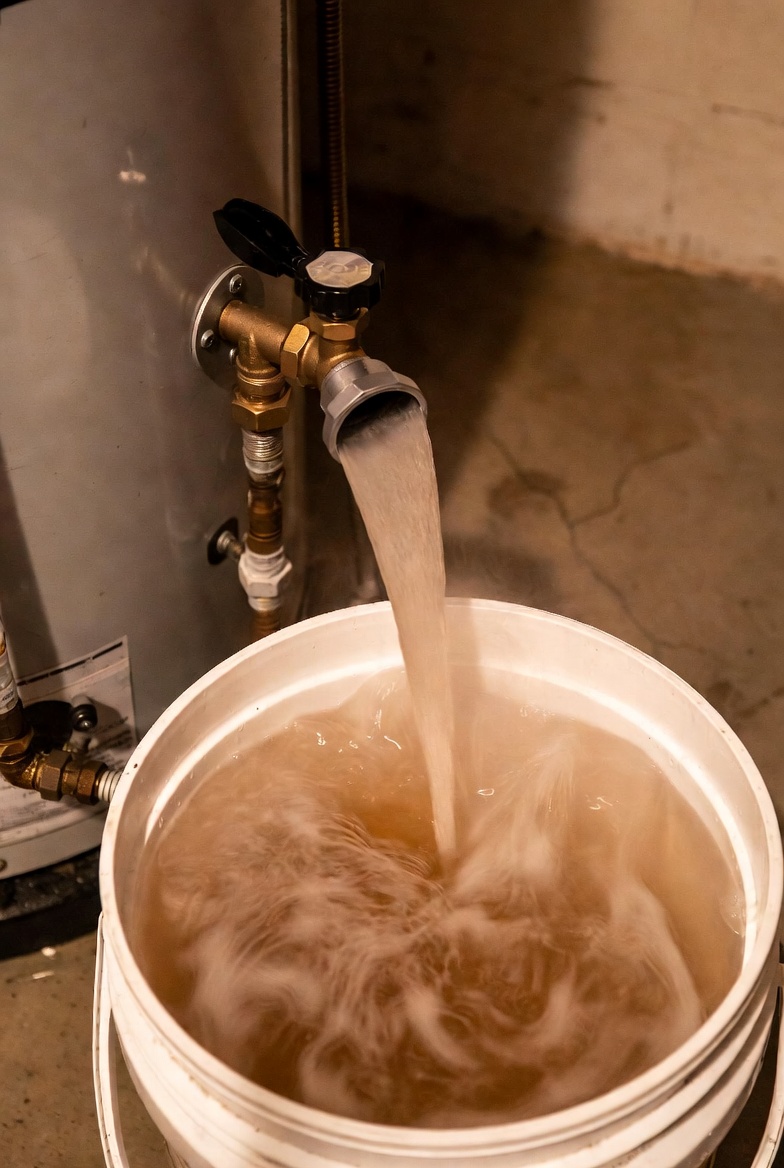
Tiny visible bubbles and retained solid particles noticed after supply restoration or plumbing work are different observations. As air bubbles rise and escape, a glass can clear from the bottom upward, not from the top downward. That visual pattern is not a complete water-safety test.
Hazards and appropriate water use
If fuel gas is suspected, leave the building or affected area immediately. Do not operate valves, switches, plugs, appliances or phones there. Call the gas emergency service from a safe location well away, and wait for responders’ clearance.
Keep away from wet electrical equipment. Do not touch wet appliances, plugs or switches, or enter water to reach a breaker. When no gas leak is suspected, power may be isolated only from a safely accessible dry location; otherwise call an electrician or emergency help. Wet equipment needs qualified assessment before it is used again.
For a new, unexplained water-quality change: do not deliberately taste the water. Use bottled water or another known-safe supply for drinking, food preparation, teeth brushing and ice while you contact the supplier. Follow the actual local notice for other uses. Boiling does not make chemically contaminated water safe, and clear appearance or a fading odor does not certify safety.
Keep the original evidence
- Existing observed bubbling/clearing versus material that remains or settles; no finger-rubbing test.
- Original ordinary outlet/activity, temperature setting and actual restoration/work history.
- Recent heater drain/refill, treatment or regulator work and any applicable notice.
What it does and does not establish
Warming or lower pressure can release dissolved air. Settling and appearance alone cannot classify every material or dissolved contaminant, and no universal sixty-to-ninety-second endpoint identifies all cloudiness. A single mixer observation does not locate the source.
What to do next
- Use the actual supplier’s advice for ordinary known air conditions; obtain source/lab guidance for a new unexplained quality change without tasting or handling material.
- Do not force full cold/hot or outdoor comparisons, alter regulator settings or collect hottest samples to classify it.
- If a heater was drained/opened, verify actual full refill, air purge and safe restart before energy or further use. Functioning temperature controls and no visible leak alone are not the complete startup state.
- After a shutoff or repair, record which lines or equipment were drained, the actual reopening instructions and completed commissioning. Clearing bubbles does not complete required restoration work.
Sampling before changing conditions
Ask the supplier or a state-certified drinking-water laboratory which substances, sample points, bottles and collection/handling conditions fit the history. Get that plan before collecting or changing conditions. Ask whether a first-draw sample is needed before flushing, cleaning an aerator or changing treatment. A household jar, paper towel, tank drain or stored glass is not a universal water-quality sample.
Actual service and restoration
For any justified internal valve, filter, hose or heater work, identify the actual model and every feed/return and energy source. Use effective isolation, controlled pressure release and verification, appropriate cooling, retained parts and a secured accepting discharge path. Reassemble compatible components fully before restoring pressure. A lower pressure setting, closed suspect valve, gloves or a small hot draw does not establish safe service conditions. Verify the required complete fill and air purge before energizing an electric storage heater; check leakage and protected intended operation.
Use the actual supplier, installer or product restoration instructions when applicable after the concern is assessed. Keep plumbing sound and assembled, the drain able to accept the discharge, safe temperature and continuous attendance. Stop for leakage, backup or a new hazard. Do not invent a hotter, longer, multi-outlet or appliance purge. A clear stream, normal feel or fading smell cannot by itself certify the substance, device readiness or water safety.
Does floating versus sinking establish whether the water is safe?
No. It records behavior that can help a provider choose the investigation. It neither analyzes every substance nor certifies potability, and a coexisting quality concern is still possible.
Related guides
- Air Bubbles Versus Sediment in an Existing Glass
- Bad taste after PRV install
- Sediment after repiping
- White Particles, Cloudy Water, or “Milky” Water
- After-Shutoff / After-Repair Water Quality Issues
Safety sources
- Con Edison: suspected gas leaks
- CDC: electrical hazards near water
- CDC: drinking-water advisories
- EPA: certified drinking-water laboratories
- EPA: home testing and laboratory collection instructions
- Example electric-heater manual: filling and maintenance requirements
- CDC: selecting and maintaining a water filter
- USGS: air bubbles, temperature and pressure effects on cloudy water