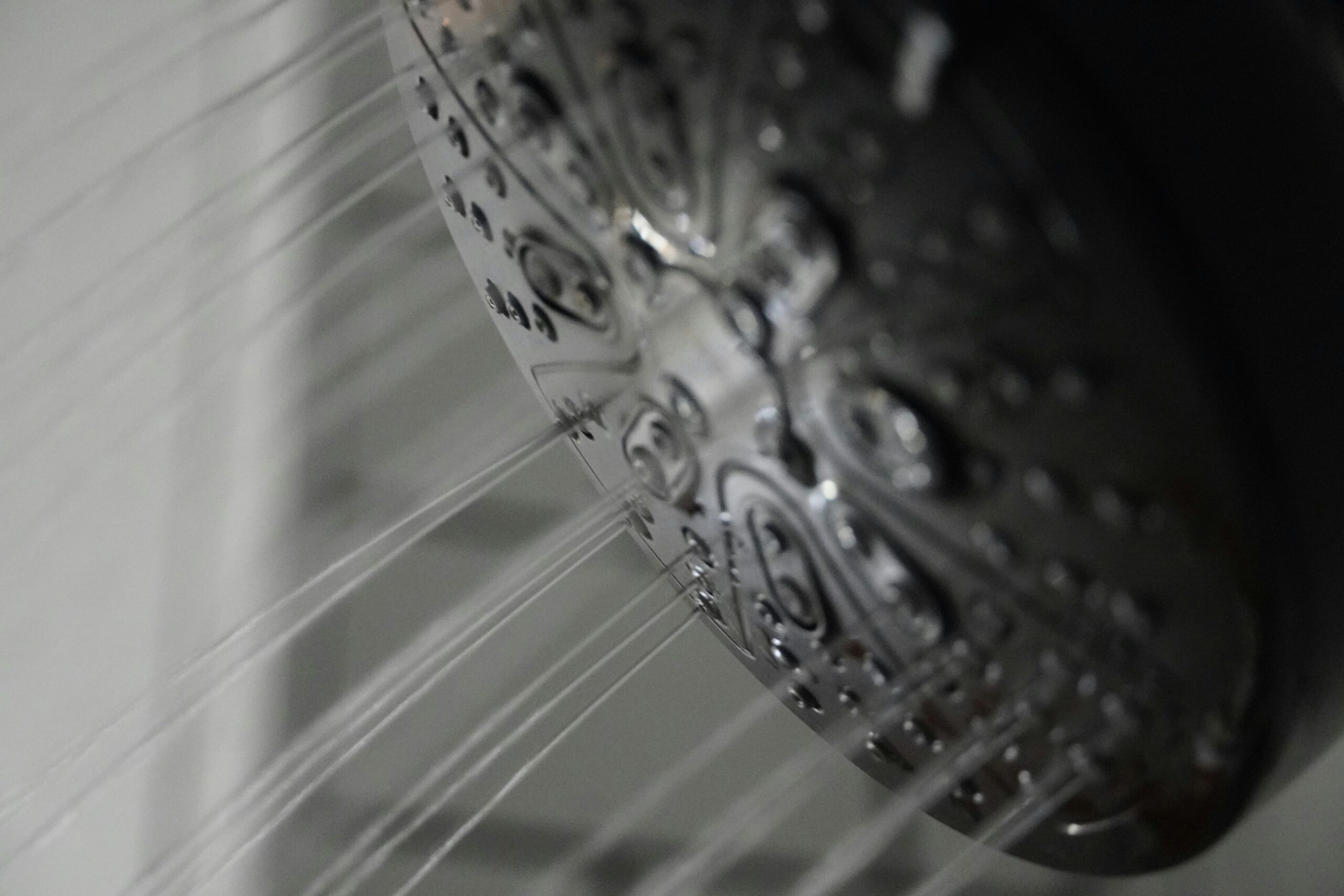
Weak shower delivery after a shutoff may involve an outlet, mixing valve or its branch supply. A normal sink does not exclude pipe or connection trouble at the shower, and a weak stream is not a pressure measurement.
Choose a safe starting point
Keep people out of a shower or bath with unstable temperature or delivery. Do not recreate the problem with someone under the spray, full-hot trials or another fixture running. Stop for leakage or unsafe temperature; a comparison test is not required before help. Follow the supplier’s water-use and restoration directions before any check.
- Several fixtures changed after the outage or work. Start with the water supplier’s notice and the installer’s restoration instructions. Record the outlets already affected rather than assuming a showerhead blockage or trying to clear every branch yourself.
- Only the shower seems weak and temperature is stable. Identify the head’s ordinary spray selector and any separate volume control from its instructions. Use only intended controls without force. A temperature handle is not necessarily a volume control. Then consider the permitted head care below.
- One temperature side or one tub/shower mode is affected, or weakness persists. Keep the original setting and any spout-versus-head difference already noticed. Give the installer or plumber the actual valve model and work history; different paths need different assessment. Do not run hot/cold extremes or select a replacement cartridge from the symptom alone.
The head and the valve in the wall can have different identities. Use paperwork or safely accessible markings; you do not need to remove trim, obtain gauge readings or reproduce a hazardous event before asking for help.
Start with the safe state
Keep away from wet electrical equipment. Do not touch wet appliances, plugs or switches, or enter water to reach a breaker. When no gas leak is suspected, power may be isolated only from a safely accessible dry location; otherwise call an electrician or emergency help. Wet equipment needs qualified assessment before it is used again.
For a new, unexplained water-quality change: do not deliberately taste the water. Use bottled water or another known-safe supply for drinking, food preparation, teeth brushing and ice while you contact the supplier. Follow the actual local notice for other uses. Boiling does not make chemically contaminated water safe, and clear appearance or a fading odor does not certify safety.
Keep the restoration and shower configuration
- Actual outage/work event, supplier directions and whether the system was drained or winterized.
- Shower-only versus tub/shower, head/handset/diverter mode and the actual valve maker/model.
- Original hot/cold behavior, unsafe temperature, leaks and already-known other-fixture information without repeated full-hot trials.
Head care must match the part
Identify the actual attachment and support the shower arm as the maker permits. Use only owner-removable parts and finish/seal-compatible cleaners; a vinegar soak or generic wrench grip is not suitable for every head. Do not remove required flow or protective components. Stop for a loose arm, hidden wall movement or uncertain fit.
Do not open retained valve parts, change protective settings or remove the head for a running-water test as a general first check. Routine owner-permitted outlet care is different from opening a cartridge, bonnet or supply connection.
Appropriate return and help
Use the actual supplier and installed equipment restoration instructions. Establish containment, permitted water use, accepting drainage and safe temperature/splash conditions before any justified attended outlet check. A known leak, failed control or poor receiver is a reason to stop, not add flow. Previously drained equipment has its own refill/purge and energy-startup requirements. There is no universal floor order, full-flow minute count or waiting period that clears every system.
Persistent weakness, sudden deterioration, unsafe temperature or leakage needs actual model/branch assessment. Retain and restore protective components and fully secure pressure parts before attended checks. A maker’s temporary cosmetic-trim setup is different from exposing retained water parts.
Read before a test that removes parts or changes settings
A permitted headless check has limits
Moen’s PosiTemp guidance includes a shower-arm flow check for a particular shower-only no-flow case. That is not a universal 30–60-second full-hot flush for every shower. Any suitable check requires the actual procedure, known accepting receiver, controlled temperature/splash and a safe standing position. Stronger delivery after removal changes outlet resistance and does not certify upstream pressure or exclude other faults.
Temperature limit and balancing are separate
A mechanical temperature limit restricts handle travel and the attainable temperature range. Pressure-balancing/cartridge parts respond hydraulically. Running hot and cold fully does not reset or adjust the mechanical limit. Do not defeat a limit or raise heater settings to cure low flow. Identify actual integral stops and intended positions before any operation; not every access screw is a shutoff.
Cartridge, bonnet, supply hose and retained valve work requires effective control of every feed, actual serviced-segment pressure relief and verification, safe access and compatible approved parts. A towel is not source isolation. Stop for continuing flow, seized or corroded parts or uncertain control. Fully secure pressure-containing parts and protective components before appropriate attended restoration; re-isolate and verify relief before further internal work. Maker-permitted trim checks or external adjustments differ from opening retained parts.
Related situations
- Single-fixture delivery: broader scenarios
- Restoration and startup: broader scenarios
- One faucet weak after a shutoff
Browse broader Plumbing topics. Choose from the actual symptom and equipment.
For the wider sequence and device-specific directories, browse Water Entry, Shutoffs & Flow Control Systems.