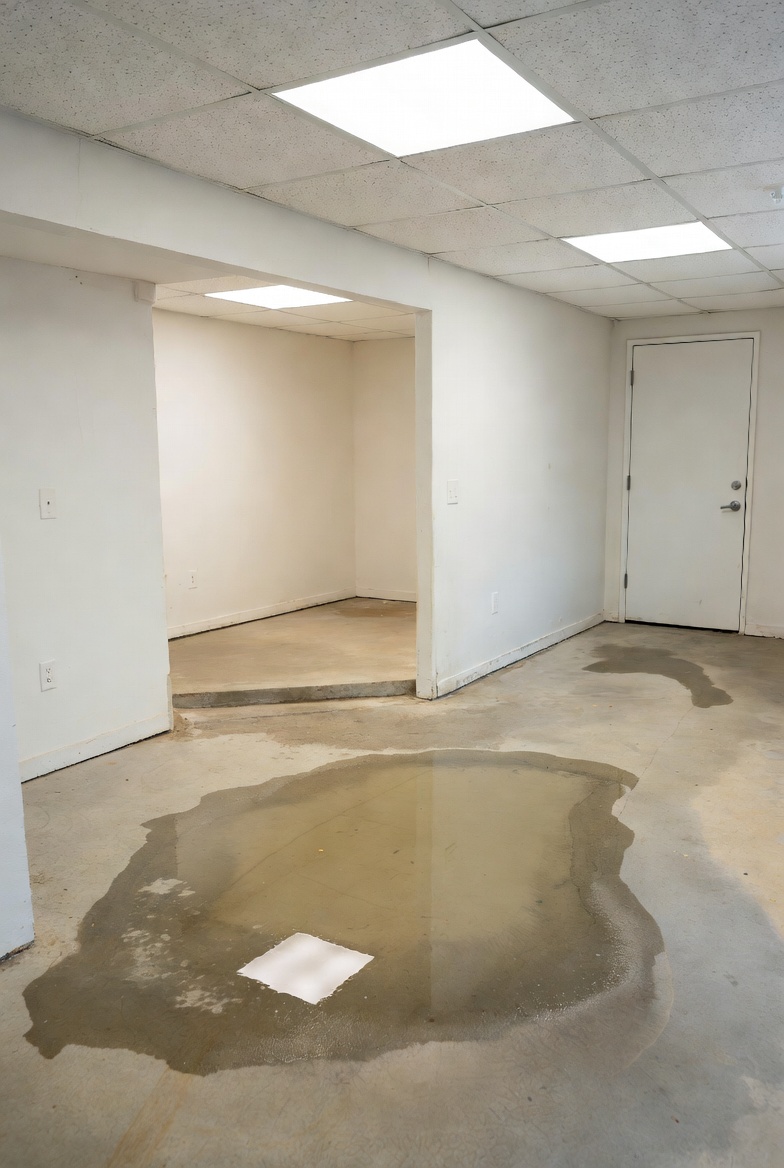
Summer water may involve condensate from fitted equipment, irrigation, storms, supply leakage or another path. The season and an operating air conditioner are useful history, not a diagnosis. Do not restart suspect HVAC equipment or fill a window well with a hose to find the source.
Make the area safe first
For suspected fuel gas, or strong, widespread or unexplained gas-like fumes, exposure symptoms or suspected concentrated sewer gas, leave the affected building and call emergency help from safety. Do not operate switches, plugs, valves or phones there, or stay to sniff or ventilate. Follow responder clearance.
Keep out of water near electrical equipment; do not touch wet appliances, plugs or controls. Isolate electricity only from safe dry access when no gas emergency is suspected, or get utility/electrician help. Use a known safely accessible shutoff for an active supply leak. During sewage return, stop contributing wastewater and keep people and pets away. A supply shutoff cannot stop every sewer or groundwater inflow.
Separate condensate evidence from exterior flooding
- HVAC status: From safe dry access, record the actual equipment, existing alarm and visible water location. A thermostat setting is not electrical isolation for opening internal components. Water depth alone does not establish electrical safety; wet equipment needs appropriate qualified assessment.
- Condensate route: Keep the actual outlet, pump and drain arrangement for the technician. Do not assume the outlet should go onto gravel or into a downspout. Use the maker’s safe access and clearing procedure; do not generically vacuum or flush an unidentified line or change a required trap or safety switch.
- Outdoor observations: Use the existing irrigation schedule, nozzle direction and storm record. Avoid sending water toward the house. Clearing known accessible surface debris can be reasonable under safe conditions, but do not climb wet eaves or fill a suspect well to test its drain.
Can I run the AC briefly once the floor looks dry?
A dry-looking floor does not clear flood-affected electrical equipment or resolve an overflow. After correction, appropriate clearance, secure reassembly and verified receiving conditions, follow the actual maker’s completion procedure. Do not bypass a condensate safety switch or repeat an active leak to confirm the diagnosis.
Control the source, then dry and verify
Get prompt appropriate help for ongoing flooding, sewage, wet equipment, structural movement or an unidentified source. Do not delay mitigation to finish a log or preserve a puddle. Photograph from safe access, then arrange suitable water removal and drying. Contamination, mold, electrical clearance and structural conditions affect the cleanup method; do not use fans over visible mold or mix cleaning products. Drying limits damage but does not fix the source.
Use the installed system’s appropriate maintenance or completion procedure after correction, secure reassembly, required source controls and an accepting discharge path. Stop for leakage or renewed rise. A small test can still add water to a failing receiver. Keep unknown cleanouts and sealed basins closed; a bucket, gloves or a slow opening cannot control every trapped sewage or gas release. Do not enter pits, tanks, manholes or excavations.
Related guides
- Flooding during peak water use
- Flooding after heavy rain
- Floor Drains, Basement & Main Lines
- When to call a plumber for basement drainage issues
Sources and limits
- Wisconsin DHS: sewer gas, exposure and leaving an unsafe area
- Con Edison: suspected fuel-gas leak response
- CDC: electrical hazards near water
- EPA: prompt drying, electrical safety and flood cleanup limits
Examples do not identify your installed model, actual fault or local requirements. Independent professional review and household field tests have not been obtained.