Quick Answer:
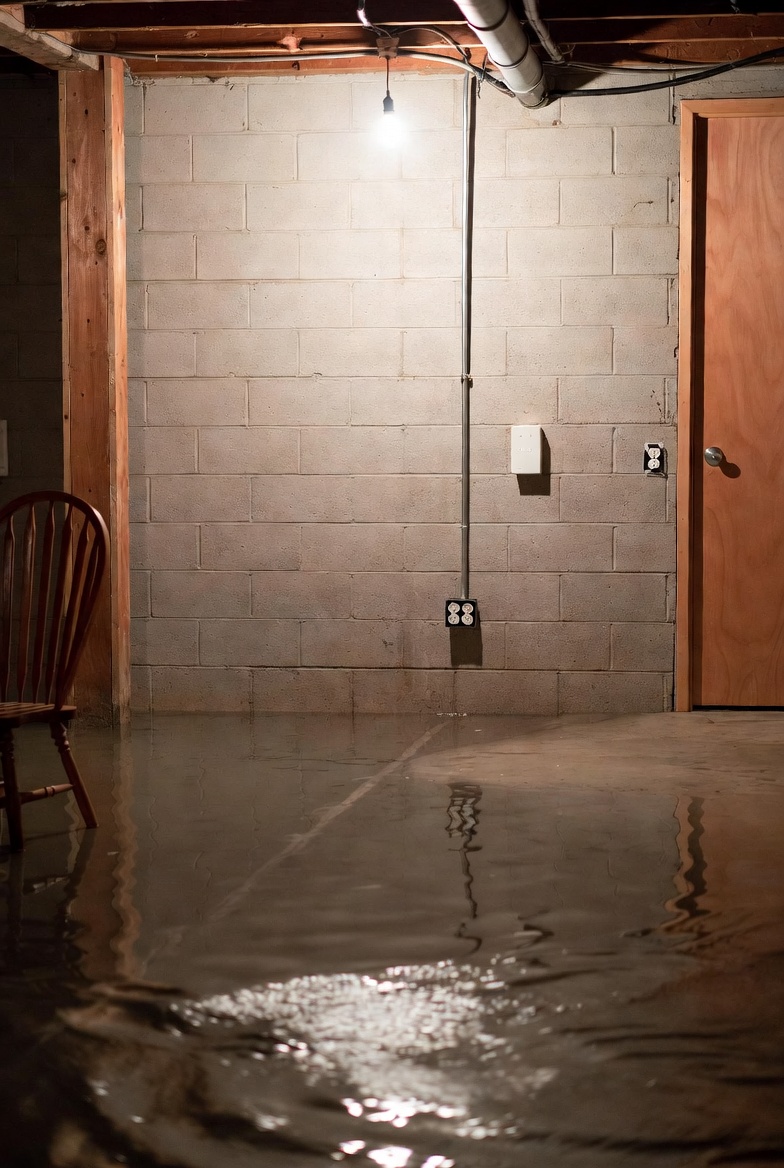
If you see water in the basement while reopening the main, stop, keep the main partly closed, and follow a calm isolation routine: open the main slowly while watching visible pipes and appliances, check the water meter for unexpected flow, and close branch shutoffs to find which section is leaking. If a leak appears immediately when you pressurize or you cannot isolate it, shut the water off and get professional help.
Why This Happens
When a home is depressurized for a shutdown, small failures that were held closed by normal pressure can start leaking once you restore water. Common causes include failed valve seats, loose fittings, cracked pipes that shift when pressure returns, and pipes that cracked and thawed after freezing. Appliances and internal fittings (water heaters, washing machines, dishwashers, hose bibs) can also fail when pressure is restored. If you recently had a municipal outage or winterization work, those conditions raise the risk of sudden leaks — see flooding after a city outage and flooding after winterization for related checks.
Step-by-Step What to Do
1. Stop and prepare
- Keep the main valve closed or only slightly open while you get essentials ready: towels, buckets, flashlight, and a way to shut power off if water reaches electrical panels.
- Tell household members to avoid using any fixtures until you confirm the system is stable.
2. Open the main valve slowly and watch closely
- Turn the main valve a few degrees at a time over several minutes. Watch all visible connections, exposed pipes, hose bibs, water heater lines, and appliance supply lines as pressure builds.
- If any fitting starts leaking or a joint seeps, stop opening and tighten or isolate that area if you can safely access it.
3. Check the water meter for unmetered flow
- Before pressurizing, make sure every tap, toilet, and appliance is off. Note the meter reading or watch the small flow indicator.
- Partially open the main and watch the meter. If the meter moves with everything off, you have unmetered flow — the leak is inside the service line or house plumbing.
4. Isolate sections by closing branch shutoffs
- Close individual shutoffs to different parts of the house (basement, upstairs, outdoor bibs, water heater feed). Open the main slightly and watch which section shows new leaks or when the meter stops moving.
- This helps pinpoint the leaking zone. If closing a specific branch stops the leak, you know the problem is in that area.
5. Feel pipes for cold spots or weaknesses
- Run your hand along exposed pipes. Cold or rapidly cooling spots can indicate areas that froze and later cracked. A wet, cold area once pressurized often points to a thawed failure.
- Do not touch hot pipes or electrical equipment; use caution in tight spaces.
6. If you find a leak
- Shut the main valve fully, mop up water to limit damage, and do not re-pressurize until the area is secured or repaired.
- If the leak is minor and accessible (a loose compression nut), you may tighten it cautiously once pressure is off. For any burst pipe or leaks near wiring, call a professional immediately.
What Not to Do
- Don’t blast the main fully open without watching the system. A sudden full opening can worsen leaks or spray water into finished areas before you can respond.
- Don’t assume small drips will self-correct once pressure returns. Small drips can become larger as systems warm or as seals shift under pressure.
- Don’t wait to get help if a leak appears immediately on pressurizing or if you cannot isolate the problem by closing branch shutoffs—shut the water and call a professional.
When to Call a Professional
- Any time a significant leak appears when you pressurize the system.
- If you cannot find or isolate the leaking section using branch shutoffs and the water meter test.
- If water is pooling near electrical panels, heaters, or major appliances, or if a pipe has clearly burst — stop and call a licensed plumber immediately.
Safety Notes
- Turn off electricity to any area where water is collecting to avoid shock risk, but only if it is safe to reach the breaker. If unsure, shut the main water off and wait for a pro.
- Avoid standing water with bare feet. Use boots and gloves when working around flood water.
- Ventilate wet areas to reduce mold risk, and remove soaked materials quickly. Document damage for insurance if flooding is significant.
Common Homeowner Questions
- How fast should I open the main? Open it very slowly over several minutes while watching pipes and the meter.
- How do I test the meter for a hidden leak? Turn everything off, note the meter or watch the flow indicator, then partially pressurize and see if it moves.
- Can I fix small leaks myself after a shutdown? Only if it’s an obvious loose fitting and the repair is simple; for any burst pipe, leaks near power, or if you can’t isolate the section, call a plumber.
More in this topic
For more related fixes and similar symptoms, see Intermittent Basement Flooding Events.