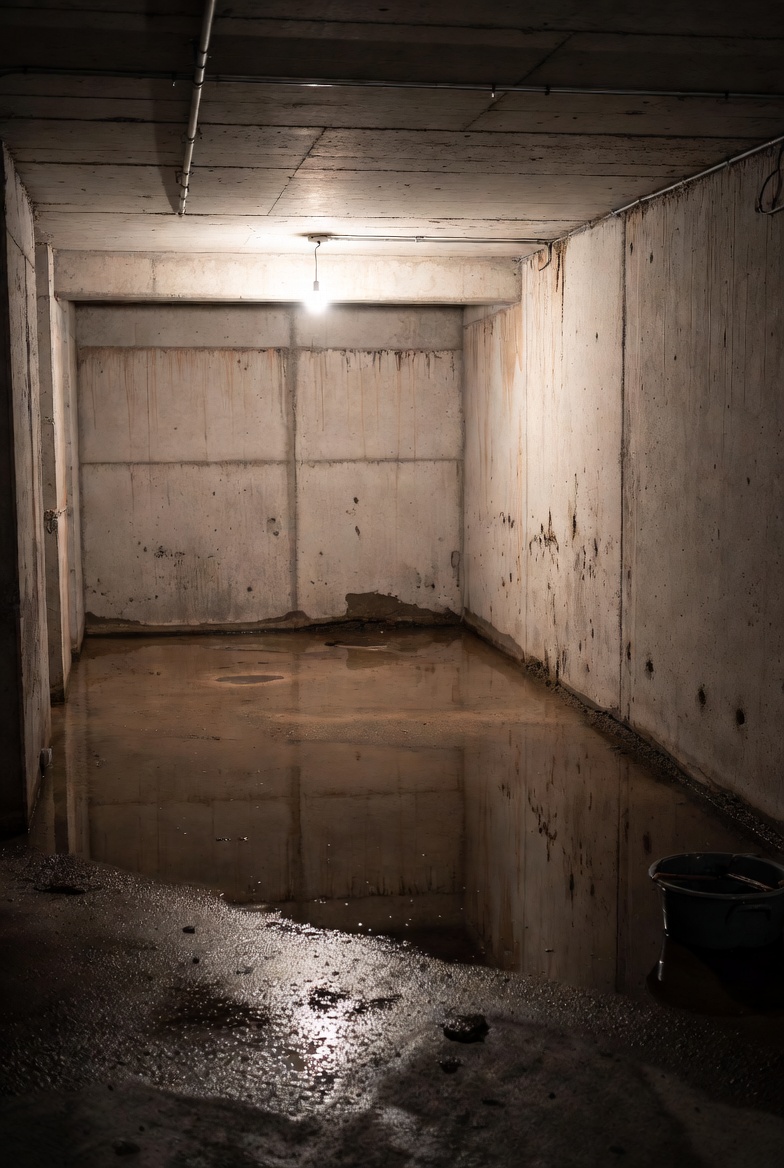
For a floor drain already overflowing after rain, stop contributing wastewater and keep clear of contaminated or electrically hazardous water. Do not remove the grate and repeat quart-to-gallon tests to decide whether the source is inside or outside.
Protect people before measuring or testing
For suspected fuel gas, or strong, widespread or unexplained gas-like fumes, exposure symptoms or suspected concentrated sewer gas, leave the affected building and call emergency help from safety. Do not operate switches, plugs, valves or phones there, or stay to sniff, ventilate or retrieve belongings. Follow responder clearance.
Keep out of water near electrical equipment. Do not touch wet appliances, plugs or controls; isolate electricity only from safe dry access when no gas emergency is suspected, or get utility/electrician help. Wet equipment needs qualified assessment before reuse. During wastewater return, stop connected taps, toilets and appliance discharges through safely accessible controls and keep people and pets away. A supply shutoff cannot stop every sewer or groundwater inflow.
Separate ordinary surface care from loaded drain and valve work
- What was observed: Record the original water rising at the drain and other affected fixtures without a new flush. Full yard drains or street water can be relevant context without proving the house drain’s connection or public responsibility.
- Grate and trap: Known loose surface debris may be addressed only with safe dry access, no return or residue hazard and the actual removable arrangement understood. Do not reach into unknown sharp or contaminated contents. A trap’s retained water is a gas seal, not automatically a reverse-flow barrier.
- Backwater device: Identify the actual valve and maker. A visible grate, outer box and sealed valve lid are different. Do not force a stuck flap or clear it under unknown surcharge; a closed valve may be functioning as designed while connected household discharge still needs to stop.
If a small amount of water drains away, is the system safe?
A momentary response would not certify capacity, identify every fault or exclude a damaged pipe. Routine safe trap-seal care and qualified post-repair testing are different conditions from an active overflow. No additional bucket test or preliminary hands-on clearing is needed before calling for help.
Use a resolved receiving state before a completion check
Do not open unknown cleanouts or sealed pump basins, manipulate a loaded valve, run appliances or add hose and bucket water to diagnose an unresolved backup. A slow opening, gloves, distance or a bucket does not establish controlled release of trapped sewage or gas. Do not enter pits, tanks, manholes or excavations. Report safely visible symptoms promptly; do not wait for another storm, rising depth, mold or a future season when damage or hazards are present.
Keep the exact cleaner and treatment history for the provider. Do not mix products or use a guessed wait or rinse as clearance for tools or opening. After source and electrical hazards are controlled, arrange suitable water removal and prompt drying. Contamination, actual equipment approval, discharge destination, exterior water level and structural conditions affect the method; a wet/dry label or ordinary gloves do not certify sewage or gas safety. Do not blow fans over visible mold.
After suitable correction, secure reassembly and required source controls, use the installed maker’s appropriate maintenance or completion procedure with a known accepting receiver, bounded input and a stop before overflow. This differs from a storm simulation at a failing foundation. Keep safely functioning groundwater protection distinct from wastewater inputs; continuous runtime alone is not a reason to switch off a healthy sump.
Related guides
When to get prompt basement drainage help
Sources and limits
- Wisconsin DHS: sewer gas, exposure and leaving an unsafe area
- Con Edison: suspected fuel-gas leak response
- CDC: electrical hazards near water
- Madison Metropolitan Sewerage District: stop discharge and report backup
- EPA: prompt drying, electrical safety and flood cleanup limits
- EPA: separate sanitary and storm systems versus combined sewers
- EPA: wet-weather inflow, infiltration and other sewer failures
- Oatey: retained trap water and the gas-seal function
- Government of Canada: backwater valve types, maintenance and closed-valve use
- Example drain-opener label: remaining-product restrictions
Sources explain general functions and examples; they do not identify your installed layout, defect, local permissions or responsibility. Independent professional review and household field tests have not been obtained.