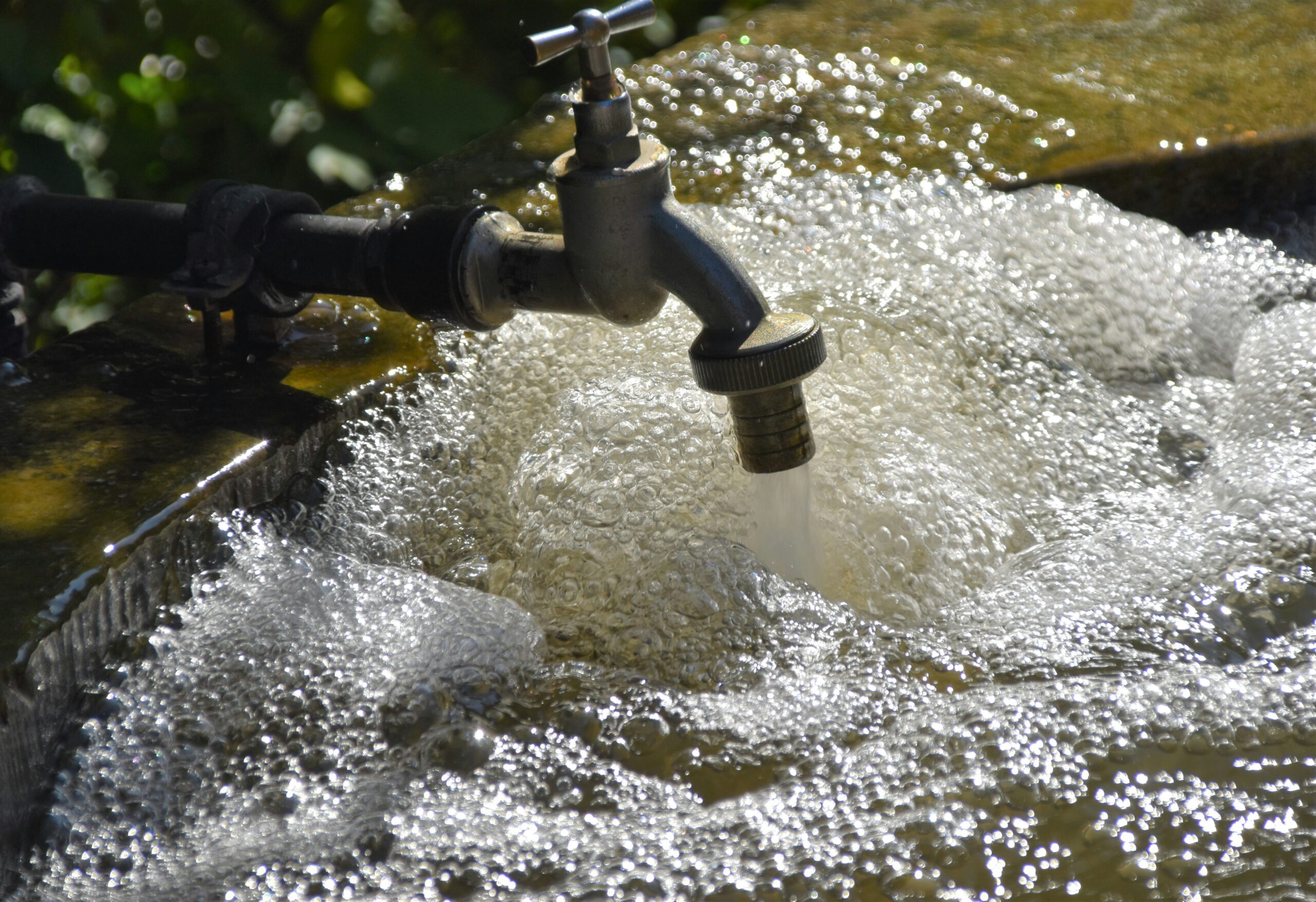
A high-pitched outdoor-faucet noise can change with flow, valve position, an attached hose or the actual supply condition. That change is a clue, not a way to rule out an external restriction or identify a worn washer. Stop deliberate noise tests when the condition is concerning; use the original event to choose safe assessment.
If fuel gas is suspected, leave the building or affected area immediately. Do not operate valves, switches, plugs, appliances or phones there. Call the gas emergency service from a safe location well away, and wait for responders’ clearance.
Keep away from wet electrical equipment. Do not touch wet appliances, plugs or switches, or enter water to reach a breaker. When no gas leak is suspected, power may be isolated only from a safely accessible dry location; otherwise call an electrician or emergency help. Wet equipment needs qualified assessment before it is used again.
Record the sound without provoking it
- Whether the original squeal occurred at opening, during steady flow, at closure or afterward. A bang at closure and a sustained whistle are different observations.
- The maker/model, handle position, hose/nozzle/splitter and required backflow device, plus already-known other demand or recent work.
- Actual leakage, freeze history and whether a known homeowner source control is safely accessible. A sound heard at one fitting may be transmitted from another location.
What a pitch change does and does not show
Changing the opening changes flow and pressure relationships across the actual path. An internal part or an external hose, nozzle or restriction may respond. Do not repeatedly compare fully open and partly closed settings, add two hoses or operate nearby valves to prove the cause. A hose nozzle closed at its end is not the same as verified isolation of the faucet body, and it may leave the hose pressurized.
Why the actual model matters
Woodford’s Models 20, 25 and 27 sheet links a specific squeal to an excessive-supply-pressure condition and discusses a plunger and regulator assessment. It also specifies a left-hand-thread head nut and prohibits lubrication of that faucet/kit. Those details illustrate why a generic washer, lubricant or nut-turning rule can be wrong; they do not identify the faucet on your house. Do not adopt the sheet’s symptom threshold as a general allowable household pressure or adjust a regulator by ear.
Suitable owner care and service
For an owner-removable hose or splitter, close its supply and release trapped hose-side pressure through the intended outlet into a suitable receiving area. A closed nozzle, check valve or attachment can retain pressure separately. Do not loosen a coupling to vent it, twist the faucet in the wall, or remove required backflow protection. Support the fitting and follow its actual instructions; stop for a seized connection or uncertain pressure.
A specified owner-removable screen or hose washer can be inspected and cleaned or replaced under the actual maker’s procedure when the system is otherwise suitable. Do not remove protective components, gouge a seat or wiggle an unknown retaining nut to chase noise. External packing adjustment may be legitimate for an identified model and actual stem leakage, within the maker’s limits; it is not a general screech repair.
Before removing a bonnet, packing, operating rod, cartridge or pressure-retaining breaker part, identify the exact model and its approved service procedure. Close a known effective homeowner supply control for every feed, control other connected inputs, and relieve and verify pressure at the actual serviced segment. A different indoor tap may not relieve an isolated outdoor branch. Stop if flow continues, the control is uncertain or parts bind. Use compatible approved parts and fully secure all pressure-retaining and protective components before an attended restoration. Re-isolate and verify relief before further disassembly. Cosmetic handle trim and maker-permitted external packing adjustment are different operations; neither authorizes loosening an unknown retainer under pressure.
After a suitable correction
A justified functional check needs complete secure assembly, known containment and receiving capacity, safe water-use conditions and attendance. Follow the actual restoration method and ordinary operation rather than recreating a severe noise or rapid transient. Stop and re-isolate for leakage, binding, strong vibration or persistent concerning sound. A plumber can assess actual pressure, source and component condition; a regulator setting or replacement should follow that evidence.
Related situations
- Two hoses change demand and flowing pressure
- When to obtain help without prerequisite tests
- Bang specifically when the faucet closes
- Whistling or screeching: broader pipe-noise directory