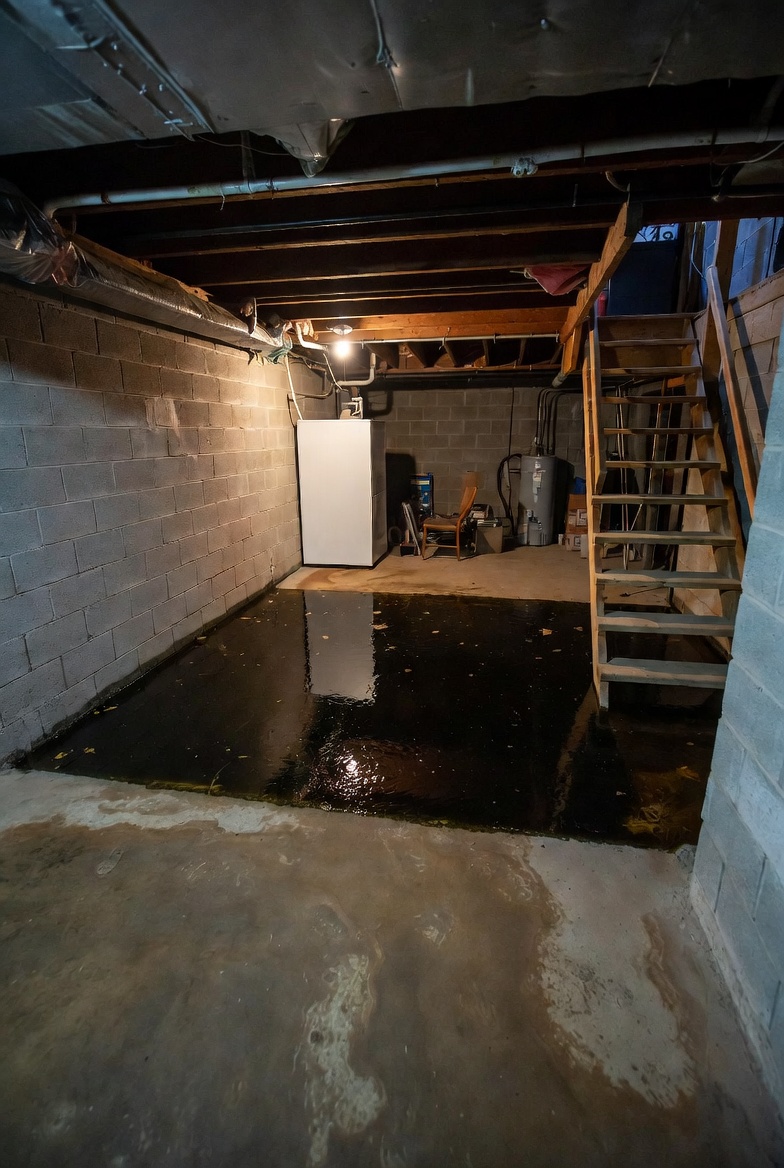
Quick Answer:
If you see standing water at a basement or floor drain only in cold weather, the most likely causes are a frozen trap or a blocked vent and not a sudden plumbing collapse. Start by measuring the air temperature near the drain, removing the grate to look for a frost ring, and carefully pouring a small amount of room‑temperature water to see if it flows or freezes. Also check vent stacks and attic areas for frost or condensation, and watch whether the puddle clears on warmer days.
Why This Happens
Water in a floor drain sits in the trap to block sewer gas. In very cold conditions the standing water or water in the trap can freeze, or cold air in a vent stack can create a partial blockage from ice or heavy condensation. If venting is impaired, the drain may not siphon or flow as it should, which can leave a shallow puddle. Ground temperature near buried drain lines can also drop enough to freeze a low section of pipe. Intermittent standing water that appears only on the coldest mornings is a common sign that freezing, not a full plumbing failure, is the issue.
Step-by-Step What to Do
Measure the ambient temperature near the drain
Use a simple indoor/outdoor thermometer or an infrared thermometer held a few inches from the drain to record the local air temperature. Note whether the reading is at or below freezing. This helps confirm whether freezing is likely and gives you a baseline to compare to warmer days.
Remove the grate and check for a frost ring
Put on gloves and remove the drain grate. Look at the top of the trap and the pipe opening for a ring or rim of frost and ice. A clear circular frost ring around the opening is a good sign the trap or the pipe just below it is frozen. If you see ice inside, don’t pull or force anything into the opening.
Pour room‑temperature water slowly to test flow
Use a cup of room‑temperature water and pour it slowly into the drain—small amounts at a time. Watch whether it disappears, pools, or starts to form ice. Pouring gradually reduces the chance of creating a sudden overflow if the trap is blocked. If the water immediately freezes or barely moves, that confirms a freezing condition close to the drain.
Verify attic and vent stacks for frost or condensation blockages
Inspect the vent stacks on the roof if it’s safe to do so from a stable surface; look for frost, ice, or a build-up of condensation around the vent opening. If you can access the attic, check for cold air leaks where vent pipes pass through roof or ceiling framing—poor insulation or gaps can let in cold air that encourages freezing. If you’re not comfortable on the roof or in the attic, call someone experienced to check the vents safely.
Track whether the problem clears on warmer days
Keep a simple log of dates, morning temperatures, and whether the standing water clears later in the day. If the puddle consistently disappears once outdoor temperatures rise above freezing, the issue is almost certainly freeze‑related rather than a broken pipe. This information is useful if you later call a professional.
If you recently winterized pipes or made changes to exterior drains, compare conditions to **Standing water after winterization**. If a drain shows slow clearing year‑round, see **Standing water in basement drain** for more general troubleshooting.
What Not to Do
- Avoid using open flames, torches, or any high‑temperature devices to thaw a frozen drain.
- Do not pour boiling water down the drain — it can crack cold cast iron or brittle PVC and cause sudden leaks.
- Do not force objects into the trap to break ice; that can damage the pipe or push a blockage deeper.
- Call a professional when freezing recurs frequently, you suspect buried pipe damage, or thawing causes unexpected leakage into living spaces.
When to Call a Professional
Contact a plumber if you have:
- Repeated freeze events that return each cold snap.
- Evidence of a frozen section of buried pipe (ice columns, unusual bulging, or sudden leaks when thawing).
- Thawing that causes sewage or groundwater to back up into living areas.
- Safety concerns about accessing vents or the roof.
Safety Notes
- Wear gloves and eye protection when inspecting the drain. Frozen metal edges are sharp and wet surfaces are slippery.
- If you climb on the roof or use a ladder, follow ladder safety rules and have someone assist you. Don’t go up in icy conditions.
- Protect floors from overflow when testing the drain. Use towels or a small bucket to catch spills.
- If you shut off water to stop a leak, know where the main shutoff is and how to turn it off safely.
Common Homeowner Questions
- Q: Will a frozen trap always thaw on its own? A: Often yes when ambient temperatures rise above freezing, but repeated freezes mean a vulnerability that should be addressed.
- Q: Can I use a hair dryer to warm the area? A: A low‑heat hair dryer aimed at the pipe area from a safe distance can be used cautiously; keep electrical devices dry and avoid high heat on old pipes.
- Q: Could this damage the drain line? A: Extended freezing and thawing cycles can stress pipes, especially older materials or shallow runs, so get a pro if it keeps happening.
More in this topic
For more related fixes and similar symptoms, see Standing Water in Floor Drain.