Quick Answer:
If a newly installed toilet overflows, the most common causes are a rough-in or outlet mismatch, a misaligned or damaged wax ring, or a partial blockage in the drain. Stop the water, check alignment and the seal, and inspect the flange and trapway before doing more. If the fix isn’t obvious or safe, call a plumber.
Why This Happens
- Rough-in mismatch: The distance from the wall to the flange (the rough-in) must match the toilet model. If it doesn’t, the outlet may not seat properly.
- Seal and alignment: A crushed, off-center, or missing wax ring can let water escape at the base and cause overflow during a flush.
- Flange height or damage: A low, broken, or misaligned flange keeps the toilet from sealing correctly.
- Trapway/drain blockage: Debris from the installation (packaging, tools) or an existing partial clog can cause backups only when the new toilet flushes differently than the old one.
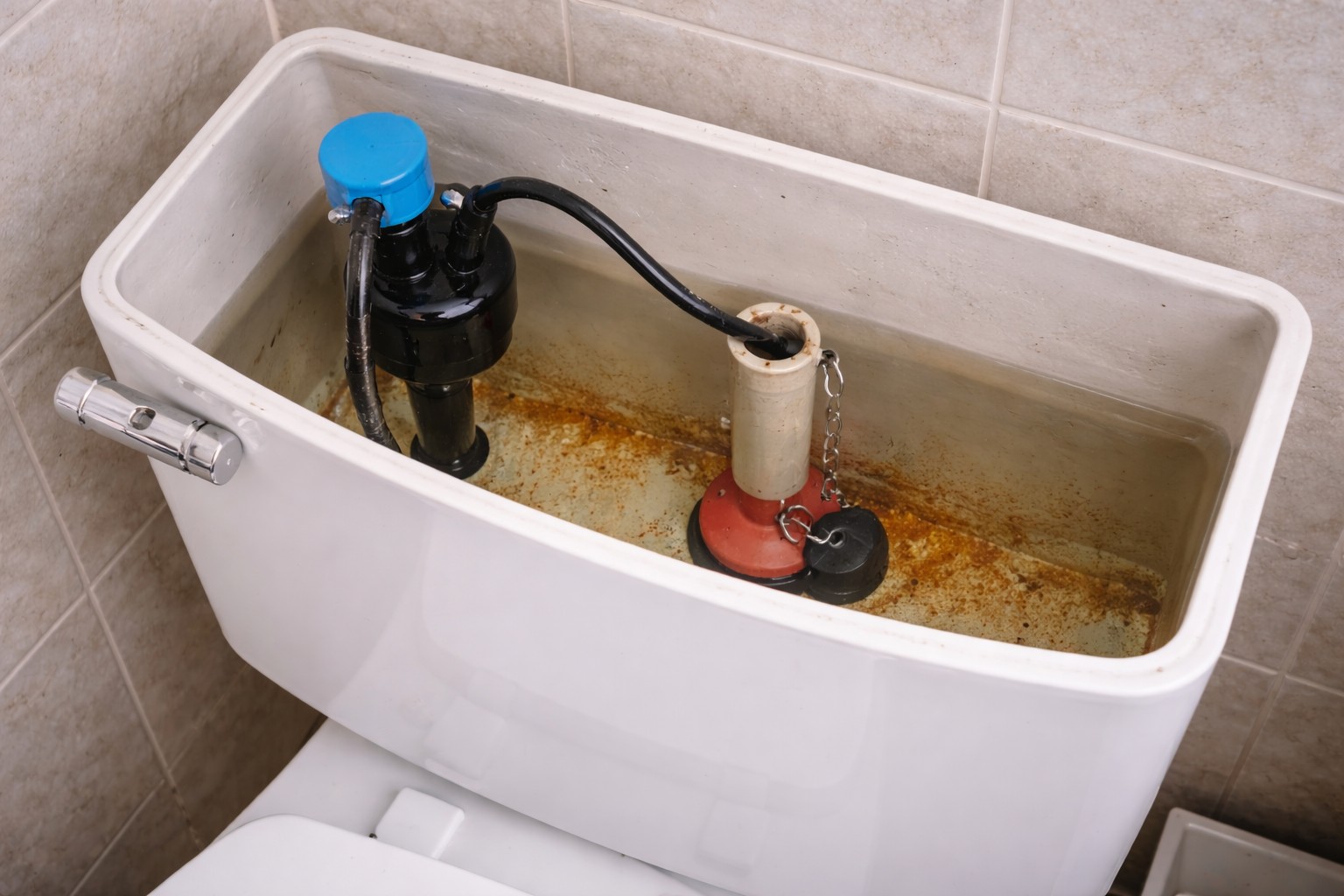
- Fill/flush settings: An overfilling tank or a faulty fill valve can send too much water during a flush, contributing to overflow.
- Related work: If recent plumbing work like filter changes or shutoff devices was done elsewhere, those systems can also affect flow—see Overflow after filter install and Overflow after smart shutoff trip for similar scenarios.
Step-by-Step What to Do
1. Stop and contain the water
- Shut the toilet shutoff valve clockwise. If that doesn’t stop water, turn off the main house supply.
- Remove the tank lid and press the flapper to prevent more water entering the bowl. Use a bucket or towels to catch water and protect the floor.
2. Verify model, rough-in and drain size
- Measure the rough-in: distance from finished wall to the bolt center on the flange. Compare with the toilet’s specification to confirm the model matches the rough-in.
- Confirm drain/trapway size and orientation match the home plumbing and the new toilet’s outlet. If the sizes or shape are different, the toilet may not seat properly and can overflow.
3. Inspect the wax ring and outlet alignment
- Carefully lift the bowl (with two people if needed) to inspect the wax ring and flange. Look for a crushed, displaced, or missing wax ring and for flange damage.
- Confirm the toilet outlet lines up with the flange and the trapway. If alignment is off, realign or replace the flange or use the correct wax ring thickness per manufacturer instructions.
4. Check for blockages and trap issues
- Use a closet auger to check the trap and the flange opening for obstructions. Remove debris left during installation.
- If you suspect a deeper clog, test other drains and consider running a sewer camera or calling a professional.
5. Re-seat carefully and test the tank
- If everything aligns, replace the wax ring and lower the bowl straight down onto the flange, tightening bolts evenly and gently.
- Adjust the fill valve and tank water level so the tank doesn’t overfill. Test a few controlled flushes while monitoring the base and drain for leaks or overflow.
6. If the problem persists, stop and escalate
- If repeated checks don’t find the problem or if the flange, drain, or rough-in need modification, call a plumber rather than forcing more DIY work.
What Not to Do
- Don’t reseat the toilet repeatedly without checking alignment—installation matters. Repeated seating can damage the flange, break the bowl, or misplace the wax ring.
- Don’t assume a long string of DIY attempts will fix a structural mismatch; a plumber is appropriate when measurements, flange repair, or drain work are required.
When to Call a Professional
- The flange is cracked, corroded, or set at the wrong height.
- You find a rough-in or drain size mismatch that requires a different toilet or flange relocation.
- There is a persistent clog or sewer backup beyond the closet flange.
- You’re unsure how to remove and reinstall the toilet safely or can’t stop the overflow with basic steps.
Safety Notes
- Always shut off the water before lifting a toilet. If the shutoff valve leaks, shut off the main supply.
- Wear gloves and eye protection when handling seals, old wax, and waste water.
- Avoid chemical drain cleaners in the flange or bowl during a mechanical inspection—these can harm pipes and are unnecessary for physical obstructions.
- Get help lifting heavy porcelain; dropping a bowl can cause injury and create sharp fragments.
Common Homeowner Questions
- Why did it overflow immediately after installation? A misaligned flange, wrong rough-in, or a damaged/missing wax ring often causes immediate overflow.
- Can I fix a misaligned toilet myself? Minor alignment and wax ring issues can be DIY if you’re comfortable lifting and re-seating the bowl; call a plumber for flange repair or rough-in relocation.
- Is a new toilet more likely to overflow than an old one? Not usually—new toilets can reveal pre-existing clogs or misfits because they may flush differently; the cause is typically installation or drain condition, not the tank itself.
For more related articles, see the nan hub.