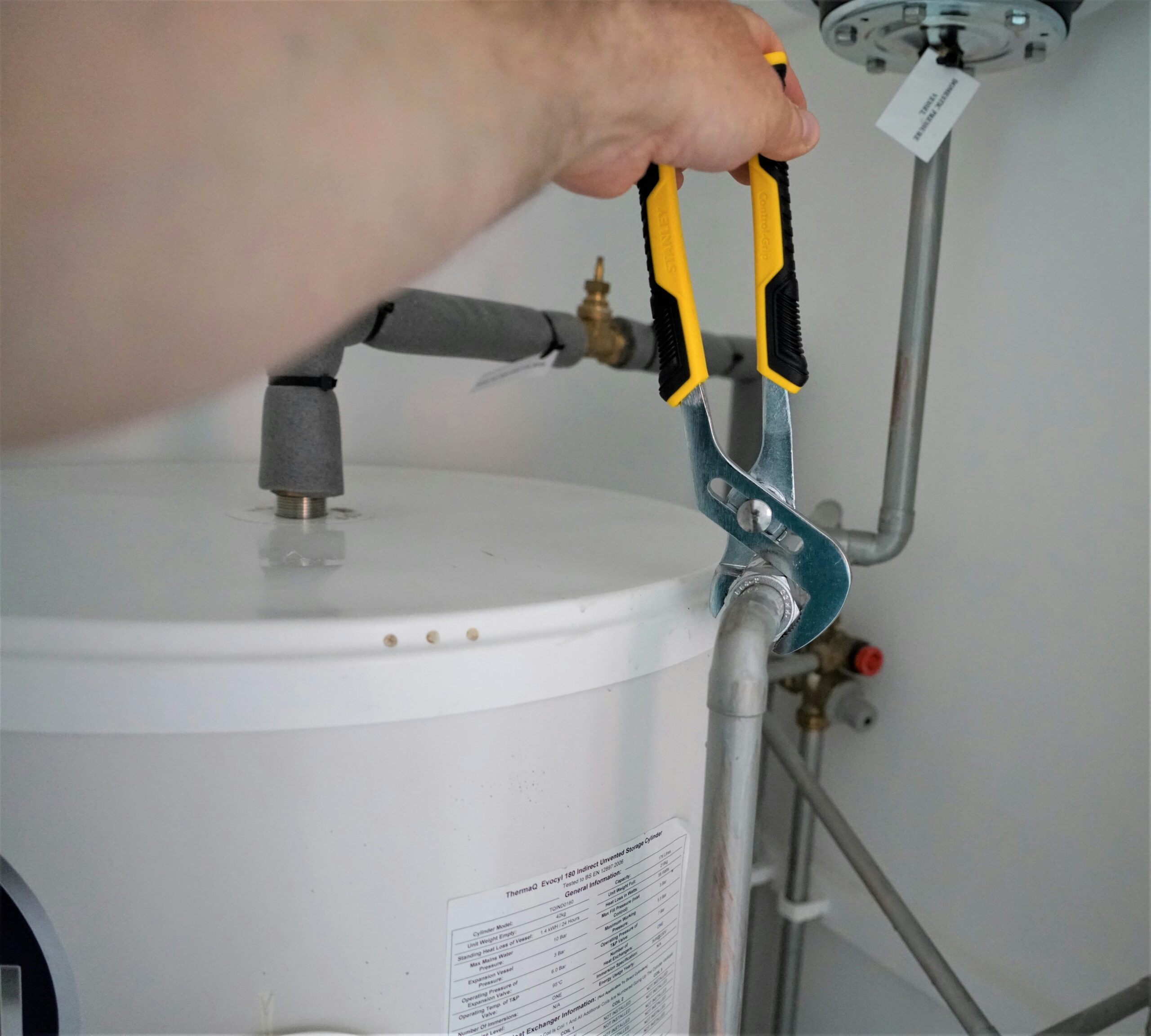
First identify where the overflow actually appears when hot water is used or a heater event occurs: toilet bowl, floor drain, a leaking joint or a relief discharge. Timing does not establish a direct heater-to-toilet pressure mechanism.
Stop added water and check hazards
For strong, widespread or unexplained gas-like fumes, exposure symptoms, or suspected high sewer-gas concentrations in an enclosed space, leave the building immediately and call the fire department or emergency services from outside. Avoid flames, switches and other ignition sources; do not remain to ventilate, sniff drains or investigate. Smell intensity does not measure the concentration. A faint localized drain odor without those warning signs calls for a different plumbing investigation; it does not automatically establish a fuel-gas leak.
If fuel gas is suspected, leave the building or affected area immediately. Do not operate valves, switches, plugs, appliances or phones there. Call the gas emergency service from a safe location well away, and wait for responders’ clearance.
Keep away from wet electrical equipment. Do not touch wet appliances, plugs or switches, or enter water to reach a breaker. When no gas leak is suspected, power may be isolated only from a safely accessible dry location; otherwise call an electrician or emergency help. Wet equipment needs qualified assessment before it is used again.
If a carbon monoxide alarm sounds or you suspect carbon monoxide exposure, get everyone outside immediately and call emergency services from safety. Carbon monoxide has no smell; an odor comparison cannot rule it out. Do not restart or repeatedly cycle a fuel-burning heater to investigate a possible combustion problem.
For wastewater rising from a drain or affecting several fixtures, stop adding water and keep affected appliances from discharging using only safely accessible dry controls when no gas emergency is suspected. Avoid sewage contact, keep children and pets away and arrange prompt drainage help. Notify building management or the sewer agency as appropriate. Do not run fixtures to locate a shared blockage.
Do not flush again while the bowl is high or the cause is unresolved. Closing a safely accessible identified toilet supply stop under its actual method can limit incoming fresh water; do not force a seized valve. It cannot block wastewater returning from a sewer. Gravity tanks, pressure-assisted, direct-feed and powered toilets differ: do not open a pressure vessel or apply a generic flapper/tank adjustment to every model.
Keep the actual event
- Actual receiving point and whether water rises from it or arrives there from a visible discharge/leak.
- Heater type/model, draw versus recovery/heating phase and safe existing observations.
- Any actual relief/backwash/primer connection, other affected drains and recent work.
Refill and heating are different events
A conventional storage heater normally takes replacement cold water as hot water is drawn; it is not a toilet-like periodic refill cycle. Heating that water can create expansion in the relevant closed zone. Neither event directly transmits potable pressure into an independent sanitary trap. A normal water-filled trap is a seal, not proof it is full of blockage.
Trace an actual input without a hot-water experiment
A fixture discharge, actual relief outlet, leak or designed equipment drain can add water to a receiver. The actual route and capacity matter. Keep clear of hot spray, steam and suspect pressure vessels; do not stand nearby through another cycle or shut the heater inlet and leave generic energy conditions unchanged as a cause test. Qualified assessment uses the actual heater procedure.
Relief is a safety function
T&P relief responds to temperature as well as pressure. Do not cap, plug, isolate or use it as routine drainage/control, or defer assessment of an unsafe safety device until a presumed tank repair. Preserve actual qualified service, safe energy state, refill and commissioning. Identify the actual receiving location before choosing a cause or repair.
Safe receiving and service boundaries
Use the event already observed, not another shower, washer drain, flush or bucket pour. A low-rate trickle passing does not certify a trap or shared drain for a flush. A normal trap retains seal water; that alone is not blockage. Have the actual receiving path assessed for recurrence, several affected fixtures, sewage outside a fixture or continuing unexplained rise. Any appropriate attended functional check follows actual correction, safe receiving capacity and model procedure; stop if water rises again.
If a cleaner may be present, identify the exact product and follow its label. Do not add another cleaner, acid, bleach, ammonia, vinegar or an improvised neutralizer. Do not plunge, snake or open the trap while hazardous residue may remain; tell the provider what was used. A rinse or elapsed time is not proof all residue is gone.
Keep cleanout caps closed. Do not loosen a cap to check a water level, watch a basin dump or release pressure; sewage and gas may escape. Do not climb to vents, enter pits or tanks, or use a flame to investigate an odor. Those checks need the appropriate qualified provider and controls.
A visible grate or cosmetic panel is different from a cleanout plug, retained trap, pressure housing or primer body. Do not open a pressure/waste boundary or tighten a live joint to discover its state. Required independent source/energy isolation, cooling, controlled release, verified absence of pressure/head, chemical clearance and safe handling come before service. Reassemble compatible parts and required protection before the actual commissioning test. Source and electrical hazards must be controlled before cleanup; use suitable restoration help for sewage or significant/inaccessible contamination.
Related situations
- Toilet overflows intermittently
- Pressure rises when water heater runs
- Floor Drain Overflows During Appliance Use
- Toilet Overflows with Clear Drain
Safety sources
- Wisconsin DHS: sewer-gas exposure and emergencies
- Con Edison: suspected gas leaks
- CDC: electrical hazards near water
- Madison Metropolitan Sewerage District: stop discharge and report sewer backup
- Example drain-opener label: restrictions on plunging, disposal operation and mixing
- CDC: carbon monoxide alarms and wet electrical devices
- A. O. Smith Bulletin 52: temperature and pressure relief functions
- Example electric-heater manual: filling and maintenance requirements
- Amtrol potable-tank example: condition and isolated unloaded precharge service