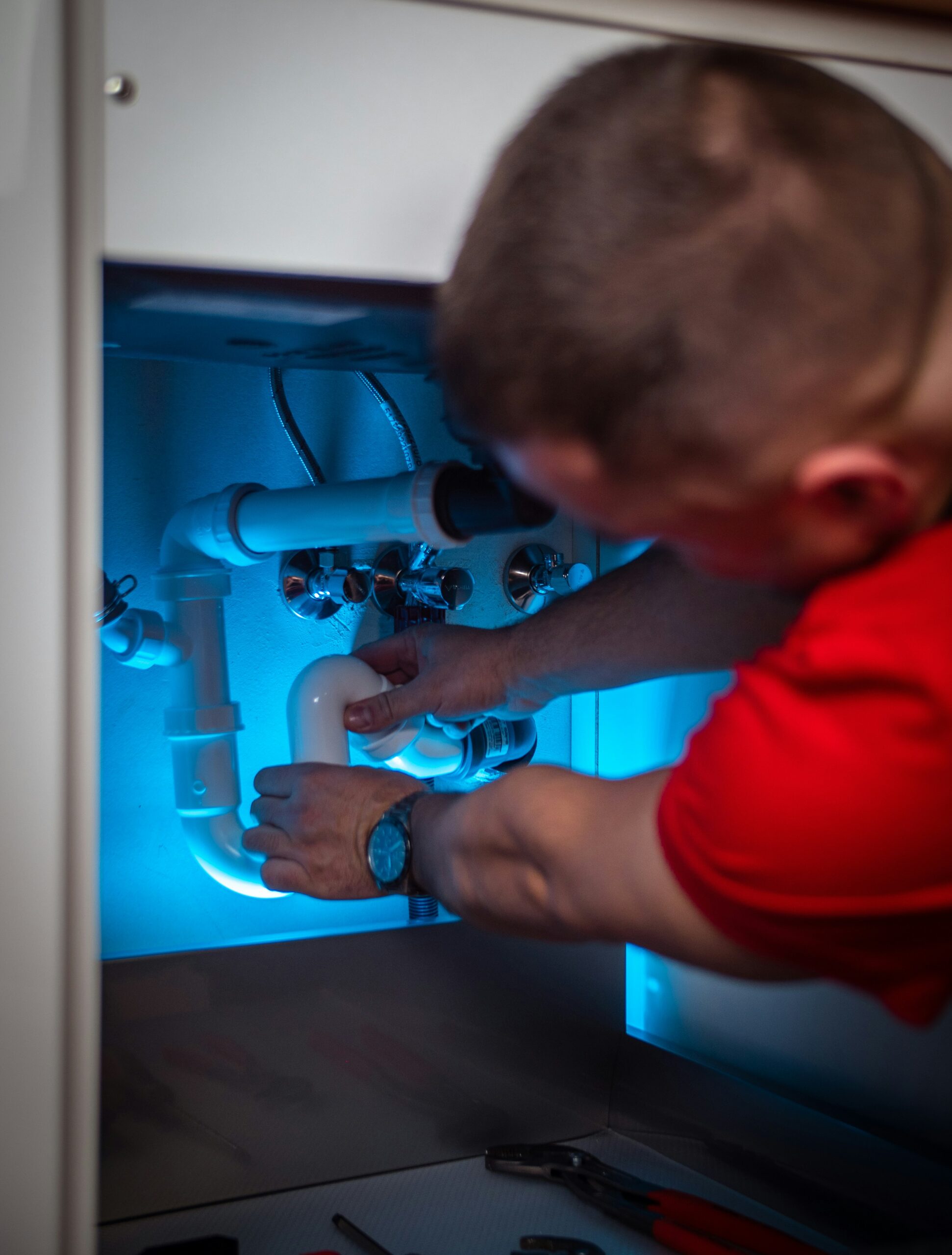
Quick Answer:
If a garbage disposal won’t run after you changed wiring, first turn the power off and try the disposal reset button. If that doesn’t work, check the switch and the outlet or the hardwired connections for loose or reversed wires. If you are unsure about any step, stop and call an electrician.
Why This Happens
When wiring is changed, a few common errors can stop a disposal from running: the circuit breaker or switch may be off, the disposal’s built-in overload reset may have tripped, the switch might be wired to the wrong side of the outlet, or hot and neutral wires could be swapped. Loose ground or damaged insulation can create a safety hazard. Sometimes the issue is unrelated to wiring and is a clog or jam—see Slow drain after disposal added for drain-related problems, or check if a new sound appears under load in the motor as described in Noise started after install.
Step-by-Step What to Do
Step 1 — Confirm power is off
- Go to the breaker panel and turn off the circuit that feeds the disposal. If you’re not sure which breaker, turn off the main breaker before you open any junctions or receptacles.
- Verify power is off with a non-contact voltage tester or a plug-in tester at the outlet. If you don’t have a tester, do not proceed with exposed wiring—call an electrician.
Step 2 — Check the disposal reset button
- With power off, locate the red or black reset button on the bottom or side of the disposal. Press it in firmly; if it had tripped, it will click and stay in.
- Restore power briefly and test the switch. If the motor hums but doesn’t run, turn the breaker off again and check for jammed blades before trying a manual reset tool or hex key designed for that model.
Step 3 — Verify the switch and outlet wiring
- Confirm the wall switch actually controls the disposal outlet. With power on and using a tester, flip the switch to see if voltage appears at the outlet.
- If the switch controls the wrong outlet or nothing happens, turn power off and open the switch and outlet boxes to look for loose screw terminals, pushed-back wires, or a switch loop wired incorrectly.
Step 4 — If the unit is hardwired, check hot, neutral, and ground
- With power off and after confirming the breaker is off, open the disposal’s wiring compartment. Verify the supply hot (usually black) is connected to the disposal hot, the neutral (usually white) is connected to neutral, and the ground (bare or green) is attached to the metal ground screw or ground conductor.
- Look for signs of overheating, loose wire nuts, or bare copper touching metal parts. Tighten connections and replace damaged wires or wire nuts before restoring power.
Step 5 — Test carefully, then stop if unsure
- After tightening and confirming connections, restore power and test the disposal once. If it still doesn’t run or you notice sparks, burning smell, or frequent tripping, cut power immediately.
- If any step makes you uncomfortable or you can’t identify the problem, stop and hire a licensed electrician.
What Not to Do
- Don’t test electrical fixes repeatedly if you’re unsure—stop and get an electrician if wiring/circuit details aren’t clear.
- Don’t touch exposed wires with the power on or use a metal tool inside the disposal while it has power.
- Don’t assume a wire color is always correct; wiring colors can vary on older homes and wrong assumptions can be dangerous.
When to Call a Professional
- If you cannot confirm the correct breaker or you lack a voltage tester.
- If wires are burned, insulation is melted, wire nuts are loose, or you see arcing.
- If the disposal is hardwired and you’re not confident identifying hot/neutral/ground or fixing a switch loop.
- If the disposal hums but won’t turn or the circuit keeps tripping after you’ve checked the reset and wiring.
Safety Notes
- Always turn off the circuit breaker before working on kitchen electrical fixtures and verify with a tester.
- Use insulated tools and wear eye protection when working under the sink.
- If you don’t have a non-contact voltage tester, don’t open live wiring—hire a pro.
- When in doubt, an electrician will be safer and often faster than continuing uncertain repairs yourself.
Common Homeowner Questions
- Q: My breaker didn’t trip but the disposal won’t run — what next?
A: Confirm power at the outlet or wiring with a tester, then check the reset button and connections; call an electrician if power is present but the unit won’t start. - Q: Can I swap the wires to make it work?
A: No—do not swap wires if you aren’t sure which is hot, neutral, or ground; incorrect connections are dangerous. - Q: Is it likely a bad disposal or bad wiring?
A: Both are possible; humming or burning smells point to the unit, while no power or intermittent power points to wiring or a switch issue.
For more related articles, see the Post-Disposal Install Plumbing Failures hub.