Quick Answer:
Stringy or fibrous food (celery, corn husks, onion skins, artichoke leaves, banana peels) can wrap around the disposal’s grinder and trap water in the sink. Turn the disposal off, remove any visible strands from the throat, then retest with plain water. If the sink still fills, follow the steps below before calling a pro.
Why This Happens
Most garbage disposals are designed for small, soft scraps. Long or stringy fibers don’t get chopped into tiny pieces; they tangle around the impeller or collect at the throat and in the trap. That partial blockage slows or stops drainage so water pools in the basin. Sometimes the impeller can jam, making the unit run but not clear material.
Step-by-Step What to Do
1. Cut power and stop the water
Switch the disposal off at the wall, unplug it if easy to reach, or turn off the circuit breaker. Do not stick your hand into the unit while it might be powered. Stop running water until you’re ready to test again.
2. Look into the disposal throat
Remove the sink stopper if present and shine a flashlight down the throat. Use long needle-nose pliers or tongs to pull out visible strands and bunches of fibrous debris. Remove fibrous debris from the disposal throat and retest with plain water.
3. Restore power and test with cold water
Once debris is cleared and the unit is safe, plug the disposal back in or restore the breaker. Run a full, steady stream of cold water into the sink and turn on the disposal for 10–20 seconds to flush remaining material. Cold water helps keep fats solid and move solids through.
4. Reset or free a jam
If the disposal hums or won’t spin, press the small red reset button on the bottom. If your model has a hex socket under the unit, use the manufacturer’s crank (usually a 1/4″ hex) to manually free the impeller before powering on again.
5. Check the P-trap if draining remains slow
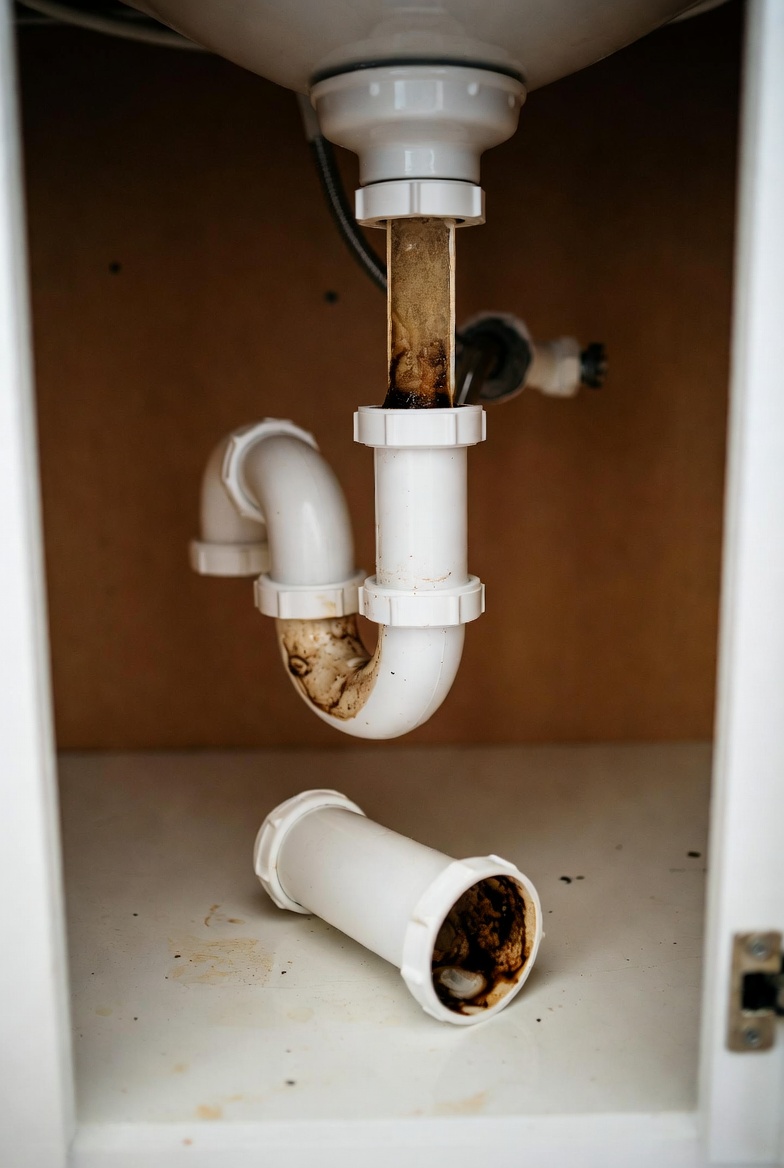
If the basin still fills after the disposal runs, put a bucket under the P-trap and remove it to look for trapped debris. Clean the trap and reassemble. If a clog is farther down the drain, consider trying a hand auger carefully or call a plumber. For persistent backups, see Backup after drain snaking.
What Not to Do
- Do not grind stringy foods without plenty of water flow.
- Do not put your hand into the disposal while it is plugged in or could be turned on.
- Do not pour boiling water or harsh drain chemicals into the disposal; chemicals can damage seals and are dangerous if the unit is later opened.
When to Call a Professional
Call a plumber if:
- Water still pools after removing debris and checking the P-trap.
- The disposal is repeatedly jamming or making unusual noises.
- There is a sewer smell or recurring backups from multiple drains. If you experience backups after heavy cooking or large meal cleanup, a professional can inspect the line—see Backup after heavy meal prep.
Safety Notes
- Always disconnect power before reaching into the disposal. Use the circuit breaker if you can’t reach a plug.
- Use tools (pliers, tongs, flashlight) rather than bare hands to remove debris.
- Wear gloves and eye protection when working under the sink or disconnecting the trap.
- If you are uncomfortable with plumbing tasks or the clog is deep, hire a licensed plumber.
Common Homeowner Questions
- Why did this happen with a mostly-working disposal? — Stringy foods and grease combine to make mats that a running disposal won’t clear on their own.
- Can I prevent it? — Run plenty of cold water, cut fibrous items small, and avoid feeding large bundles of stringy material to the unit.
- Is a clogged disposal covered by appliance warranty? — Warranties vary; check your appliance paperwork. Many cover mechanical failure but not misuse-related clogs.
For more related articles, see the Sink Backs Up When Disposal Runs hub.