Quick Answer:
If you restart a disposal after it has sat unused and the sink backs up, it’s usually a clog or a jam that prevents water from flowing down the drain. First clear the standing water, then run the disposal in short bursts with cold running water to see if flow normalizes. If the unit hums or won’t clear the debris, stop and follow safe troubleshooting steps or call a pro.
Why This Happens
- Grease, food particles and debris can harden in the trap or pipe when a disposal sits unused, creating a blockage that sends water back into the sink.
- A disposal that hums but doesn’t grind often means the motor is trying to turn but the impellers are jammed on a hard object.
- If the disposal runs but the sink still fills, the clog may be downstream of the unit, in the trap or the house drain line.
- Longstanding standing water can make debris more compact and harder to move until you remove the water and let the unit work in short bursts.
Step-by-Step What to Do
1. Cut power and protect yourself
- Turn the disposal switch off. For extra safety, unplug the unit or switch off the circuit breaker feeding it before you do any work.
- Wear gloves and eye protection if you plan to reach into the sink area or remove the trap.
2. Clear standing water
- Scoop or bail standing water into a bucket or use a cup to remove as much water as you can. Less water in the bowl makes it easier to see and work on the problem.
3. Try the disposal in short bursts with running water
- With the power still off, reset the disposal if it has a reset button. Restore power only when you are ready.
- Run cold water and turn the disposal on in short bursts (a few seconds at a time). This helps break up loose debris and flush it down the drain without overwhelming the line.
- Stop immediately if the unit hums but won’t turn or the sink begins to back up again.
4. Check and clear the trap if flow doesn’t improve
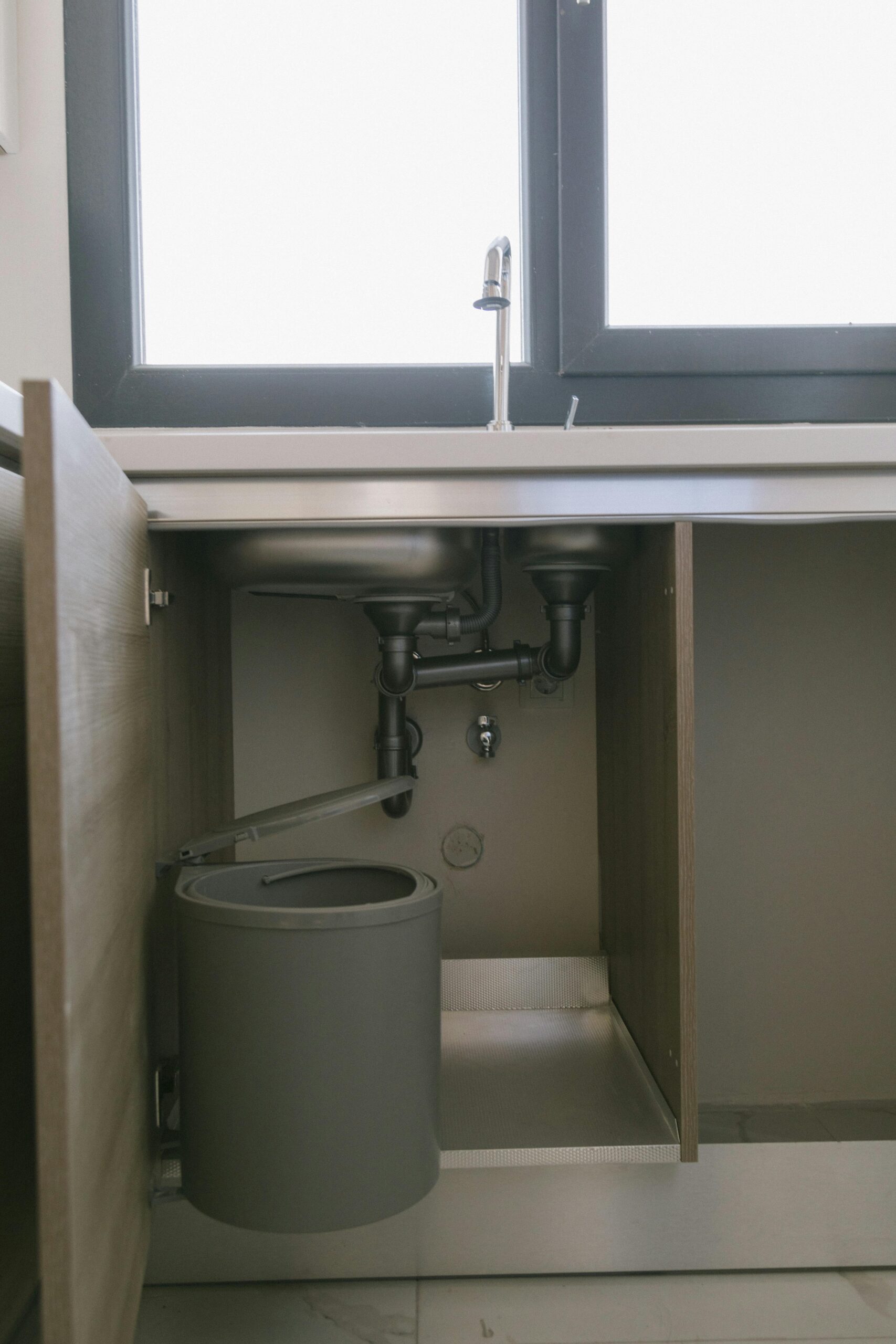
- Place a bucket under the P-trap, loosen the slip nuts and remove the trap to check for clogs. Clean it out and reassemble carefully.
- If you’re not comfortable doing this, skip to the “When to Call a Professional” section.
5. Free a jam safely
- Only after power is disconnected, try freeing a jam with a wooden spoon or with the manual hex wrench in the recess under many disposals. Do not put your hand in the disposal.
- If freeing the jam doesn’t help, or the disposal continues to hum, stop and get help.
For related situations, see Sink fills when disposal hums and Sink fills when disposal drains.
What Not to Do
- Do not restart a jammed disposal without clearing standing water.
- Do not stick your hand into the disposal or reach down into the drain while the power could be on.
- Do not pour strong chemical drain cleaners into a disposal; they can damage the unit and the plumbing.
- Do not try aggressive mechanical force (like forcing a drill or similar tool) into the disposal’s grinding chamber.
When to Call a Professional
- The sink still backs up after you removed standing water and tried short bursts of operation.
- You cannot clear the clog in the trap or you find corrosion or a leak when you remove parts.
- The disposal hums continuously, trips the circuit, or you smell sewer gas or see multiple fixtures backing up — these suggest a bigger drain or sewer problem.
- You don’t feel safe performing the steps described above.
Safety Notes
- Always disconnect power before reaching into the disposal or removing the trap.
- Use tools such as pliers or a hex wrench rather than your hands when trying to free objects. Wear gloves and eye protection.
- Remove as much standing water as practical before restarting a disposal; running it submerged increases the chance of further clogging.
- Avoid chemical cleaners in the disposal; if a chemical was previously used, ventilate the area and avoid mixing products.
Common Homeowner Questions
-
Q: Why did it back up immediately when I turned it on?
A: A preexisting clog or jam pushed water back into the sink as soon as the disposal tried to move debris.
-
Q: Can I clear it with a plunger?
A: A sink plunger on the bowl can help loosen a trap clog; use short plunges and avoid forcing water if the disposal is jammed.
-
Q: Is it safe to use the reset button and try again?
A: Yes, but only after you removed standing water and confirmed the unit is not jammed; if it still hums, stop and disconnect power before further checks.
For more related articles, see the Sink Backs Up When Disposal Runs hub.