Quick Answer:
If water rises in the sink when you run the garbage disposal, stop using it and run a quick check: turn the disposal on with cold water flowing, then shut the disposal off and see whether the sink drains immediately after shutoff. If it drains, the problem is likely a minor clog or air restriction; if not, the blockage is deeper in the trap, drain line, or shared dishwasher line and you’ll need further steps or a plumber.
Why This Happens
When a disposal runs and the sink fills instead of draining, something is stopping the water and food waste from moving down the drain. Common causes:
- P-trap or drain pipe clogged with grease, coffee grounds, fibrous scraps, or small bones.
- Disposal jam prevents grinding and allows food to build up at the outlet.
- Shared drain with the dishwasher: backflow from the dishwasher or a clogged connection.
- Poor venting or a partial blockage farther down the line causing slow flow.
- Occasional sewer main issues (less common) that affect multiple drains.
If you notice the other basin or dishwasher water rising too, that often points to a shared-line problem such as a clog at or after the trap. For those situations see the related notes like Sink fills when disposal drains and Sink fills when disposal and dishwasher run.
Step-by-Step What to Do
1. Stop and make the area safe
Turn off the disposal and the faucet. If the disposal is still humming or jammed, switch it off at the wall and turn off the breaker for that circuit before you touch anything.
2. Run the disposal with cold water and observe
Turn on a steady stream of cold water, then switch the disposal on for a few seconds. After a short run, turn off the disposal but keep the water running for a moment to see whether the sink drains immediately after shutoff. This check helps distinguish between a grinder/jam issue and a blockage in the drain line.
3. Check for a jam and reset the disposal
- If the disposal made a grinding noise or hummed without turning, use the manufacturer’s hex wrench at the bottom socket (if provided) to free the impeller. Follow the model’s instructions.
- Press the reset button on the unit and try the cold-water test again.
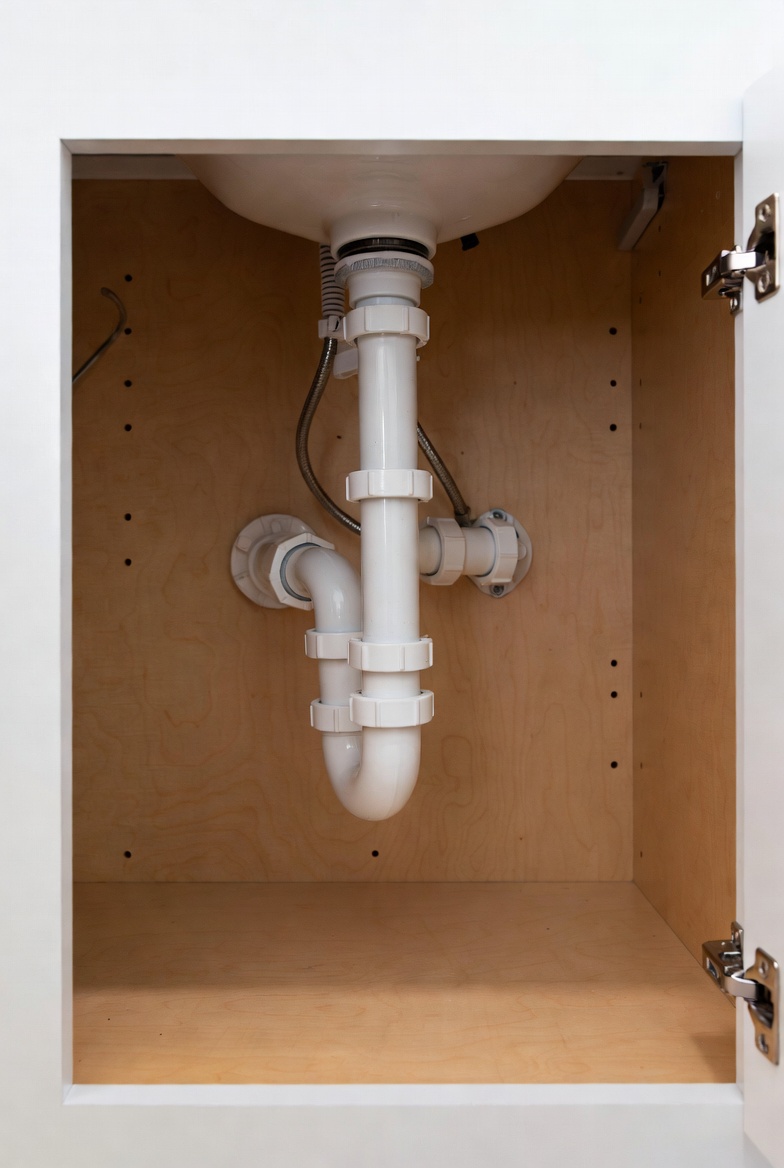
4. Inspect and clear the P-trap
Place a bucket under the P-trap, loosen the slip nuts, and remove the trap to check for blockages. Clear any debris, rinse the trap, and reassemble. Test the drain with cold water and the disposal (if needed) after reassembly.
5. Check the dishwasher connection and air gap
If you have a dishwasher, inspect the hose that runs to the disposal or the underside of the air gap. A clogged hose or a missing/incorrectly installed high loop can cause backflow when the disposal runs.
6. Use a drain auger for deeper clogs
If clearing the trap didn’t help, feed a small drain auger into the branch line to break up deeper clogs. Work carefully and avoid forcing the cable if you meet strong resistance.
7. Re-test and observe
After each action, run cold water and test the disposal briefly, then shut it off and watch whether the sink drains immediately. Note any unusual noises or smells and whether other fixtures are affected.
What Not to Do
- Do not keep running the disposal while the sink is filling; if backups persist, professional help is appropriate.
- Do not stick your hand or fingers into the disposal opening, even with the unit off — use tools designed for the job.
- Avoid pouring large amounts of chemical drain cleaners into a disposal; they can damage the unit and harm pipes, and they’re dangerous if the mechanical parts need manual clearing.
- Don’t force a drain snake or cable if it won’t pass — you can damage pipes or the disposal.
When to Call a Professional
Contact a licensed plumber if any of the following apply:
- Water backs up from multiple fixtures (kitchen plus basement or other sinks).
- There is a strong sewer odor or raw sewage in the sink.
- The disposal hums but won’t turn and you can’t free it with the tool supplied or a reset.
- Repeated clogs recur after you clear them, suggesting a line problem or failing disposal.
- You’re uncomfortable working under the sink or dealing with the electrical side of the disposal.
Safety Notes
- Always switch the disposal off at the wall and, when possible, turn off the circuit breaker before working on it.
- Use tools rather than your hands to clear blades or trapped items.
- Wear gloves and eye protection when removing the trap or using a drain auger.
- Keep water on at a low steady stream when testing to flush debris, but do not run hot water into a greasy clog — cold water helps solidify fats so they can be flushed away.
Common Homeowner Questions
-
Q: Why does the sink only back up when I use the disposal?
A: That usually means the clog is near the disposal outlet, in the trap, or in a hose/shared connection. -
Q: Can I fix this myself or do I need a plumber?
A: Many clogs in the trap or a jammed disposal can be fixed by a homeowner; call a plumber if the problem persists, affects multiple drains, or smells like sewage. -
Q: Is it safe to run the disposal while the sink is full to try to push the clog through?
A: No. Do not keep running the disposal while the sink is filling; that can worsen a blockage or damage the unit.
For more related articles, see the Sink Backs Up When Disposal Runs hub.