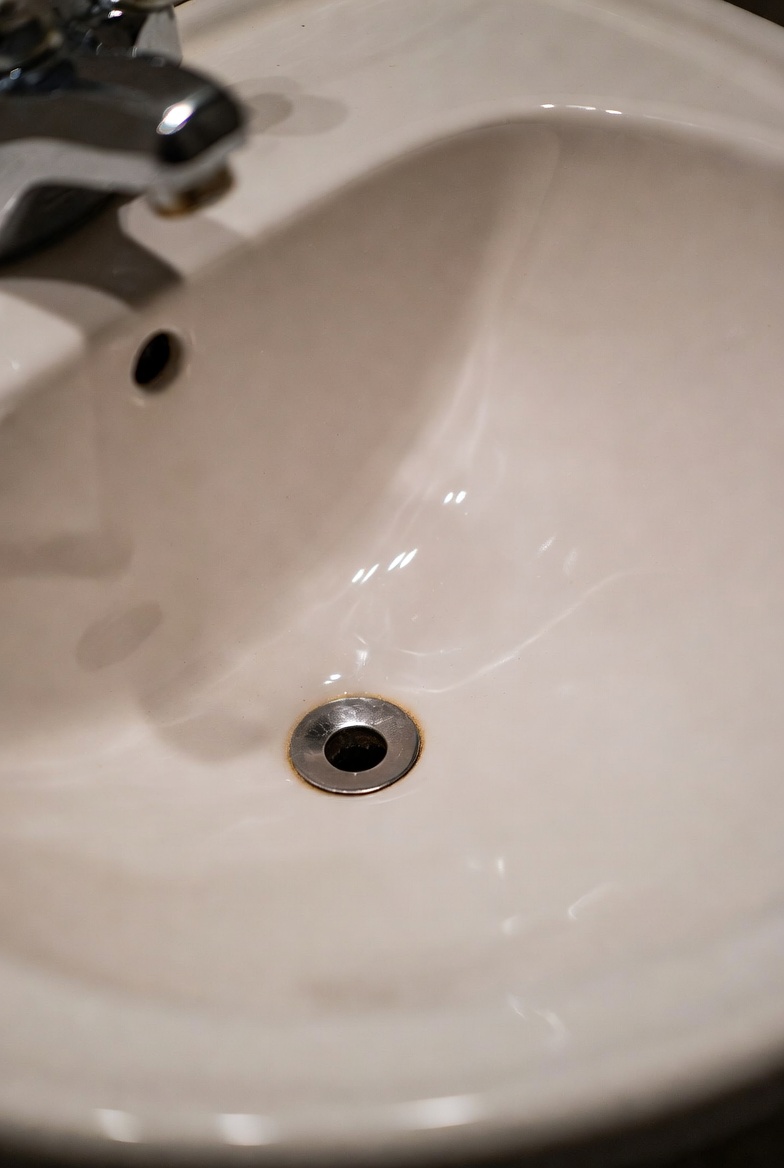
Quick Answer:
If you see the overflow opening packed with slime, it often means buildup only at the visible hole. Start by pulling out the loose gunk with a small brush or a straightened zip tie used as a hook, then flush the channel with warm water. If water still doesn’t move or you smell sewer gas, stop and consider professional help.
Why This Happens
Overflow channels run just behind the visible opening on sinks, tubs, and toilets. They collect soap scum, shaving residue, hair, skin oil, and mineral deposits. Because they only see occasional flow, that material can settle and form a slimy plug near the mouth of the opening while the deeper channel remains mostly clear. Stagnant water and warm bathroom temperatures help bacteria and mold grow, which makes the slime sticky and harder to remove.
Step-by-Step What to Do
Step 1 — Get ready
Gather a small nylon brush (a toothbrush or narrow bottle brush works), a plastic zip tie you can bend into a hook, rubber gloves, and a cup for rinsing. Lay down towels to catch drips and have a trash bag ready for the pulled-up gunk.
Step 2 — Remove visible slime
Insert the brush or the hooked zip tie gently into the overflow opening and pull toward you. Work slowly and feel for softened material. The goal is to scrape and pull out the loose bits at the mouth of the channel. Avoid forcing a rigid metal rod deep into the channel.
Step 3 — Flush with warm water
After you remove the visible gunk, pour a steady stream of warm (not boiling) water into the overflow opening from a cup or run the faucet so water flows into the opening. This helps wash remaining residue down the channel. Repeat brushing and flushing until the water runs through without backing up.
Step 4 — Final clean and check
Wipe the area around the opening with a mild disinfectant or diluted vinegar solution to remove slime and reduce odors. Run water at the normal fixture flow and watch the overflow opening—if water backs up or drains slowly, there may be a deeper blockage.
Step 5 — Monitor over the next few days
Check the opening over the next 48 hours. If slime returns quickly or the channel backs up when you use the fixture, the issue may be deeper in the overflow pathway or in the main drain.
What Not to Do
- Do not pack the overflow opening with tools that can break the channel lip or scratch porcelain.
- Do not insert sharp metal objects or rigid wire into the channel — this can damage the lining and cause leaks.
- Do not pour strong chemical drain cleaners into the overflow. They are rarely effective here and can harm finishes or plumbing seals.
When to Call a Professional
Call a plumber if:
- Brushing and flushing don’t clear the flow or the overflow consistently backs up.
- You notice a persistent foul smell that doesn’t improve after cleaning.
- Water is leaking from around the overflow area or into spaces behind fixtures.
If the problem follows a specific activity, see Overflow backing up after shaving. If it happens without a clear trigger, see Overflow backs up randomly.
Safety Notes
- Wear gloves and eye protection if the slime is thick or you have cuts on your hands.
- Use warm water only — boiling water can crack porcelain or damage sealants.
- Avoid mixing cleaners. If you use a mild disinfectant after mechanical cleaning, rinse thoroughly.
- Keep electrical devices away from the work area to avoid water contact.
Common Homeowner Questions
- How long will the cleaning take?
10–20 minutes for a simple surface clean; longer if the buildup is heavy.
- Can I prevent this from coming back?
Yes—wipe the area regularly and run warm water into the overflow once a week.
- Will bleach or vinegar dissolve the slime?
They can help with odors and surface bacteria, but you should remove as much physical gunk first and rinse well.
For more related articles, see the Overflow Channel Backups hub.