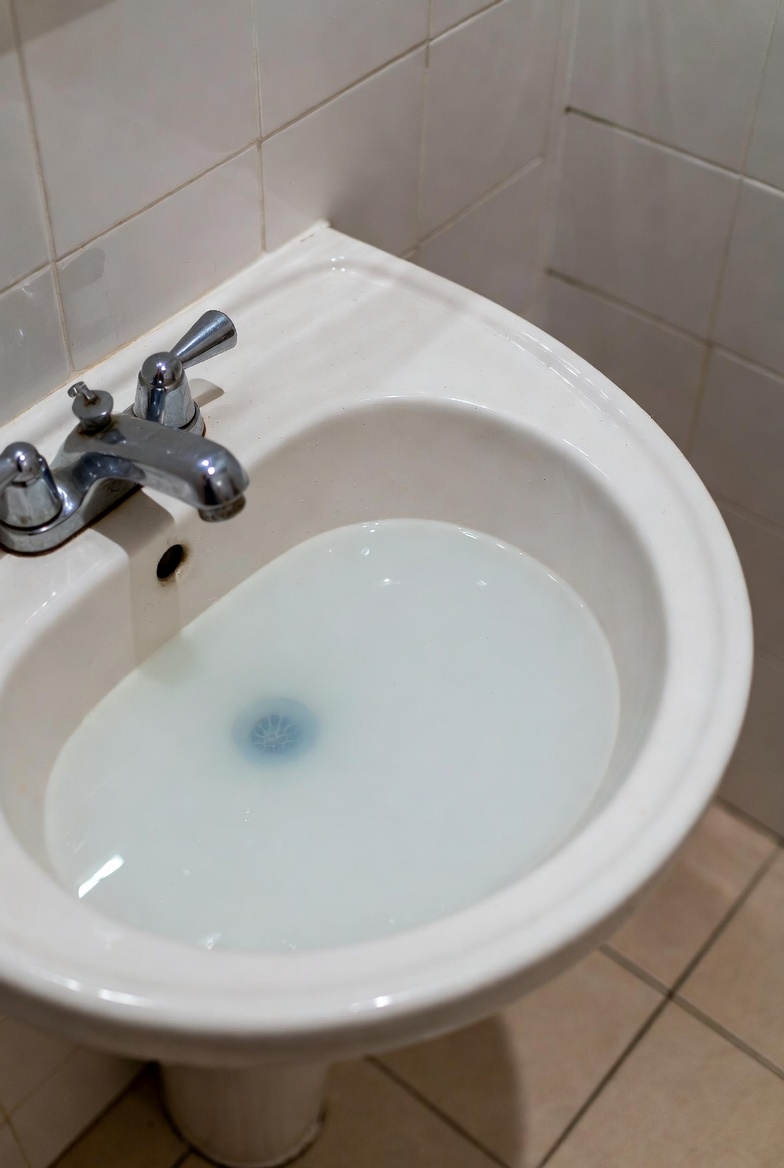
Quick Answer:
A partial clog or a trap that’s holding debris is the usual cause. Water may run at first then return because the flow briefly clears a path then stalls. Start by stopping use and testing the sink so you can see whether water returns quickly.
Why This Happens
Several common issues make a sink drain, then back up:
- Hair, soap scum, or grease collecting in the P-trap or the pipe just past it.
- A shifting blockage: running water can temporarily move debris, letting water pass briefly before it settles again.
- Vent or downstream problems — if other fixtures are slow or gurgle, the vent system or main line can be involved.
If it’s a bathroom sink, the cause is often hair or toothpaste and shaving residue — see Bathroom sink stops draining mid-use for details on that situation.
Step-by-Step What to Do
1. Stop running water
Don’t keep the tap on. Let the sink sit so you can observe what happens when you run a short test.
2. Remove obvious debris
Pull out the stopper or lift the strainer and clear any visible hair or gunk. A gloved hand or tweezers is usually enough.
3. Fill and drain the sink while watching if water returns after a few seconds
Fill the basin a few inches, then open the drain and watch closely. If water flows away and doesn’t come back, the problem may be minor. If it returns quickly, that shows a partial blockage close by.
4. Try a plunger carefully
Use a sink plunger (not a toilet plunger) and seal around the drain. Give a few steady plunges rather than frantic force. If plunging clears the line, run water again to confirm the flow stays clear.
5. Check the P-trap
Place a bucket under the trap, loosen the slip nuts and remove the trap to clear trapped debris. Clean it and test the drain again before reassembling.
6. Observe other fixtures
Run water in nearby sinks, tubs, or the toilet. If multiple drains are slow or gurgle, the issue may be further down the line and you may need professional help.
7. When hair or shaving bits seem likely
If you notice a lot of hair or shaving residue, treat the area gently and consider changing your habits or adding a hair catcher. For specific shaving-related stoppages, see Drain stops after shaving.
What Not to Do
- Do not keep forcing water if it is backing up quickly.
- Do not pour large amounts of caustic drain cleaner down a partially backed-up sink; they can be dangerous and often don’t reach the clog.
- Do not use an electric auger or drill-aided snake unless you have experience — you can damage pipes or push the clog further.
When to Call a Professional
- Backups affect multiple fixtures or the toilet.
- There’s sewage odor or raw sewage backing up — stop use and call immediately.
- You removed the P-trap and the line still backs up, or plunging and trap cleaning don’t help.
- Frequent repeat blockages despite cleaning.
Safety Notes
- Wear gloves and eye protection when working on drains; trapped water can contain bacteria.
- Catch water and debris with a bucket when opening the P-trap to avoid spills.
- If you’ve already used chemical cleaners, ventilate the area and avoid mixing products — chemicals can react dangerously.
Common Homeowner Questions
-
Q: Why did it clear briefly and then come back?
A: A partial clog moved enough to let water pass, then settled back into place. -
Q: Will a plunger always fix it?
A: Not always—plunging often helps for close clogs but deeper or stubborn blockages may need more work. -
Q: Is this an emergency?
A: If only the one sink is affected and no sewage is present, it’s usually manageable; call a pro if multiple fixtures back up or sewage appears.
For more related articles, see the Sink Drains Then Suddenly Stops hub.