Check for an emergency first
For strong, widespread or unexplained gas-like fumes, exposure symptoms, or suspected high sewer-gas concentrations in an enclosed space, leave the building immediately and call the fire department or emergency services from outside. Avoid flames, switches and other ignition sources; do not remain to ventilate, sniff drains or investigate. Smell intensity does not measure the concentration. A faint localized drain odor without those warning signs calls for a different plumbing investigation; it does not automatically establish a fuel-gas leak.
If fuel gas is suspected, leave the building or affected area immediately. Do not operate valves, switches, plugs, appliances or phones there. Call the gas emergency service from a safe location well away, and wait for responders’ clearance.
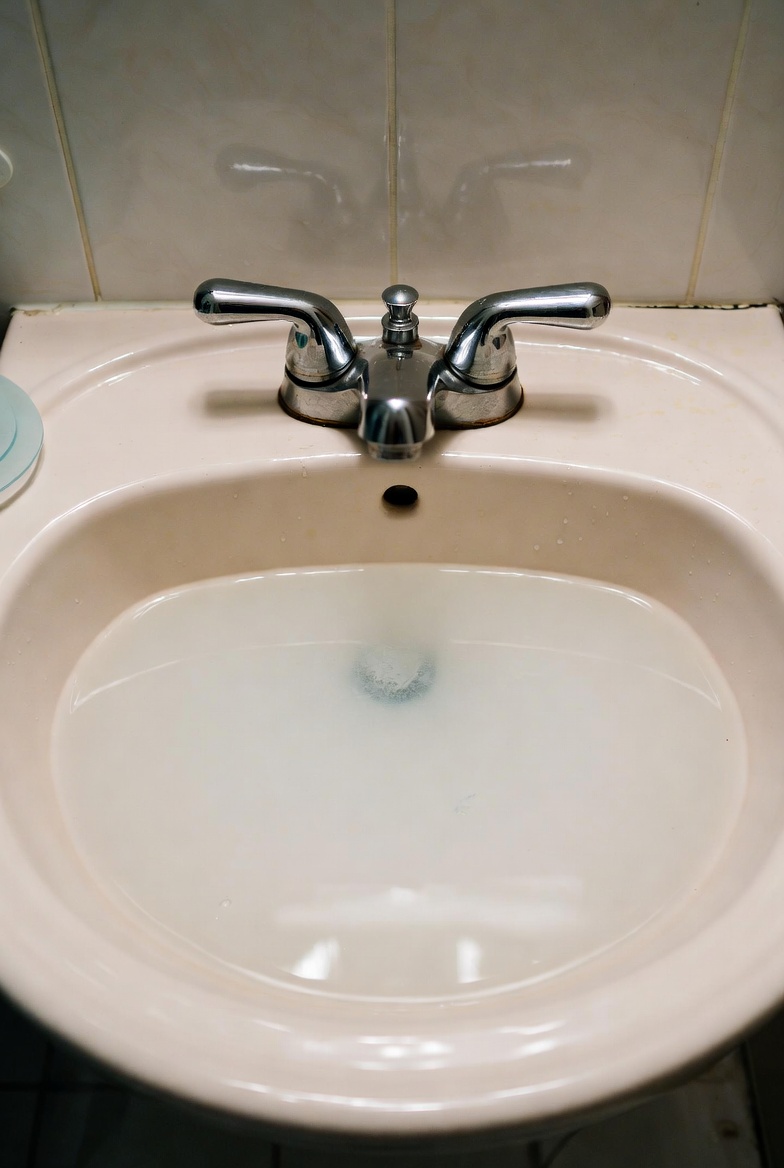
When a bathroom sink stops draining during use, turn off the tap and keep the event history. A fast rise after stopper movement does not locate a clog near the throat or establish a safe cable size. Check the actual stopper and ordinary accessible debris only after chemical, sewage and other hazards are excluded.
Useful details to record
- What was being washed and whether jewelry or another object may have entered.
- The stopper position, recent faucet or pop-up work and any earlier slowdown.
- Other affected drains already noticed, leaks and any product added.
What the pattern can tell you
- The stopper does not open normally. Identify its retention and linkage. Many cannot simply be pulled straight out.
- An object is missing. Do not push it farther in or prescribe an auger size from the symptom. Tell the provider what fell in.
- The basin fills quickly. This shows inadequate drainage under that use, not an exact obstruction location.
What to do next
- During an active backup, stop adding water and keep connected appliances from discharging, only using safely accessible dry controls when no gas emergency is suspected. Do not run other fixtures or a full basin to reproduce the event. Keep people and pets away from wastewater; arrange prompt drainage help for sewage or several affected fixtures.
- Check the chemical history before touching the drain. If a drain opener or other chemical may remain, follow its exact label, keep people clear and tell the service provider what was added. Do not plunge, snake, open a trap, run a disposal or improvise a neutralizer while hazardous residue may remain. A guessed wait or rinse does not establish safety.
- For a sound isolated plain-water sink, clean a removable stopper under the actual instructions and wipe accessible debris into the trash. Do not force a retained mechanism or probe an unknown path with wire.
- The linked general bathroom guide provides bounded plunger and accessible serviceable-trap care. Keep the faucet off, contain retained cool water and reassemble with correct washers and alignment before any controlled leak check.
- Do not rinse a removed trap by running the sink into a disconnected drain, use a hot-water purge or escalate blindly to a 3/8-inch or 1/2-inch cable. Stop for leakage, recurrence, inaccessible material or several affected fixtures and obtain help.
Does an abrupt stop mean it is an easy local clog?
No. A local stopper or trapped object is possible, but abrupt timing alone does not prove location or difficulty. What was actually seen or removed, and the result after correct reassembly, provide better evidence than the speed of the rise.
Related situations
- Sink stops draining after faucet replacement
- Sink drains fine then suddenly clogs
- Sink Drains Then Suddenly Stops
Safety sources
- Con Edison: suspected gas leaks
- Wisconsin DHS: sewer-gas exposure and emergencies
- Delta example: identifying and removing a retained sink stopper
- Example drain-opener label: restrictions on plunging, disposal operation and mixing
- Manufacturer kitchen-sink guide: strainer, plunger and reassembly sections
- Madison Metropolitan Sewerage District: responding to a sewer backup