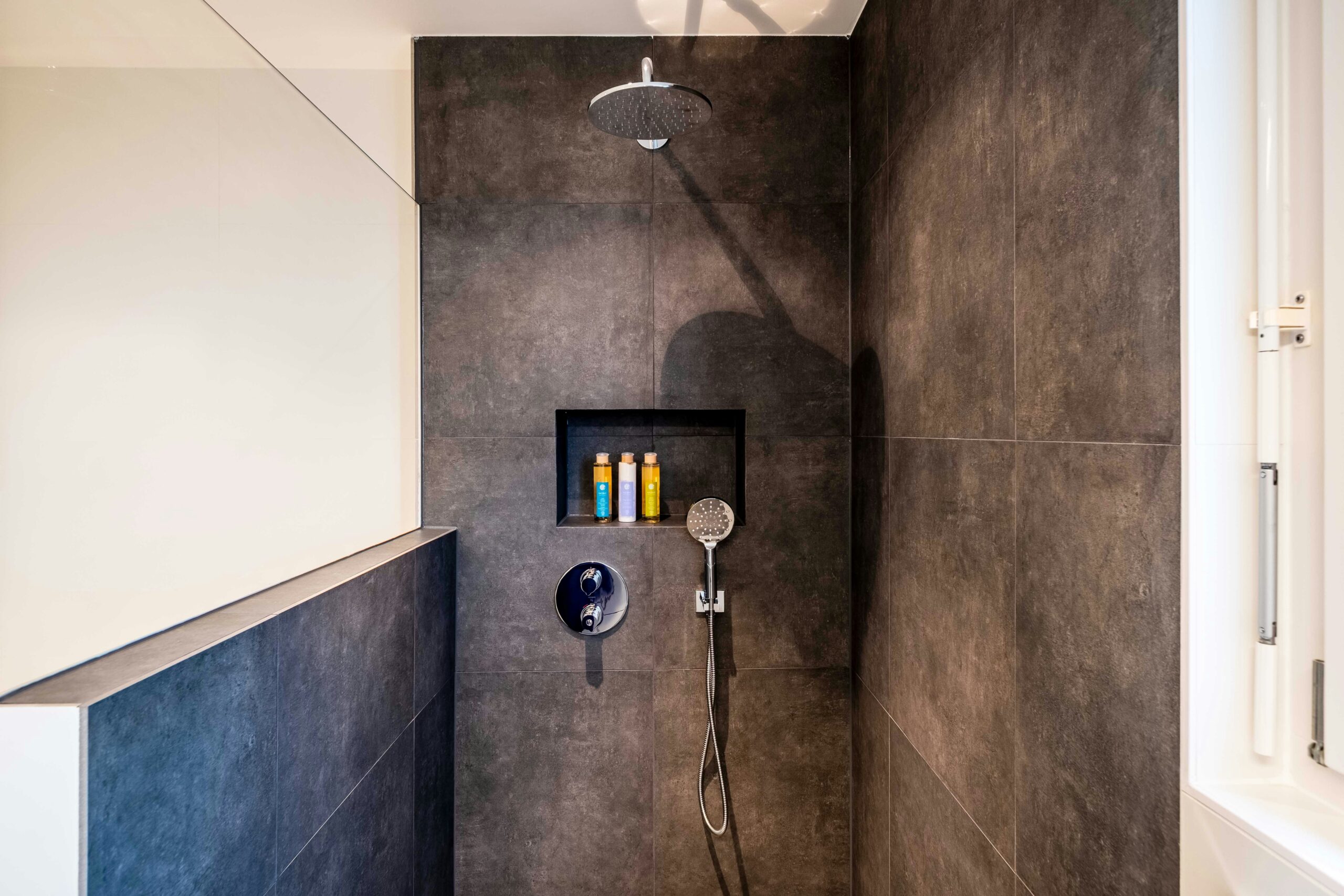
Quick Answer:
If you see water at the handle or around the trim plate, it may be a leak from the valve cartridge, a failed O-ring, a loose trim, or water getting behind the wall through a gap in the plate. First confirm whether the leak only happens when the shower runs. If water is coming from behind the wall or soaking drywall, **shut water off quickly** and then assess damage. If you don’t know where your house shutoff is, locate and test it so you can **find the main shutoff valve** if needed.
Why This Happens
- Worn cartridge or O-rings: Single-handle valves rely on a cartridge and seals. Over time they harden or crack and let water leak past into the trim area.
- Loose or missing trim screws: A loose trim plate or escutcheon can allow water to run behind the wall instead of down the drain.
- Failed seal between trim and wall: Gaps in caulk or grout let water pass outside the intended path.
- Pinhole or joint leak in the valve body or supply lines: These can leak when the shower is on and send water behind the wall.
- Previous repairs left soft or swollen drywall that wicks water and shows dampness even after the leak is stopped.
Step-by-Step What to Do
1. Confirm when the leak happens
- Run the shower for a short time and watch the handle and trim. Note if water appears only while water is running or if it’s present at all times.
- If the leak happens only when the shower runs, it’s likely a valve/cartridge or supply-line issue. If it’s present without running water, that suggests an existing behind-wall leak or retained moisture.
2. Inspect visible gaps and caulk
- Look for gaps between the trim plate and the tile or wall. Check the caulk bead—broken or missing caulk can let splashes migrate behind the plate.
- Differentiate surface gaps (which you can repair later) from an active leak. If the area behind the trim is wet, that indicates an active leak rather than just a failed caulk line.
3. Gently tighten the trim and escutcheon
- Use the correct screwdriver or an adjustable wrench with a soft cloth to gently snug visible screws or nuts on the trim. Tighten only a little—over-tightening can crack tiles or deform parts.
- Re-test the shower to see if the leak is reduced or stopped. This sometimes fixes leaks caused by a misaligned or loose trim.
4. Consider the cartridge and O-rings
- If the leak persists when the shower is on, the valve cartridge or its O-rings may be worn. Turn off the water and remove the handle and trim to inspect for damaged seals or corrosion.
- If you’re comfortable, replace the O-rings or cartridge with the OEM part. If not, take photos and the part to a hardware store or call a plumber so the right replacement is ordered.
5. Monitor adjacent wall and ceiling for dampness
- Check nearby walls and the ceiling below (if applicable) for damp spots, discoloration, or soft drywall. These are signs water has traveled behind the wall and may indicate bigger damage.
- Even if the leak seems fixed, continue to watch for new staining or soft areas for several days.
6. Shut water off and escalate if you suspect behind-wall leak
- If you see water behind the trim or wet drywall, turn off the water to the shower or the whole house and assess the damage—use the main valve if needed to stop flow quickly.
- Document what you see (photos), dry what you can safely reach, and contact a plumber. Behind-wall leaks can cause hidden structural and mold damage.
What Not to Do
- Do not keep using the shower if water appears behind the wall.
- Do not seal it up with caulk to hide an active leak.
- Do not ignore swelling, soft drywall, or new stains—these are signs of ongoing damage.
When to Call a Professional
- There is water saturation behind the trim or wet/soft drywall.
- You find corrosion or a cracked valve body, or replacing the cartridge doesn’t stop the leak.
- You cannot shut the water off quickly or you’re unsure where the shutoff valve is located.
- You see stains on ceilings below the shower, electrical fixtures near the leak, or severe mold growth.
Safety Notes
- If you need to turn off water to stop a leak, do so immediately and use the main shutoff if necessary—know ahead of time how to **find the main shutoff valve** for your home.
- Avoid poking into wet drywall or electrical areas. If water is near lighting or switches, turn off power to that area and call an electrician or plumber.
- If mold or extensive water damage is present, consult professionals for safe remediation—don’t try to cover it up.
Common Homeowner Questions
- Why does water drip only when the shower is on? Usually a worn cartridge, O-ring, or a loose supply connection that only leaks under pressure when water flows.
- Can I just replace the caulk and fix the leak? No—replacing caulk may stop surface seepage but won’t fix an active valve leak or damaged seals behind the trim.
- Is a leaking trim plate an emergency? It can be if water is reaching the wall cavity or drywall. Stop the leak and assess; call a plumber if you see behind-wall moisture.
For more related articles, see the nan hub.