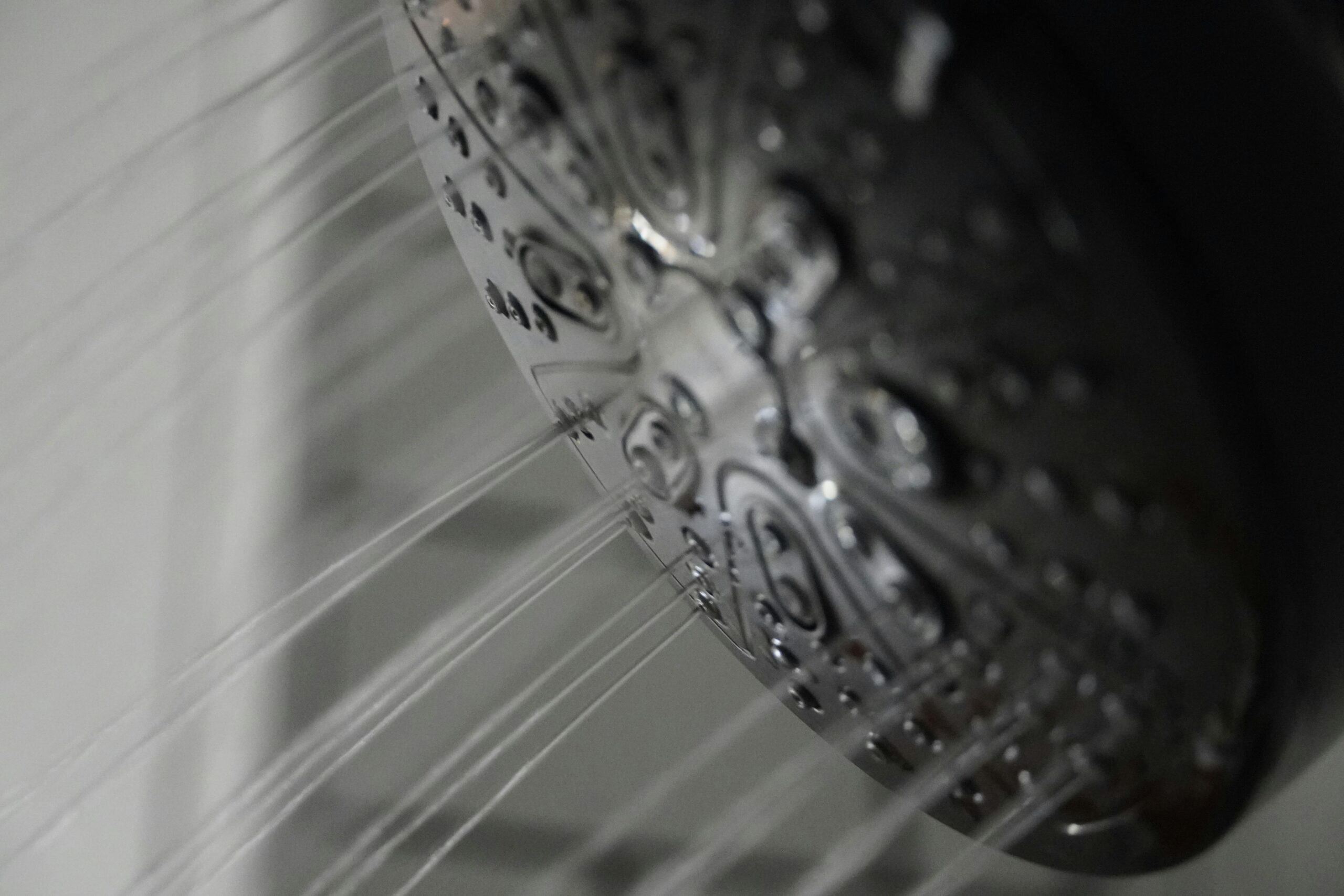
First locate the water: from the showerhead’s spray openings, the head-to-arm joint, or the wall/trim. These are different paths. A finite amount left downstream after use can drain out, but air in a restored supply does not by itself explain continuing water through a correctly closed valve.
What was restored and what was off?
Identify the installed valve and trim from its manual, invoice or safely visible markings. The head or handle brand alone may not identify the hidden valve. Volume control, temperature travel limit, source-isolating service stops and a transfer/diverter control do different jobs; do not turn an unidentified screw or assume nearby sink stops serve this fixture.
Record whether the house supply was restored, the shower was just used, or water was transferred from another outlet. A closed shower volume control is different from an upstream service stop. Retained head or hose water and sustained supplied leakage need different assessment; a one- or two-minute cutoff is not a universal normality test.
Safe observations
- From safe access, note the exact opening or joint where water appears, whether it decreases or continues, and whether the fixture was actually in its normal off state.
- Record recent head, trim, cartridge or supply work and any wall or ceiling wetness. Do not repeatedly reopen the main or run the shower to reproduce a suspected concealed leak.
- If water is entering a wall, pooling outside the receiver, becoming a stream or cannot be controlled, stop use and arrange safe isolation and repair promptly. Do not wait for an air-settling timer.
A head joint is different from valve passing
Tightening or cleaning a head does not repair a valve that continues to admit supply water while off. Conversely, retained outlet water alone does not prove a failed cartridge. A model-specific test can distinguish these; do not turn a general removal or hot-flow challenge into an automatic first step.
A connection must use its actual seal design: a washer or O-ring and a threaded joint may have different assembly requirements. Identify retention and the specified sealant, if any; do not add tape or turn the entire arm/spout to fix every leak. For intended owner cleaning, use the exact finish/material instructions, permitted product, dilution and duration, followed by the prescribed rinse. Some products allow limited diluted vinegar; that does not make every soak or finish safe. Control the outlet, hot parts and residual water, and refit before a safe attended check.
Before parts work
Before opening a cartridge retainer, bonnet, supply joint or other pressure boundary, identify and isolate every feed that can pressurize the segment, control temperature, relieve the actual segment through the appropriate controlled outlet and verify depressurization. A remote tap may not relieve a chamber beyond closed local stops or checks. Keep the work isolated while open. Use the correct parts, retainer, seals and complete reassembly before normal restoration. An approved service flush needs its exact source-on/captured-flow/source-off sequence before extraction or refitting; being ready to stop water is not isolation.
Restore only after the actual assembly and leak test requirements are met, with safe temperature, drainage, access and attendance. If handle indexing or protective settings were disturbed, complete the model’s required measured temperature/protection verification before bathing. Reduced flow or partly closed supply is not proof of a safe static pressure, successful isolation or a completed repair.
Do not force a stuck head, overtighten threads, cap the outlet or alter protective controls. Persistent off-state leakage deserves an identified valve assessment; hidden wetness needs its source and any damage addressed.
Related guides
- Dripping Showerhead After Shutoff
- Why Your Shower Won’t Turn Off Completely
- Why Your Shower Is Leaking Around the Handle or Trim Plate
- Why Your Bathtub Faucet Drips After Turning the Water Back On
Safety sources
- Kohler Rite-Temp example: distinguish retained outlet water and valve leakage
- Moen M-Core4example: handle calibration, retained pressure components and concealed leaks
- Moen: cleaning instructions differ by actual finish and product
- Moen: identify and turn off the appropriate supply before repair
- BrassCraft: water supply stop instructions