Quick Answer:
If the washer fills with a loud sputtering and a bangy, airy flow at the start, it’s usually trapped air and a high initial flow causing pressure shock. Run the washer fill and watch whether the sputter only happens at the very start. Confirm both washer valves are fully open, reduce flow a little if you hear banging, and replace old or bulging hoses with braided hoses. If the noise continues or you see leaks, call a plumber.
Why This Happens
- Trapped air: When a valve opens, pockets of air in the supply lines can be forced ahead of the water, creating sputtering and spitting until the air clears.
- Sudden flow and pressure spikes: Opening a valve rapidly can cause water-hammer type impacts that sound like bangs and rumbles at the start of a fill.
- Old flexible hoses: Rubber hoses can expand or bulge and make the symptoms louder or cause earlier failure.
- Recent plumbing changes can introduce air or change flow. See Air noise after backflow preventer install for a similar situation after new devices are added.
Step-by-Step What to Do
1. Observe a complete fill
- Run a normal wash or a short fill cycle and watch closely. Note whether the sputter and bangs happen only at the very start and then stop.
- If the noise stops after a few seconds and water runs steady, it’s likely just trapped air clearing out.
2. Confirm valves are open and working
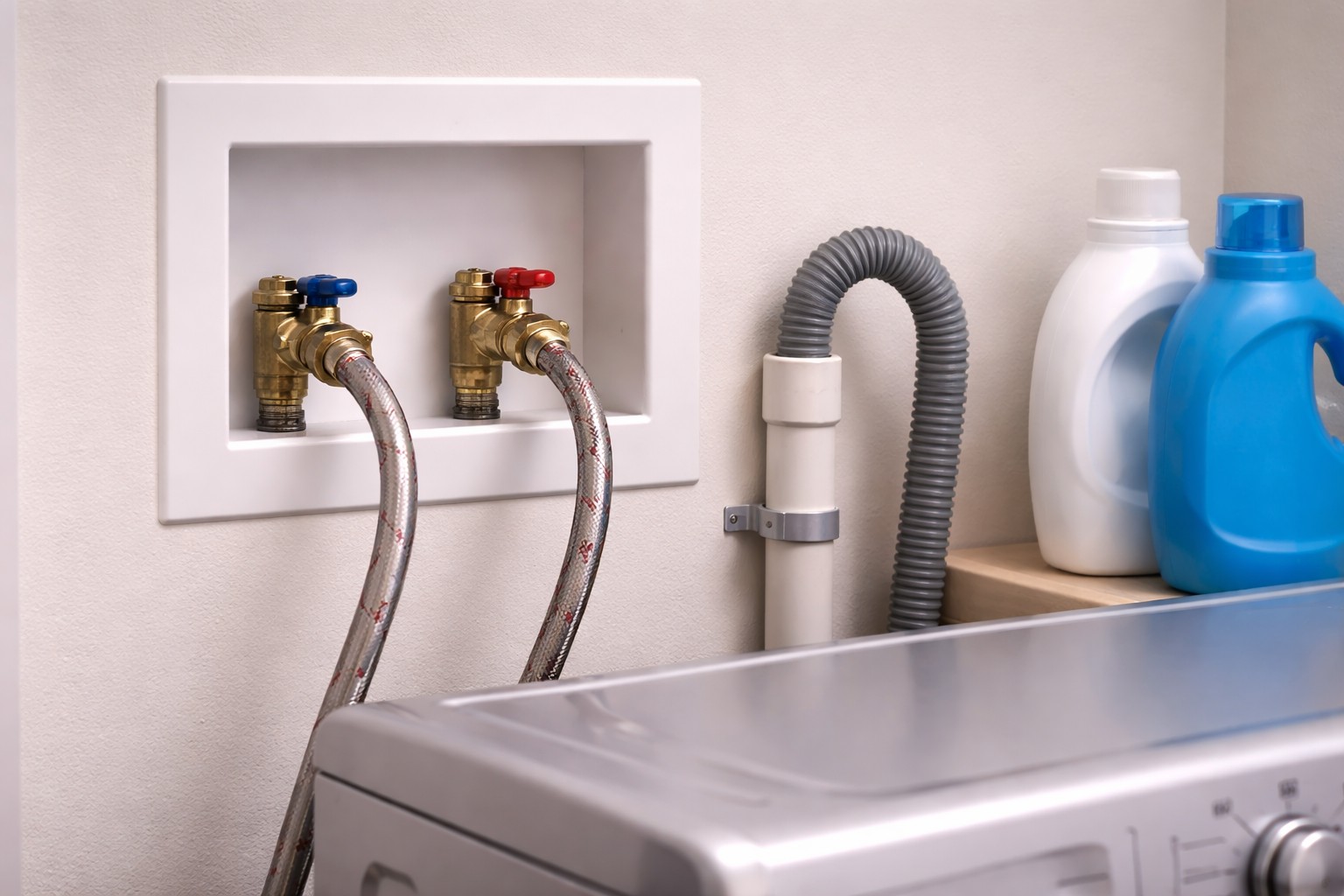
- Check the hot and cold shutoff valves behind the machine. Confirm both washer valves are fully open.
- Open them fully, then close and reopen slowly if they were partially stuck. A half-open valve can make the initial surge noisy.
3. Reduce flow slightly if there is banging
- If you get a sharp bang or repeated hammering, partially close each valve a small amount (about a quarter turn) to reduce the initial flow and see if that calms the bang.
- Consider a water hammer arrestor or ask a plumber about pressure-control options if the banging is strong or recurring.
4. Inspect and replace hoses if needed
- Look at the supply hoses for soft spots, bulges, cracks, or corrosion. If hoses are old or bulging, replace with braided hoses (a safer risk-reduction step).
- Turn off the water and unplug the washer before swapping hoses. Fit new braided hoses hand-tight plus a quarter turn—do not overtighten.
5. Test again and monitor
- Run another fill after any changes. If the problem is improved but not gone, keep an eye on it for a few cycles.
- If the sputter or banging returns or you find leaks, stop using the machine and call a professional.
What Not to Do
- Don’t reuse old rubber washer hoses; sputter/hammer events can finish them off—upgrade to braided hoses.
- Don’t open or close the main supply rapidly to “shock” air out; it can create more water hammer and damage fittings.
- Don’t attempt major valve or pressure-reducing device installations unless you are confident and have the right tools—call a plumber if unsure.
When to Call a Professional
- If the banging is loud, repeated, or causes visible movement of pipes.
- If replacing hoses or adjusting valves does not stop the sputter and banging.
- If you see leaks, rusted fittings, or if the valves won’t operate smoothly.
- If recent work (meter, backflow preventer, pressure regulator) coincides with the problem and simple checks don’t help—this can need a plumber’s diagnosis.
Safety Notes
- Turn off the water supply before disconnecting hoses. Unplug the washer before working behind it.
- Have a bucket and towels ready for residual water when you remove hoses.
- Do not overtighten hose fittings. Hand-tight plus a small wrench turn is usually enough.
- If you smell gas or suspect a larger plumbing or utility issue, stop and call a professional immediately.
Common Homeowner Questions
- Q: Will the air clear on its own? A: Often yes—if the sputter is only at startup it can clear after a few fills. Monitor for leaks or worsening noise.
- Q: Could this be only the cold side? A: Yes. If only cold spits air, check the cold valve and line first; see Cold water spits air only for a focused approach.
- Q: Are braided hoses really necessary? A: Braided hoses are a simple upgrade that reduce burst risk compared with old rubber hoses and are worth installing.
Related Articles
If you’re troubleshooting a similar symptom, these guides may help:
For the full directory, see Air in Pipes After Shutoff.