Quick Answer:
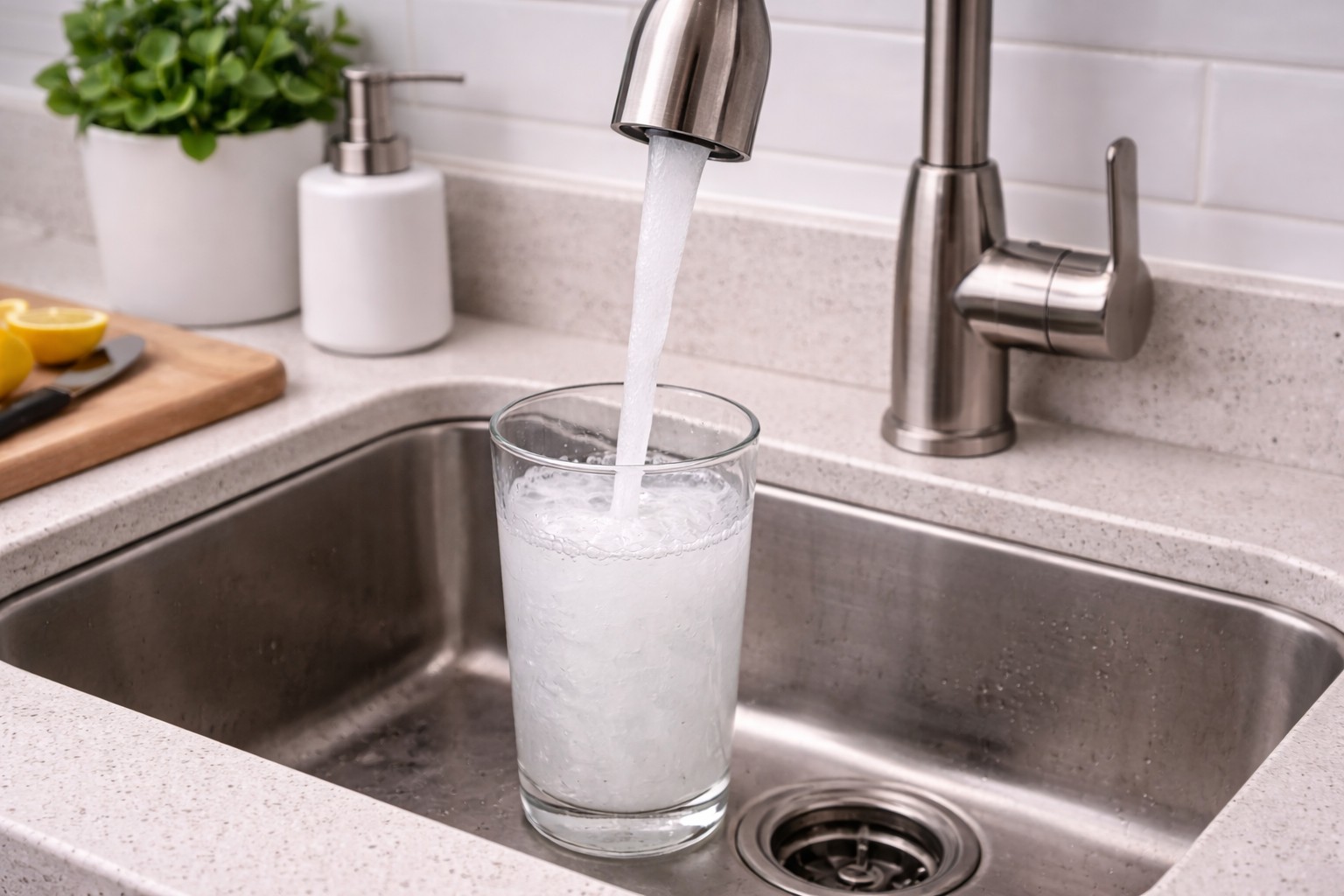
Seeing cloudy water or air bubbles immediately after service is restored is commonly caused by air in the pipes (aeration). Cloudy water and bubbles that clear in a glass after a minute often indicates aeration. Run cold water slowly to clear remaining air. If cloudiness doesn’t clear or has odor/discoloration, treat as a water quality issue and contact the utility.
Why This Happens
- When water flow is stopped and then restarted, pockets of air can become trapped in the plumbing. Those pockets break into many small bubbles that make water look cloudy.
- Work on a main line, after replacing a valve, or a short city outage are common causes. See Air pockets after replacing shutoff valves and Air trapped after city water outage for more on those scenarios.
- Small bubbles usually rise and disappear once the water is still; dissolved gases coming out of solution can also cause temporary cloudiness.
Step-by-Step What to Do
1. Check with a glass
Fill a clear glass from a cold tap and set it on the counter. If the cloudiness or bubbles clear from the bottom up within a minute, it’s almost certainly aeration.
2. Run cold water slowly
Run cold water slowly to clear remaining air. Open one nearby faucet at a time and let it run for a few minutes until the stream is steady and clear.
3. Purge systematically
- Start at the lowest fixture in the house (basement hose bib or lowest sink) and work toward the highest.
- Open each faucet until water runs clear, then move to the next. This targeted purging is usually faster and uses less water than running every fixture wide open.
4. Flush appliances and filters
Run water through appliances that use water (ice maker, water heater refill, dishwasher) according to the manufacturer’s guidance. Replace any inline filters if you notice persistent cloudiness.
5. Evaluate for quality issues
If cloudiness doesn’t clear, or you notice a metallic taste, sediment, or discoloration, treat as a water quality issue and contact the utility. They can advise about testing and whether a larger problem exists in the distribution system.
What Not to Do
- Don’t keep running every faucet wide open for hours; targeted purging is usually more sensible than flooding the system.
- Don’t assume discolored or odorous water is just air—stop using water for drinking or cooking until the cause is confirmed.
- Don’t attempt chemical treatment or complex repairs yourself if you’re not trained; call the utility or a licensed plumber for water-quality problems.
When to Call a Professional
- Cloudiness or bubbles persist after systematic purging.
- Water is discolored (brown, yellow, red) or has a strong odor.
- Multiple fixtures show the same problem and the utility confirms there was no scheduled work or outage.
- If you suspect a leak, damaged valve, or pressure problem that could let contaminants in.
Safety Notes
- Use cold water when checking for aeration; hot-water systems can scald and may hide air pockets differently.
- If you suspect contamination, avoid using the water for drinking, brushing teeth, or cooking until cleared.
- When in doubt, contact your water utility for guidance on testing and any boil-water notices.
Common Homeowner Questions
- How long should aeration last? Usually a few minutes to an hour of targeted purging; if it lasts longer, investigate further.
- Can aeration damage plumbing? No—air in the lines is not harmful to pipes; persistent pressure issues or hammering should be checked by a plumber.
- Should I drink the water while it’s cloudy? No—wait until it clears or the utility confirms it’s safe.
Related Articles
If you’re troubleshooting a similar symptom, these guides may help:
For the full directory, see Air in Pipes After Shutoff.