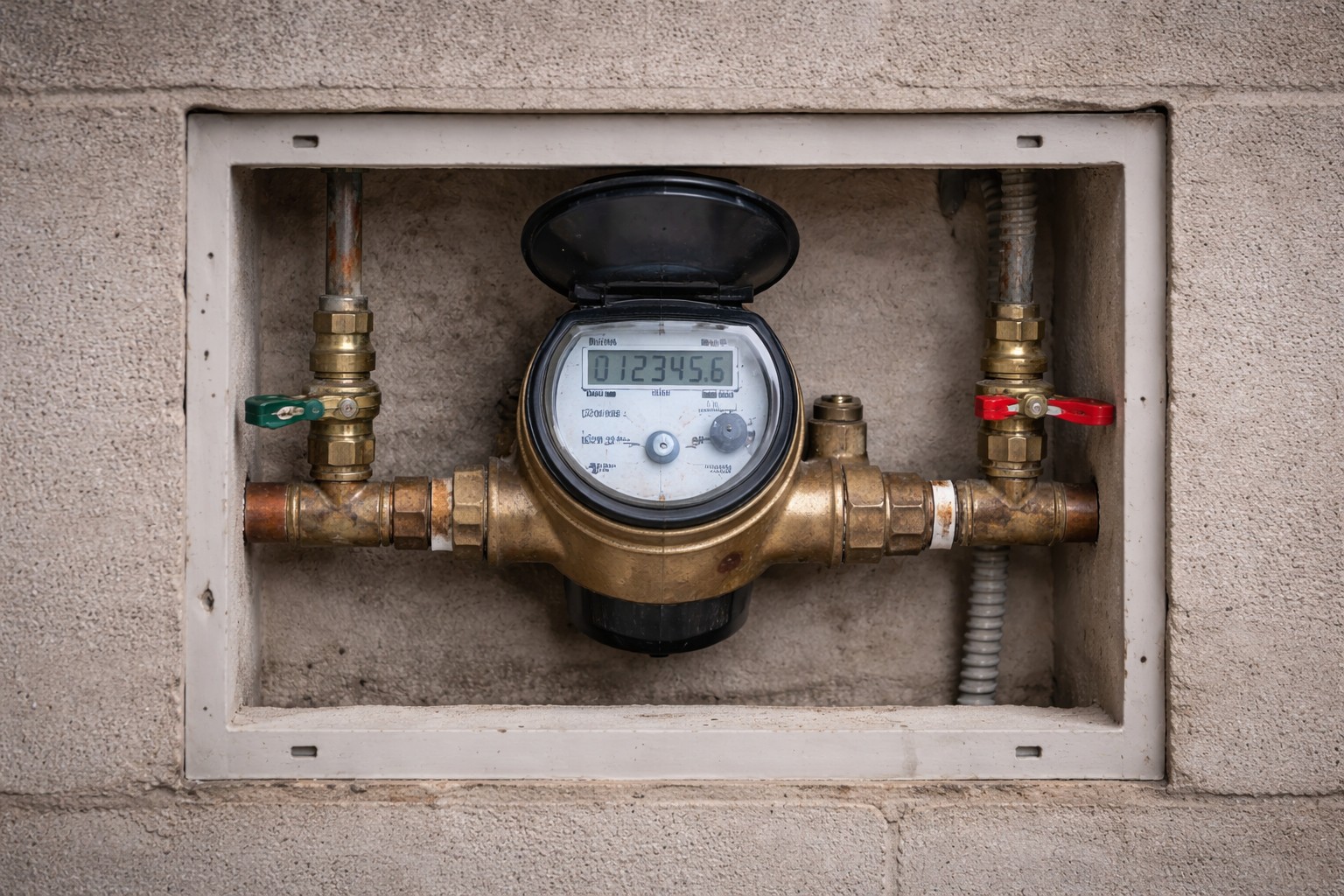
Quick Answer:
After a meter replacement or reconnect you can get bursts of air and noisy, sputtering flow at the first fixtures used. Start by running a cold hose bib or a utility sink slowly until the stream is steady and clear. Watch for debris or sediment. If you suspect the meter box or curb stop was moved and problems continue, contact your water utility rather than trying to adjust their equipment.
Why This Happens
When the water service is shut off and turned back on, air trapped in the supply line will be pushed into the house. The air arrives as pockets that cause sputtering, noisy flow, or short bursts of water at faucets and showerheads. The same thing can happen after internal work, and it looks a lot like Air bubbles after turning water back on. Meter work can also dislodge scale or sediment that shows up as grit or discoloration at the first fixtures you run, which makes the sputtering feel worse.
Step-by-Step What to Do
Step 1 — Start at an outdoor cold faucet or utility sink
- Use a cold hose bib or a utility sink if you have one. Open it slowly to a small flow and let it run until the stream becomes steady and free of air bursts.
- Running slowly helps air move out without causing pressure spikes or forcing debris into fixtures.
- Watch the water for grit, rust, or discoloration. If visible, stop and run until clear, collecting a sample if you need to report it.
Step 2 — Move to inside fixtures, one at a time
- Open the nearest sink, tub, or shower next and run cold, then hot, until each has a steady stream. Work through the house from lowest to highest or from closest to farthest from the meter.
- Flush toilets a couple of times to purge air from those lines. Repeat until the noise and bursts stop.
Step 3 — Check aerators, filters, and appliances
- Remove faucet aerators and check screens for sediment. Rinse or replace as needed.
- Look at appliance inlet screens (dishwasher, washing machine) and any inline filters. Sediment can clog valves and reduce flow.
Step 4 — Document and contact the utility if needed
- If pressure remains low, pulses continue, or you see significant sediment after flushing, take photos and note times.
- If you suspect the meter box or curb stop was touched during the work, call the utility and report your observations rather than attempting to adjust their equipment yourself.
- If the repair included internal plumbing, some issues resemble Air in pipes after plumbing repair, but the utility should handle meter-side problems.
What Not to Do
- Don’t tamper with utility-owned meter components, the curb stop, or any locked meter box.
- Don’t try to force the main shutoff at the street or adjust the meter—this is often illegal and can make problems worse.
- If symptoms persist, document the condition and request a utility check instead of attempting unauthorized fixes.
When to Call a Professional
Contact a plumber or your water utility when:
- Air and sputtering do not stop after thorough flushing of hose bibs and fixtures.
- There is ongoing low pressure, pressure surges, or visible damage to fixtures or appliances.
- You find large amounts of sediment, rusty water that does not clear, or suspect the meter/curb stop has been disturbed.
Safety Notes
- If water appears heavily discolored or contains grit, avoid drinking it and use bottled water until the utility or plumber confirms it’s safe.
- Turn off appliances that use water if you see heavy sediment to avoid damage (dishwashers, refrigerators with ice makers, etc.).
- Do not attempt to open locked meter boxes or tamper with public-side valves—leave that to the utility crew.
Common Homeowner Questions
- Why does my toilet gurgle after meter work?
Air pockets in the line can cause gurgling; flushing and running nearby fixtures usually clears it. - How long will the air in the pipes last?
Usually minutes to a few hours if you run fixtures methodically; persistent issues need inspection. - Can this damage my appliances?
Brief air bursts usually do not, but sediment can. Stop appliances if you see debris and call a plumber if unsure.
Related Articles
If you’re troubleshooting a similar symptom, these guides may help:
For the full directory, see Air in Pipes After Shutoff.