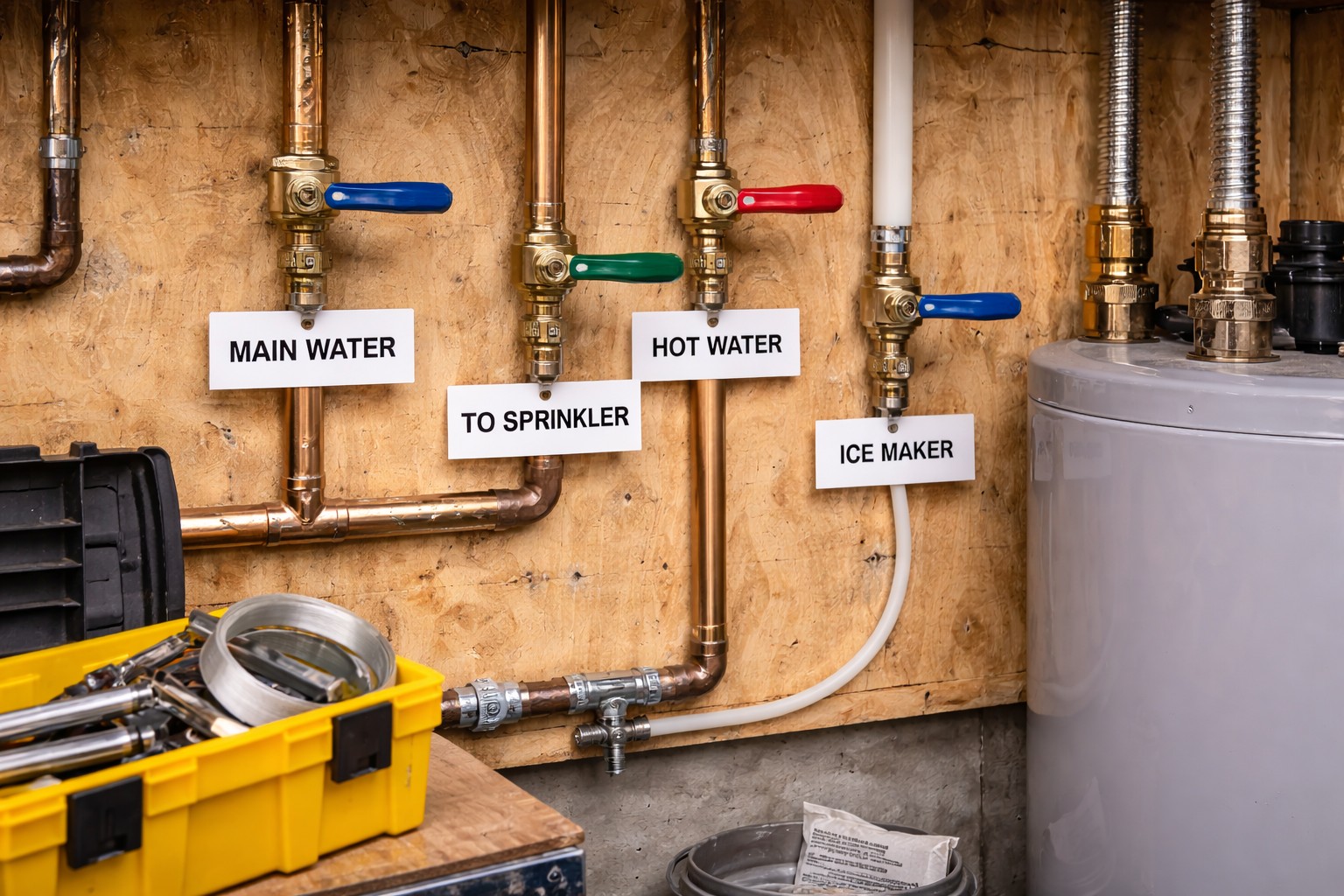
An inspection visit does not establish that pipes were cut, a component repaired or a control moved. First obtain the actual inspection/commissioning record and describe what changed during ordinary use.
Check hazards and the work record
If fuel gas is suspected, leave the building or affected area immediately. Do not operate valves, switches, plugs, appliances or phones there. Call the gas emergency service from a safe location well away, and wait for responders’ clearance.
Keep away from wet electrical equipment. Do not touch wet appliances, plugs or switches, or enter water to reach a breaker. When no gas leak is suspected, power may be isolated only from a safely accessible dry location; otherwise call an electrician or emergency help. Wet equipment needs qualified assessment before it is used again.
Stop affected use for an active leak, uncontrolled hot water, severe movement/noise or a protective shutdown. Contain a leak only from safe dry access using an identified owner-operated valve without force; otherwise request prompt installer, plumbing or utility help. Do not wait for a pressure log or repeat the fault. Leave utility controls, confined/flooded meter pits and unidentified ports to authorized personnel.
Record this repair’s actual scope
- Inspection type and exact controls/tests or corrective work actually performed.
- Original high/low/fluctuating delivery, temperature, leakage or protective alert and its timing.
- Actual equipment models and existing mapped pre/post-visit readings, if any.
Do not invent a repair point
A visual inspection may involve no supply interruption. An operated test/control or separate repair must be identified from evidence. Ask the inspector/installer which valves or settings were changed and what normal state was restored. Do not close random valves or flush high and low outlets because an unrelated article assumes cutting, soldering or debris.
Check the actual protection and measured condition
A temperature limiter, regulator, check, test port and pump-tank connection have different functions. Do not use a pressure-tank air valve or unidentified port as a water gauge connection, or alter protection to restore an old flow feel. A changed reading after a generic flush does not uniquely distinguish air, debris or regulator failure. Promptly report unsafe or persistent changes; the visit record and controlled supplied evidence guide the next action.
Separate service from operating measurements
- Service: Before opening a retained part or joint, identify all feeds, isolate them independently, control temperature and relevant energy, release trapped pressure by the appropriate controlled method and verify that segment is unloaded. A remote tap or app status alone does not prove every chamber safe. Keep it isolated while open.
- Completion: Secure the correct parts and required protection, meet actual joining/cure and acceptance requirements, and use the model’s refill, air-release and commissioning procedure. A union is a separable joint, not a shutoff. Do not energize an unfilled heater or pump.
- Operating evidence: Only after safe reassembly/restoration compare appropriately mapped readings under known supply and demand. An isolated/drained downstream section cannot represent its normal supplied pressure or sustain a continuing flush. Equal static readings do not exclude a restriction under flow.
Measure and flush only in the intended state
Weak delivery at an open spout is a flow observation, not a pressure reading. Optional owner measurement uses only an intact existing accessible approved connection and compatible pressure/temperature-rated instrument, following its safe connection/release instructions. Identify source, regulator/check/valve side, elevation and actual demand. A near-street hose bib is not automatically upstream. Do not add a hot adapter, loosen a live fitting or use a backflow test cock as a generic test point; qualified measurement can be obtained instead.
A directed construction or return-to-use flush needs its actual supplied path, secured discharge, safe receiving capacity and provider/manufacturer procedure. Opening high and low fixtures cannot create flow through closed isolators. Do not run every hot/cold outlet, bypass treatment or keep flushing for generic minutes until clear water is called safe or repaired. Check source notices first; new quality concerns need supplier guidance, and prolonged disuse can require a separate return-to-use plan.
Related situations
- Pressure low after main shutoff replacement
- Low pressure after water heater install
- Pressure Loss After Plumbing Repairs
- Pressure problems after valve change
- Pressure loss after bypass removal