Quick Answer:
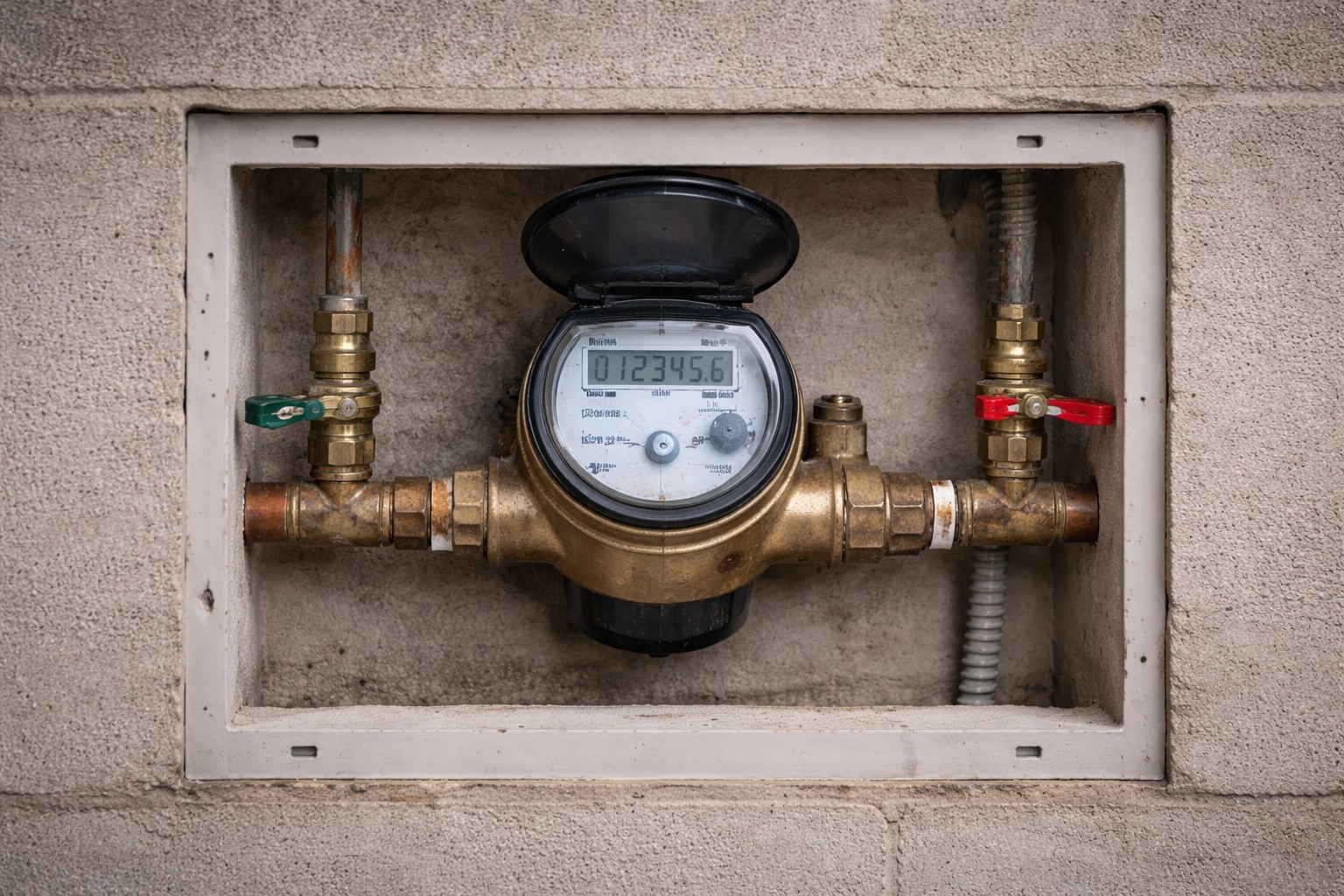
If meter reconnection left you with noticeably reduced flow, don’t assume it will fix itself. Isolate the repaired component, measure pressure upstream and downstream of the repair point, and flush the affected lines. These checks will show whether the problem is air, debris, a closed valve, or something that needs a pro.
Why This Happens
- Debris or sediment can enter the line when the meter is opened and settle at fittings, valves, or aerators.
- A partial valve closure or an incorrectly seated meter component reduces flow downstream of the repair point.
- Air trapped in the pipes can make flow sputter and seem weak until it’s flushed out.
- Occasionally a pressure regulator or backflow device adjusted during the work is left at a lower setting.
Step-by-Step What to Do
1. Prepare and isolate the repaired component
- Find and close the nearest isolation valves that specifically control the repaired section, if available. If the repair was at the meter, use the service shutoff or utility valve only if you are authorized and it is safe to do so.
- Turn off appliances that use water (water softener, dishwasher) so they don’t interfere with tests.
2. Measure pressure before and after the repair point
- Use a simple water pressure gauge that screws onto an outdoor hose bib or the house service port. Measure pressure on the supply side (upstream) of the repair point and then downstream (on the house side) after reconnecting valves.
- Record both readings. A large drop after the repair point confirms a local restriction or mis-adjusted device.
3. Flush the affected lines
- Open the nearest outdoor hose bib or an inside tap closest to the meter and let it run for several minutes to clear air and debris. Work from the meter outward so debris doesn’t move deeper into the system.
- After the first flush, run a full-house flush by opening high- and low-level taps briefly (bathroom, kitchen, outdoor) to move remaining debris out.
- If water clears and pressure returns to normal, re-check the pressure readings to confirm.
4. Check fixtures and devices
- Remove and inspect faucet aerators and showerheads for debris. A clog at a fixture can mimic low pressure at the tap.
- If a backflow preventer or pressure regulator was part of the work, verify its setting and seating. Small adjustments may be needed.
5. Re-test and observe
- With isolation valves returned to normal positions, repeat the pressure measurements. Note any persistent difference across the repair point.
- Watch for intermittent drops that could indicate a partially closed valve or a device that sticks under certain flow conditions.
If the steps above point to a localized issue, but you’re unsure how to safely adjust or replace the device, stop and call a professional.
What Not to Do
- Do not assume pressure will self-correct without flushing and inspection.
- Do not try to force open municipal or locked meter hardware if you are not authorized; contact your water utility.
- Do not work in a flooded or confined meter pit without proper training and safety equipment.
When to Call a Professional
- If pressure measurements show a large drop across the repair point and you cannot find a closed valve, call a licensed plumber.
- If the meter or backflow device appears damaged or leaks at the meter connection, contact your water utility and a plumber—meter work may be restricted.
- If you find cloudy water, persistent air, or contamination after reconnection, stop using the water for drinking and contact a professional for testing and corrective work.
Safety Notes
- Avoid entering locked or confined meter pits. These spaces can be hazardous and may require utility permission.
- Turn off electrical appliances before working on or near water lines to avoid electrical hazards.
- If you smell gas or see structural damage near water service, leave the area and call the appropriate utility or emergency services.
If your situation followed a specific recent action, it may help to read related guides such as Pressure reduced after backflow install or Pressure changed after inspection.
Common Homeowner Questions
- How long should I flush the lines? Run the nearest hose bib for 3–5 minutes, then open other taps briefly; longer if water is cloudy.
- Do I need a pressure gauge? A gauge gives useful, objective readings; they are inexpensive and recommended for troubleshooting.
- Can air in the lines cause low pressure? Yes—air can reduce flow and cause sputtering until it’s flushed out.
Related Articles
If you’re troubleshooting a similar symptom, these guides may help:
For the full directory, see Pressure Loss After Plumbing Repairs.