Quick Answer:
Uneven pressure between fixtures after a repair usually means air, debris, or a partially closed valve is still in the line. Start by isolating the repaired section, measure pressure on each side of the repair, then flush the affected lines. If pressure stays uneven after those steps, you may have a regulator or connection issue that needs professional attention.
Why This Happens
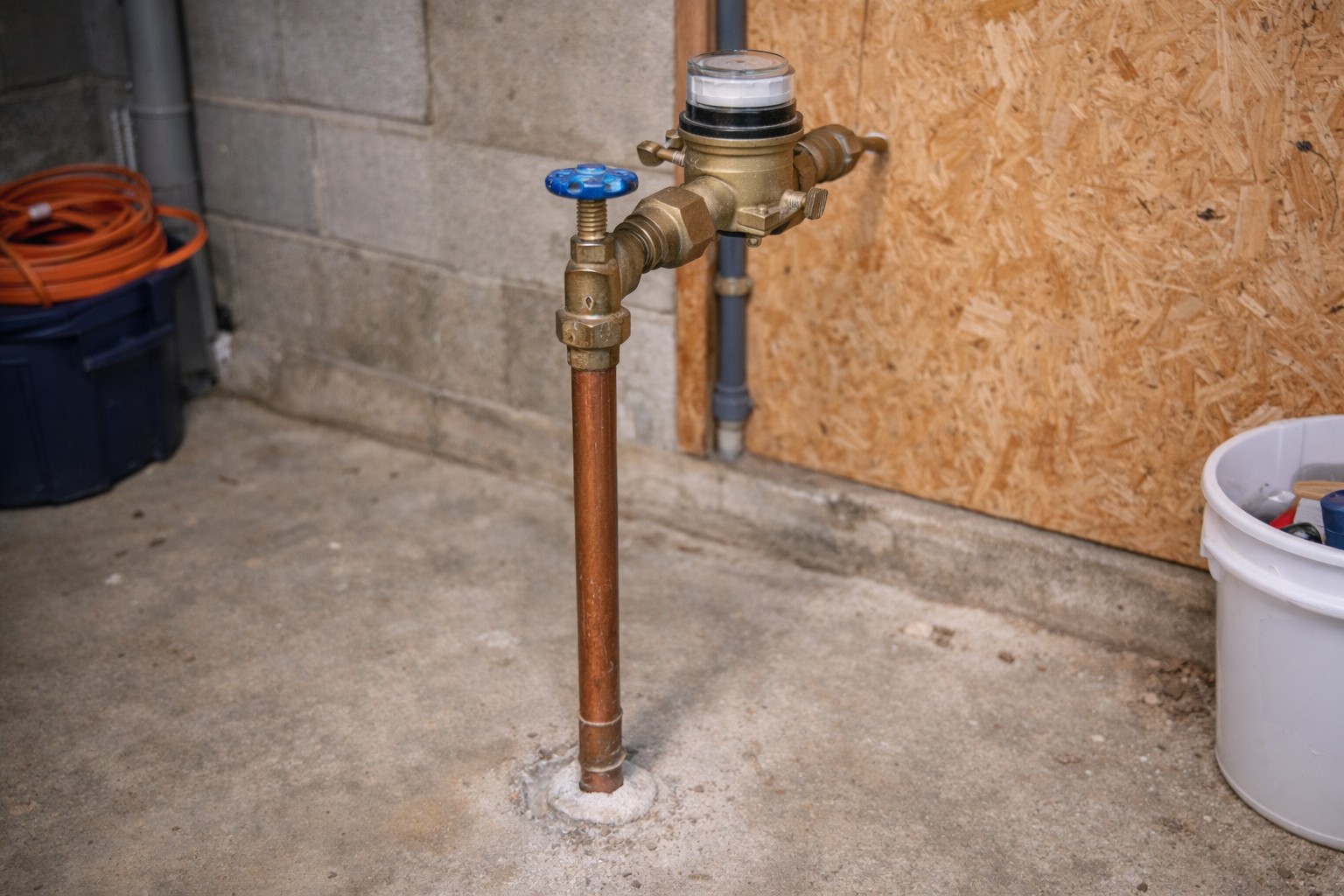
Work on a water line can trap air or dislodge sediment. Small particles can lodge in faucet aerators, shower cartridges, or a pressure-reducing valve. Partially closed isolation valves or a kinked replacement pipe also reduce flow to one side of the system. Improper reconnection of the service line or meter can leave fittings partially obstructed. Similar problems show up in other situations, such as Pressure loss after installing new filter or Pressure loss after reconnecting meter, where a trapped air pocket or an unseated component reduces flow.
Step-by-Step What to Do
1. Isolate the repaired component
- Close the isolation valves that control the repaired section so you can work without affecting the whole house.
- Confirm isolation by turning on a nearby fixture—no water should flow from the isolated section.
2. Measure pressure before and after the repair point
- Use a handheld water pressure gauge at a faucet or hose bib on each side of the repair.
- Record readings so you can compare: if the upstream pressure is normal and downstream is low, the issue is at or after the repair point.
3. Flush affected lines
- With the isolated section open to drain, open a high-flow faucet or hose bib downstream to flush air and debris.
- Flush until the water runs steady and clear; this often restores equal pressure.
4. Inspect valves, fittings and new pipe
- Check that shutoffs are fully open and that fittings are not cross-threaded or obstructed.
- Look for kinks, crushes, or undersized fittings in the replacement pipe that would restrict flow.
5. Re-measure and restore service
- Close drains and slowly reintroduce water to the line, watching pressure as you go.
- Compare the before-and-after pressure readings. If they match and fixtures behave normally, finish the job and monitor for a while.
What Not to Do
- Do not assume pressure will self-correct without flushing and inspection.
- Do not force valves or fittings open with excessive tools — you can break them or cause a leak.
- Do not remove the main shutoff or work on pressurized sections without fully isolating and draining the line.
When to Call a Professional
- If pressure stays uneven after isolating, measuring and flushing.
- If you find a leaking connection or suspect the pressure-reducing valve needs replacement or adjustment.
- If you cannot access a meter, regulator, or municipal connection, or if the problem affects the whole property.
Safety Notes
- Shut off and depressurize the section you are working on before loosening fittings.
- Wear eye protection when flushing lines; debris and water can spray unexpectedly.
- If you smell gas, or if electrical components are nearby, stop and get professional help.
Common Homeowner Questions
- Why did pressure drop only on one sink? — Air or debris likely settled in that branch or a valve is partly closed.
- How long should flushing take? — Flush until water runs clear and steady; usually a few minutes per affected run.
- Will a regulator fix uneven pressure? — Only if the regulator is the source; a pro can test and replace it if needed.
Related Articles
If you’re troubleshooting a similar symptom, these guides may help:
For the full directory, see Pressure Loss After Plumbing Repairs.