Quick Answer:
Freeze-thaw cycles can damage or partially block supply lines and pressure-control devices. Start by installing a test gauge with a max-needle, log when the pressure changes, and isolate upstream vs downstream causes to find whether the issue is in the main, the PRV, or distribution lines.
Why This Happens
Repeated freezing and thawing moves soil and can stress joints, fittings and pressure-reducing valves (PRVs). Ice can temporarily shift pipe alignment or force sediment and mineral deposits into narrow spots. When the ice melts, pieces of disturbed material can float and lodge in valves or meter screens, causing intermittent or sustained pressure loss. Thermal contraction and expansion also loosen threaded fittings, creating small leaks that reduce pressure under load.
Step-by-Step What to Do
1. Gather basic tools and a test gauge
- Buy a durable pressure gauge that includes a max-needle or “peak” indicator. The max-needle records the highest pressure the gauge has seen during a test cycle.
- Have a notebook or spreadsheet ready to time events, and a wrench to fit test ports or hose bibs near the main shutoff.
2. Install the gauge with max-needle
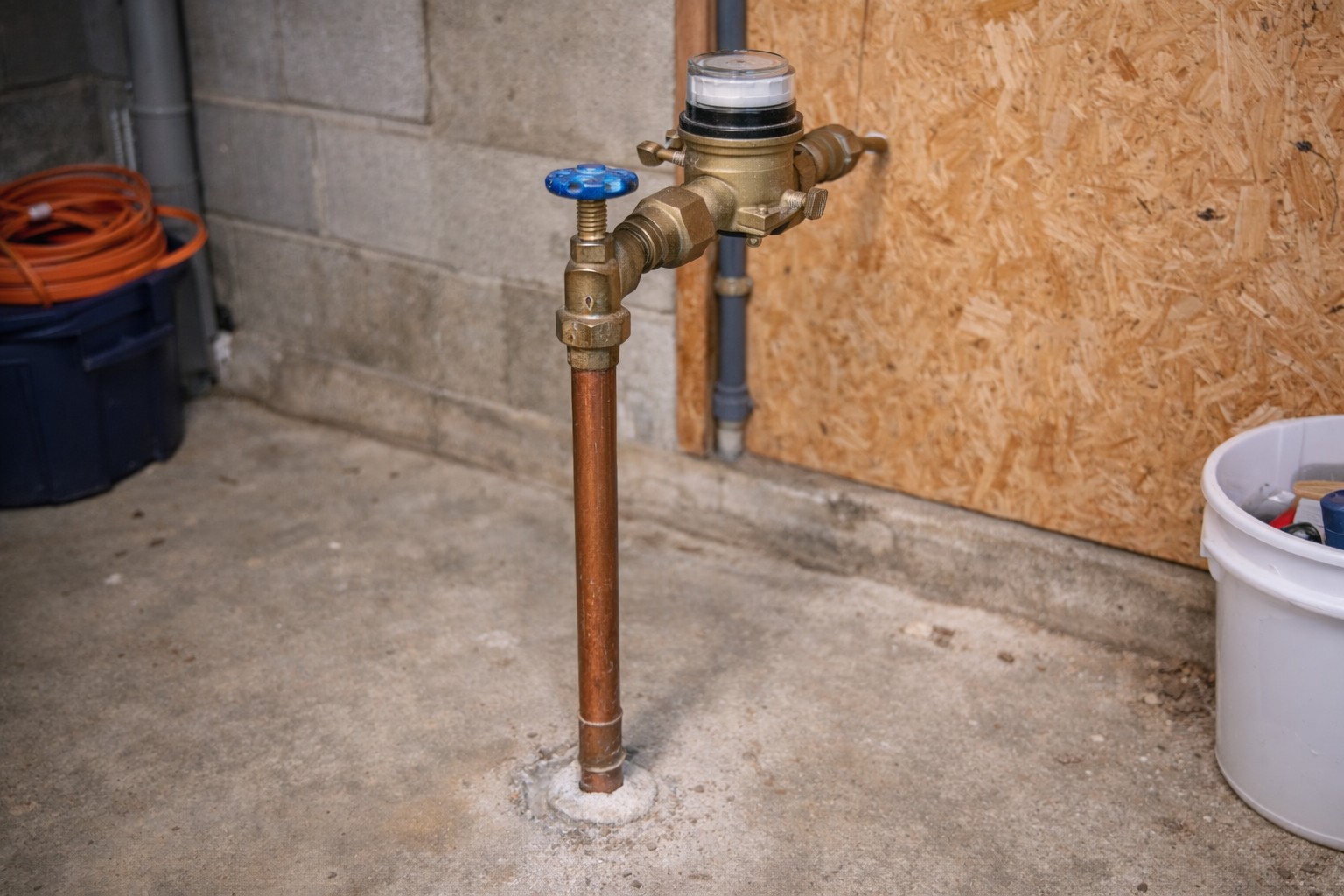
- Attach the gauge at a convenient service point: the service valve after the meter or the house side of the main shutoff. If you have a PRV, test both upstream and downstream of it on separate fittings.
- Make sure the connection is tight and secure. Record the static pressure (no water running) and the max-needle reading after any activity that might change pressure.
3. Correlate pressure drops to specific triggers
- Keep a simple log of events: turn irrigation on/off, note storms, and record any PRV cycling times. Compare those times to when you see the gauge fall or the max-needle move.
- Watch for patterns. For example, drops that line up with the irrigation schedule suggest a distribution or supply restriction under flow. Drops that occur during storms may indicate infiltration or meter/utility issues.
- Pay special attention to short, repeatable losses and PRV behavior — note whether you see Pressure drops for seconds at a time or whether the issue looks like Pressure cuts when PRV cycles.
4. Isolate upstream vs downstream causes
- Begin upstream: shut off valves that isolate the house from the street (meter shutoff or service valve) and note pressure at the gauge. If pressure falls while isolated from the street, the problem is inside your property.
- Test downstream: with the house isolated from the main, open and close fixtures or irrigation zones one at a time to see where pressure drops under load. If pressure stays steady when parts of the system are off, you can narrow the affected zone.
- If pressure is low only when the PRV is in service, test pressure upstream of the PRV and compare to downstream readings to confirm whether the PRV or its internal screen is the issue.
5. Interpret results and decide next steps
- If the gauge shows steady low pressure upstream of your shutoff, contact your water utility—this points to a mains problem.
- If pressure upstream is fine but drops downstream under flow, focus on PRV service, filters, or clogged lines on your side.
- If the max-needle records brief spikes or drops you didn’t see in real time, share those readings with a pro to speed diagnosis.
What Not to Do
- Do not assume intermittent loss is a fixture issue—track system-wide behavior first.
- Do not try to thaw buried or concealed pipes with an open flame or any unsafe heat source.
- Don’t repeatedly open and close buried service valves or force valves that are stiff; you can break them and create a bigger problem.
When to Call a Professional
- Persistent low pressure that you can’t isolate after basic testing.
- Visible leaks, bulging pipe sections, or signs of a recent burst pipe.
- Evidence the PRV is failing (pressure fluctuates wildly or cannot be stabilized downstream).
- If you suspect damage to the service line or meter after a storm or multiple freeze-thaw events.
Safety Notes
- Turn off the main before loosening service fittings to avoid uncontrolled water release.
- Never use an open flame to thaw pipes. Use a hair dryer or electric pipe heater and keep electrical cords clear of wet areas.
- If you find a frozen outdoor valve or hose bib, warm it gently and open it slowly to relieve pressure and avoid a sudden burst.
Common Homeowner Questions
- Why did this start after warm weather? Thawing moves debris and releases ice that can clog valves and screens when water flow resumes.
- Can I fix a PRV myself? You can test it, but replacing or repairing a PRV is often best left to a licensed plumber unless you have experience.
- How long should I monitor pressure? Monitor through at least one full irrigation cycle, any storms, and a few PRV cycles—48–72 hours gives a useful picture.
Related Articles
If you’re troubleshooting a similar symptom, these guides may help:
For the full directory, see Intermittent Pressure Loss Events.