Quick Answer:
Intermittent pressure loss with no clear pattern usually comes from a system-wide issue rather than a single fixture. Start by fitting a pressure gauge with a max-needle on the main supply, log readings and times, and try to match drops to likely triggers (irrigation, storms, PRV cycles). Isolate upstream vs downstream sections to narrow the cause before replacing parts or calling someone.
Why This Happens
- Temporary leaks or partial blockages can open and close with temperature or vibration.
- Pressure-reducing valves (PRVs) or well-pressure switches can cycle unpredictably when worn or set incorrectly.
- External events — irrigation zones starting, utility work, or storm-related demand — can lower supply for short periods.
- Pressure tanks or pump issues on private wells can cause brief falls while the system recovers.
Step-by-Step What to Do
Step 1 — Observe and document
Start a simple log: date, time, duration, what was happening around the house (irrigation on, heavy appliance use, storm). Short, consistent entries help you see patterns you might miss in real time.
Step 2 — Install a gauge with a max-needle
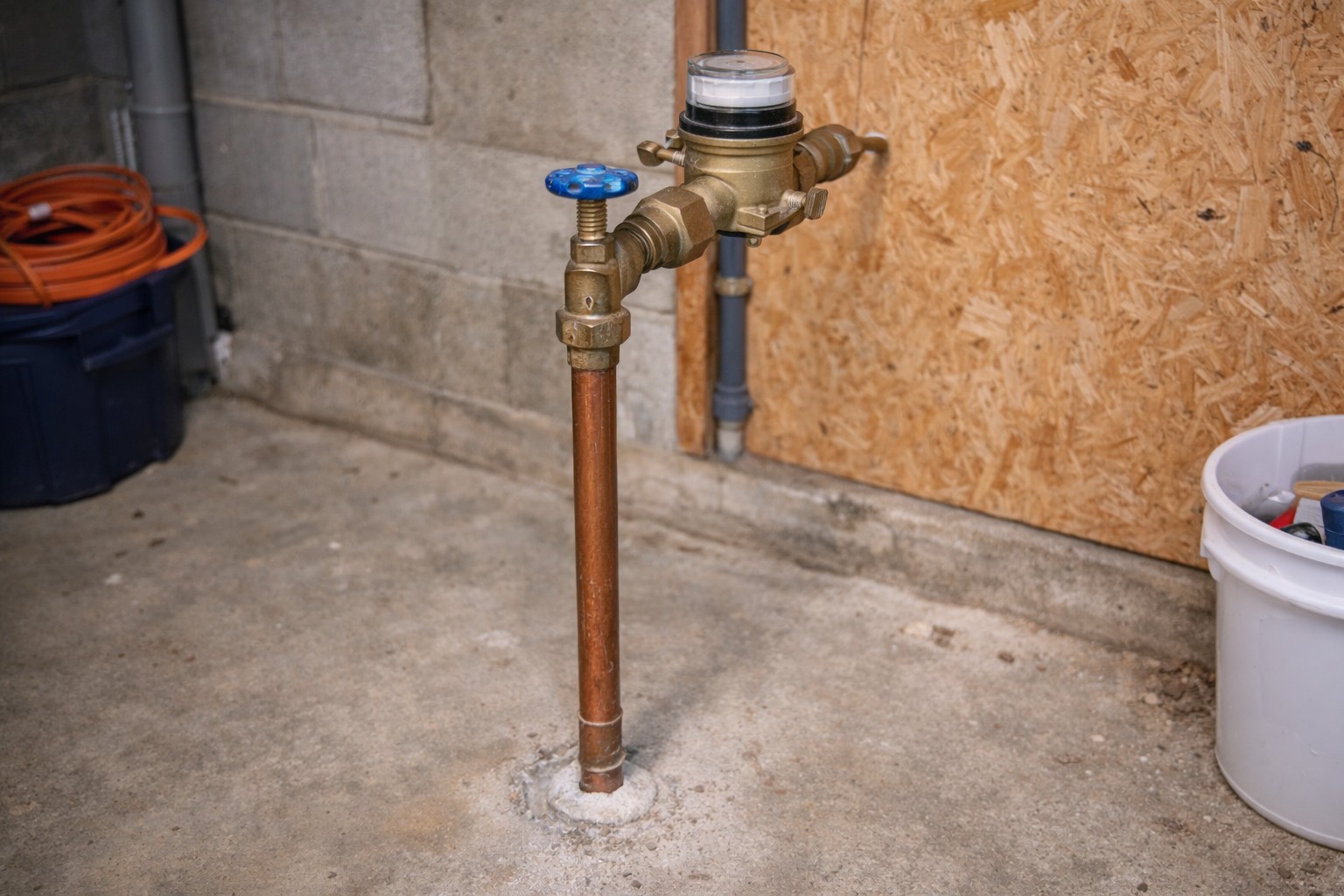
Put a pressure gauge with a max-needle on the main cold-water line near the house entry or at the meter. The max-needle records the highest pressure reached between checks, which helps spot momentary falls and recoveries. Note both the steady reading and any sudden drops; the max-needle gives context for how low pressure went during an event.
Step 3 — Correlate pressure drops to specific triggers
Use your log to compare pressure events to likely causes such as:
- Irrigation cycles — run a test zone and watch the gauge.
- Storms or utility activity — note pressure during and after severe weather.
- PRV or pump cycles — look for repeated short drops that line up with valve or switch activity.
As you work, check related symptoms. For example, if the drop is very brief, see the detailed discussion in Pressure drops for seconds at a time. If touching or adjusting the main valve seems to change behavior, compare notes with Pressure loss when main valve touched.
Step 4 — Isolate upstream vs downstream
To find whether the source is inside your property or on the supply side, do these isolation checks:
- Turn off irrigation and large outdoor zones. If drops stop, the irrigation system or its control valves are likely involved.
- Close the internal isolation valve (if you have one) and observe the gauge at the meter. If pressure remains stable at the meter but falls inside the house, the issue is downstream (in the house plumbing, PRV, or fixtures).
- Shut your main house valve briefly while watching the gauge upstream. If upstream pressure falls, the supply or utility side may be the cause.
- If you have a private well, watch the pressure tank and switch for cycling behavior that matches the drops.
Step 5 — Narrow the cause with targeted checks
- Listen for hissing or running water when the system is at low pressure — that can indicate a leak somewhere.
- Check PRV condition and settings: a failing PRV can chatter and cause irregular pressure.
- Inspect visible pipes and irrigation valves for wear or intermittent leaks; many intermittent leaks are valve or control-related.
- Note whether the issue happens during heavy demand times (neighbors using water, lawn watering) — that points to supply-side variability.
What Not to Do
- Do not assume intermittent loss is a fixture issue—track system-wide behavior first.
- Don’t replace random parts (fixtures, faucets) without confirming the problem is isolated to that fixture.
- Avoid making large adjustments to the PRV or pressure switch without data — small changes and logging are safer.
When to Call a Professional
- If you cannot isolate upstream vs downstream after the basic checks.
- If you detect a hidden or persistent leak, sudden large drops, or ongoing loss of supply from the utility side.
- When pump, pressure tank, or PRV replacement is likely — or if you are uncomfortable working on these components.
- If the problem occurs during utility work or after meter repairs — call the water utility to confirm supply-side issues.
Safety Notes
- Turn off electrical power before working on pumps or components that are wired.
- Close the main valve before disconnecting piping. Work with a partner when handling tools or heavy parts.
- Wear eye protection when testing with pressure gauges or opening fittings under pressure.
- If you suspect a gas appliance or contaminated water, stop use and call a qualified technician immediately.
Common Homeowner Questions
- Why can’t I feel a leak if the pressure drops?
Small leaks or underground leaks can cause pressure loss without audible running; a gauge and isolation checks help find them. - How long should I log events before calling someone?
A few days of consistent logging, including at least one high-demand period (irrigation or peak use), is usually enough to spot patterns. - Will a failing PRV cause sudden drops?
Yes — a PRV that sticks or cycles can cause unpredictable pressure swings and usually needs repair or replacement.
Related Articles
If you’re troubleshooting a similar symptom, these guides may help:
For the full directory, see Intermittent Pressure Loss Events.