Quick Answer:
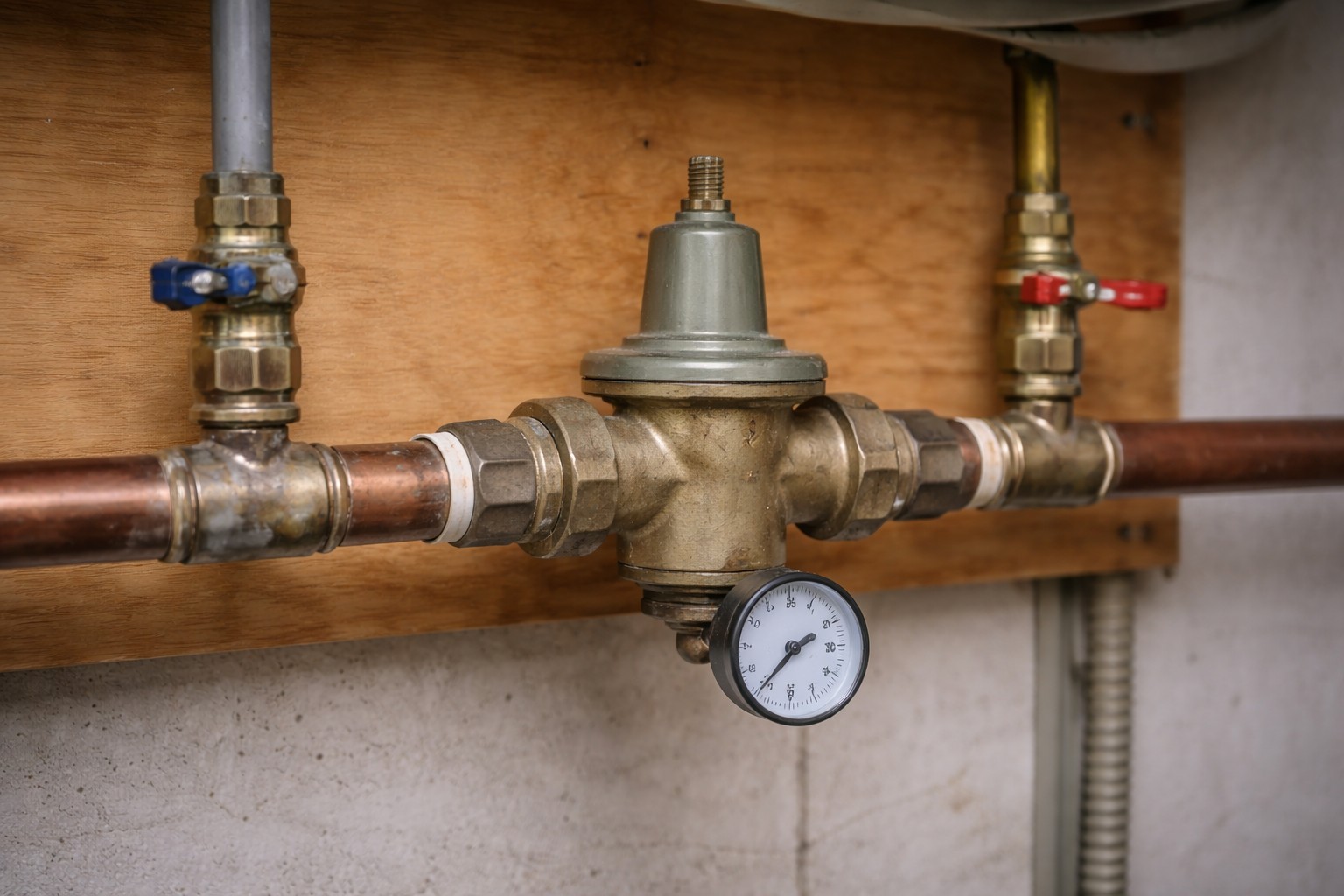
If pressure goes unstable right after you adjusted a pressure‑reducing valve (PRV), stop using fixtures if you see very high or fluctuating numbers. Start by fitting a pressure gauge upstream and downstream to confirm the readings, then isolate the PRV and the backflow device so you can see whether the PRV itself is the issue. Monitor the timing of any surges to tell whether they are linked to your plumbing, a neighbor, or transient events on the water main.
Why This Happens
- PRV components can stick or pop when you change the setpoint. A stuck valve body or worn seat can cause rapid swings rather than a steady new pressure.
- Some backflow preventers react to a PRV adjustment and create temporary instability until pressures settle.
- Upstream pressure spikes from the municipal line or a neighbor’s usage can be mistaken for a PRV problem—watch for correlation. Pressure spikes when neighbor uses water.
- Thermal expansion in a closed system or a failed expansion tank can produce pulses that feel like a PRV surge.
Step-by-Step What to Do
1. Install a pressure gauge
- Attach a simple pressure gauge to a downstream hose bib and, if possible, an upstream port or the service line. This confirms actual PSI and shows if the problem is upstream or downstream of the PRV.
- Record both static and dynamic readings: note the gauge at rest, while a tap is on, and when you notice a surge.
2. Isolate the PRV and backflow
- If your PRV has isolation valves, close the downstream isolation to separate the house plumbing, then open a drain to relieve pressure. This lets you determine whether the PRV or the house side is causing swings.
- If there’s a backflow preventer near the PRV, isolate it as well where possible. Some backflow devices can create pressure instability if they are partially stuck.
3. Monitor surge timing
- Watch the gauges for several hours and log each surge time. Note whether surges coincide with appliance use, washing machines, sprinklers, or neighbor activity.
- If surges line up with specific events, you can narrow the cause. If you see a sudden big spike that damages fixtures, that can lead to problems like a burst hose—be aware that a Pressure spike breaks washing machine hose.
4. Basic adjustments and checks
- If the PRV is small and you are comfortable, make only small, incremental adjustments and recheck gauges after each change. Don’t force screws or springs.
- Check the expansion tank (if installed) for bladder failure and make sure household appliances have proper pressure‑rated hoses and shutoffs.
What Not to Do
- Do not ignore surges—they cause fixture and appliance failure.
- Do not remove or disassemble the PRV while the line is under pressure. Isolate and drain first.
- Do not repeatedly crank the PRV beyond manufacturer recommendations to “force” a steady pressure; that can damage the valve.
- Do not leave an appliance connected to poorly regulated water pressure; shut off its water supply until the issue is resolved.
When to Call a Professional
- If you cannot stabilize pressure after basic checks and isolation, call a licensed plumber.
- If pressure spikes exceed safe limits for fixtures (generally above 80–90 psi) or if you notice repeated appliance failures, get professional help.
- If the PRV or backflow preventer appears mechanically damaged, or you’re unsure how to isolate and test safely, contact a pro rather than attempting risky repairs yourself.
Safety Notes
- Always shut off the main water and drain the line before opening or removing a PRV or backflow device.
- Be careful of hot water when relieving pressure; scalding is possible if the system includes a water heater.
- If you’re uncomfortable performing these checks, especially working around the main shutoff or backflow assembly, hire a licensed plumber.
Common Homeowner Questions
- Why did the pressure get worse after I adjusted the PRV? Small adjustments can unsettle internal parts; the valve may need time to reseat or may be failing and require replacement.
- How long should I monitor before deciding it’s still a problem? Monitor for at least a few hours across typical use periods; persistent or large swings beyond that merit intervention.
- Can I protect appliances while this is sorted? Yes—shut off water to vulnerable appliances or install temporary shutoffs and use rated hoses to reduce risk.
Related Articles
If you’re troubleshooting a similar symptom, these guides may help:
For the full directory, see Pressure Spikes & Sudden Surges.