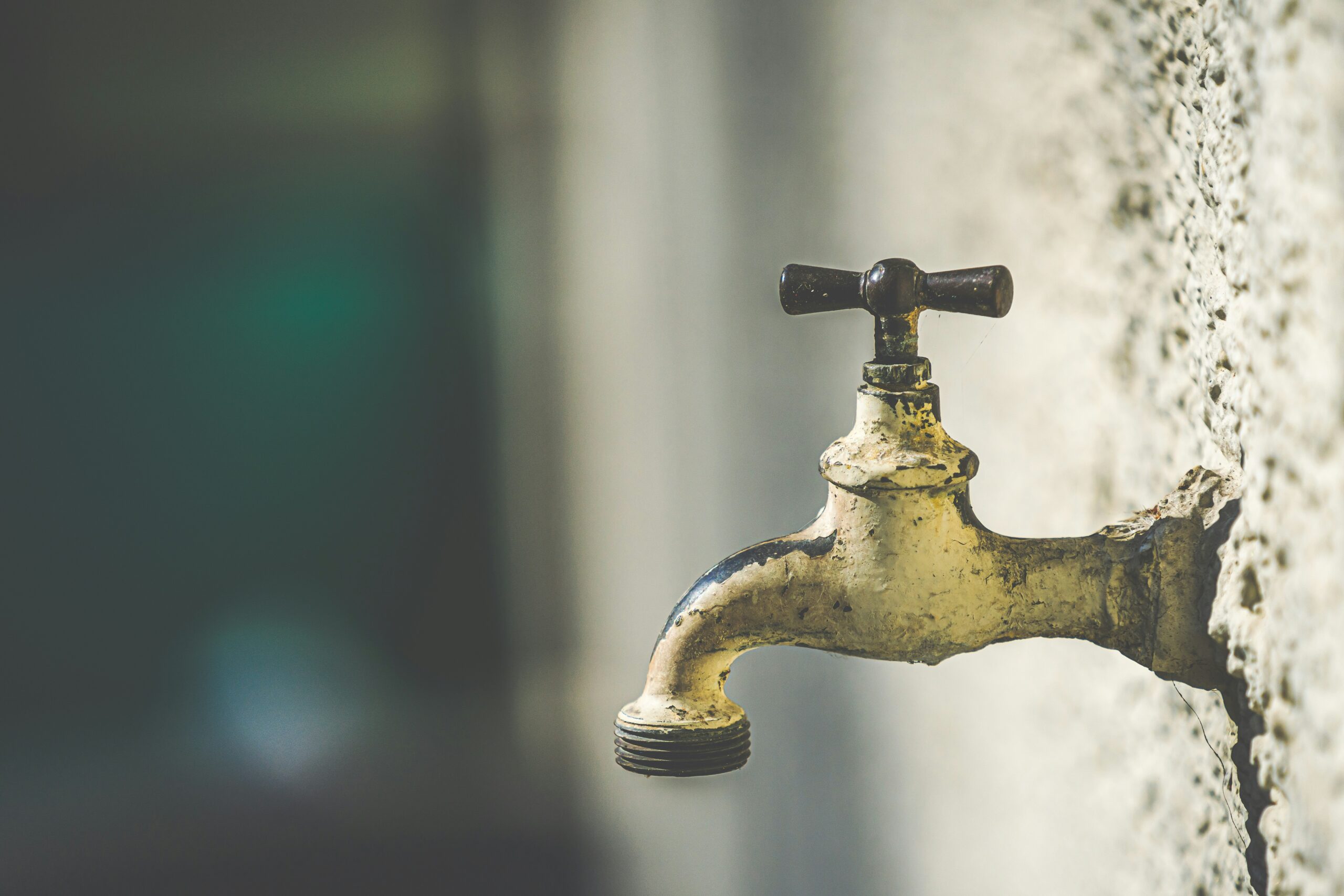
For an active supply leak, close the known customer shutoff that serves the leak if you can reach and operate it safely. If the house control is missing, inaccessible or ineffective, contact the water utility or building manager for help. A wheel valve and a quarter-turn lever do not use the same closing movement.
Check the area before touching controls
If you smell fuel gas or suspect a gas leak, leave the building or affected area immediately and take others with you. Do not operate switches, plugs, phones, appliances, thermostats or valves in the affected area, light flames, or stay to ventilate or investigate. From a safe location well away, call the local gas emergency service or emergency services. Do not re-enter until responders say it is safe. Plumbing checks and normal maintenance must wait.
Keep away from wet electrical equipment. Do not touch wet appliances, plugs or switches, or enter water to reach a breaker. When no gas leak is suspected, power may be isolated only from a safely accessible dry location; otherwise call an electrician or emergency help. Wet equipment needs qualified assessment before it is used again.
Choose the smallest known isolation that will work
- A functioning fixture stop may isolate a single faucet or toilet. Identify all feeds to that fixture; a mixer can have separate hot and cold sources.
- A verified house main isolates the service path it controls. Apartments, wells, shared services, irrigation and fire-protection arrangements need their own identified controls. Do not operate fire-sprinkler or communal equipment as a trial.
- If water keeps escaping after closure, stored water, an additional supply or an ineffective valve may be involved. Do not assume a remote tap stopping proves the leaking segment is isolated.
Operate the identified valve by its design
- Conventional multi-turn wheel valve: the usual closing direction is clockwise. Turn by hand only as the installed valve instructions permit, stopping without forcing the seat. A wheel-shaped handle alone does not prove what the valve serves.
- Conventional quarter-turn ball valve: the usual closed position has the lever across the pipe, at the designed stop. It does not require repeated clockwise turns. Confirm the installed markings and intact handle; do not force past a stop.
- Unknown, corroded, stiff or leaking control: stop. Do not apply a generic penetrating oil, rock an uncertain stem or use leverage. A manufacturer may allow a particular external adjustment or compatible lubricant on a specific valve; that is not permission for an unidentified one.
What if the only control is at the meter?
Ask your own utility which equipment customers may operate and what emergency procedure applies. A meter, curb stop and customer shutoff are different components. Tacoma, for example, permits emergency use of a specified existing yoke stop; that local instruction does not authorize every street valve. Leave locked, sealed, damaged or unfamiliar utility equipment to the provider. Do not use a generic meter-key or wrench recipe.
After closing the supply
- Observe the original leak from a safe, dry position. Do not enter a crawlspace, wet electrical area or unstable space to confirm it.
- If the actual repair procedure requires pressure relief, use the specified safe outlet and an accepting receiver, controlling hot water and splash. Absence of flow at one faucet does not certify that every isolated branch, tank or checked segment is depressurized. Do not loosen a fitting to find out.
- Keep the system isolated until the repair and any affected equipment preparation are complete. Draining, freeze protection, stored hot water and prolonged loss of required services need the actual system instructions.
- Use the restart guide when restoration is appropriate. Do not reopen merely because the visible dripping slows.
For future preparation, have the actual service route and customer controls identified and labeled. Keep access clear and a utility emergency number handy. Valve replacement cost and permitted maintenance vary with the installation.
Related guides
- Where Is the Main Water Shutoff Valve in a House?
- What to Do Immediately After You Shut Off Water to Your House
- How to Turn Water Back On After Shutting It Off (Safely)
For the wider sequence and device-specific directories, browse Water Entry, Shutoffs & Flow Control Systems.
Safety sources
- Con Edison: suspected gas leaks
- CDC: electrical hazards near water
- Tacoma Public Utilities: identifying service equipment and local shutoff permissions
- BrassCraft: water supply stop instructions
- Moen: isolate the water supply before faucet repair
- Example electric-heater manual: filling and maintenance requirements