Quick Answer:
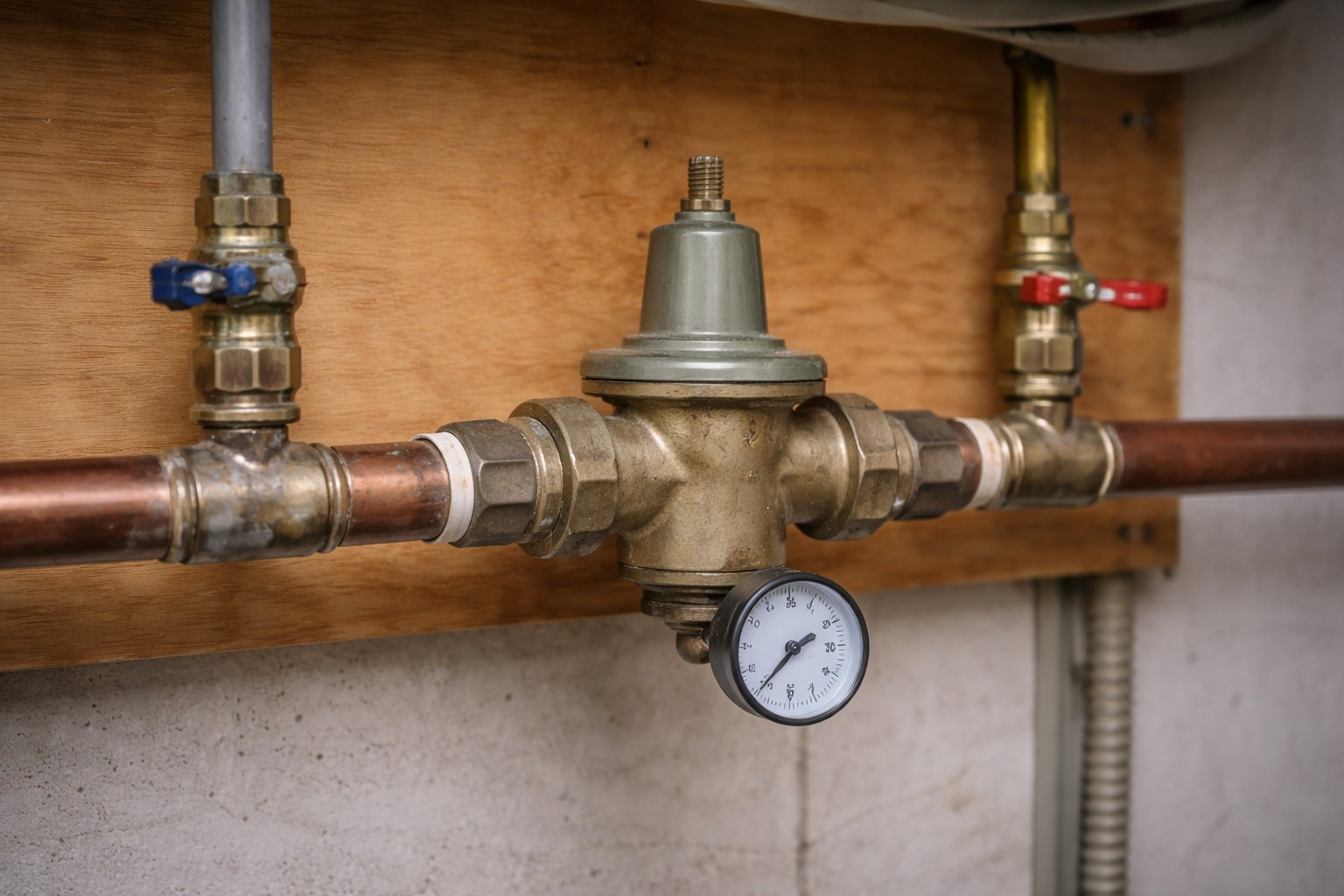
If a pressure-reducing valve (PRV) is hunting while a smart shutoff device is watching for pressure changes, the two can fight. That causes pressure oscillation and nuisance trips. Measure the PRV setpoint under flow and verify it’s stable, fix any PRV hunting first, then recalibrate the smart shutoff and set its sensitivity for a regulated system. Also avoid overlapping “pressure protection” features on both devices.
Why This Happens
PRVs regulate downstream pressure by changing valve position. If a PRV is worn, dirty, or incorrectly adjusted it can hunt (open and close repeatedly) to hold pressure. A smart shutoff that senses pressure drops or changes can think those regular PRV moves are leaks and shut the system off. The result is pressure oscillation and nuisance trips during normal regulation.
Step-by-Step What to Do
Step 1 — Measure the PRV setpoint under flow
- Install or use a pressure gauge downstream of the PRV at an accessible fixture or hose bib.
- Run one or two typical fixtures (shower, sink) to create normal household flow and note the pressure reading.
- Watch the pressure for several minutes. Verify the setpoint and whether pressure is stable or oscillating.
- Record the average pressure and the size of any swings (for example, ±5 psi vs. ±20 psi).
Step 2 — Fix PRV hunting first
- If you see wide swings, address the PRV before changing the smart shutoff settings.
- Common fixes:
- Cycle the PRV open and closed to clear light debris.
- Check and tighten the bonnet screw or spring adjustment slightly, per manufacturer instructions.
- Replace the internal diaphragm or the entire PRV if it’s old or damaged.
- After any work, re-test under flow until the downstream pressure holds steady within a small range.
Step 3 — Recalibrate the smart shutoff
- Only recalibrate after the PRV is stable.
- Reset the smart shutoff learning routine or run its setup with the system at normal, stable pressure.
- Set device sensitivity appropriate for regulated systems:
- Raise the minimum pressure-change threshold so normal PRV regulation isn’t treated as a leak.
- Enable a short delay (several seconds) before a trip so momentary ripples don’t trigger shutoff.
- Disable overlapping “pressure protection” features on one device if both the PRV and shutoff have similar protections—use one system to manage pressure events.
Step 4 — Test the combined system
- Run fixtures at normal and higher flow. Watch for nuisance trips.
- Simulate a leak (open a single faucet fully) to confirm the smart shutoff still detects and closes on true leaks.
- If nuisance trips persist, re-check PRV stability and repeat the recalibration with slightly different sensitivity or delay.
What Not to Do
- Don’t tune the smart device while PRV is failing—fix regulation first, then recalibrate.
- Don’t disable the PRV to “make the smart shutoff happy.” That can over-pressurize downstream plumbing and cause damage.
- Don’t guess adjustments to internal PRV parts if you’re not comfortable—incorrect work can worsen hunting or cause leaks.
When to Call a Professional
Call a licensed plumber if:
- The PRV continues to hunt after simple cleaning or adjustment.
- You’re unsure how to measure pressure safely or how to access PRV internals.
- The smart shutoff won’t recalibrate after the PRV is stable, or the system continues to nuisance-trip.
If the shutoff is stuck after cold weather or the smart system bypass looks suspect, check related issues such as Smart shutoff locks closed after freeze and Smart system bypass leaking for more context; mention these when you call the pro so they see the full picture.
Safety Notes
- Shut off the main water and relieve pressure before doing any valve work.
- Use the correct pressure gauge fittings. Improvised connections can leak or fail under pressure.
- If you smell gas, see electrical sparking, or suspect serious plumbing failure, stop and call a professional immediately.
Common Homeowner Questions
- Q: How can I tell if the PRV or the smart shutoff is causing trips?
A: Measure downstream pressure under flow — if it swings widely the PRV is the likely cause. - Q: Will lowering smart shutoff sensitivity stop false trips?
A: It can, but only after the PRV is stable; otherwise the shutoff will still react to real pressure swings. - Q: Is replacing the PRV expensive or common?
A: PRV replacement is a standard plumbing job; cost varies by valve type and accessibility—ask a plumber for a quote.
For more related articles, see the Smart Water Shutoff System Failures hub.