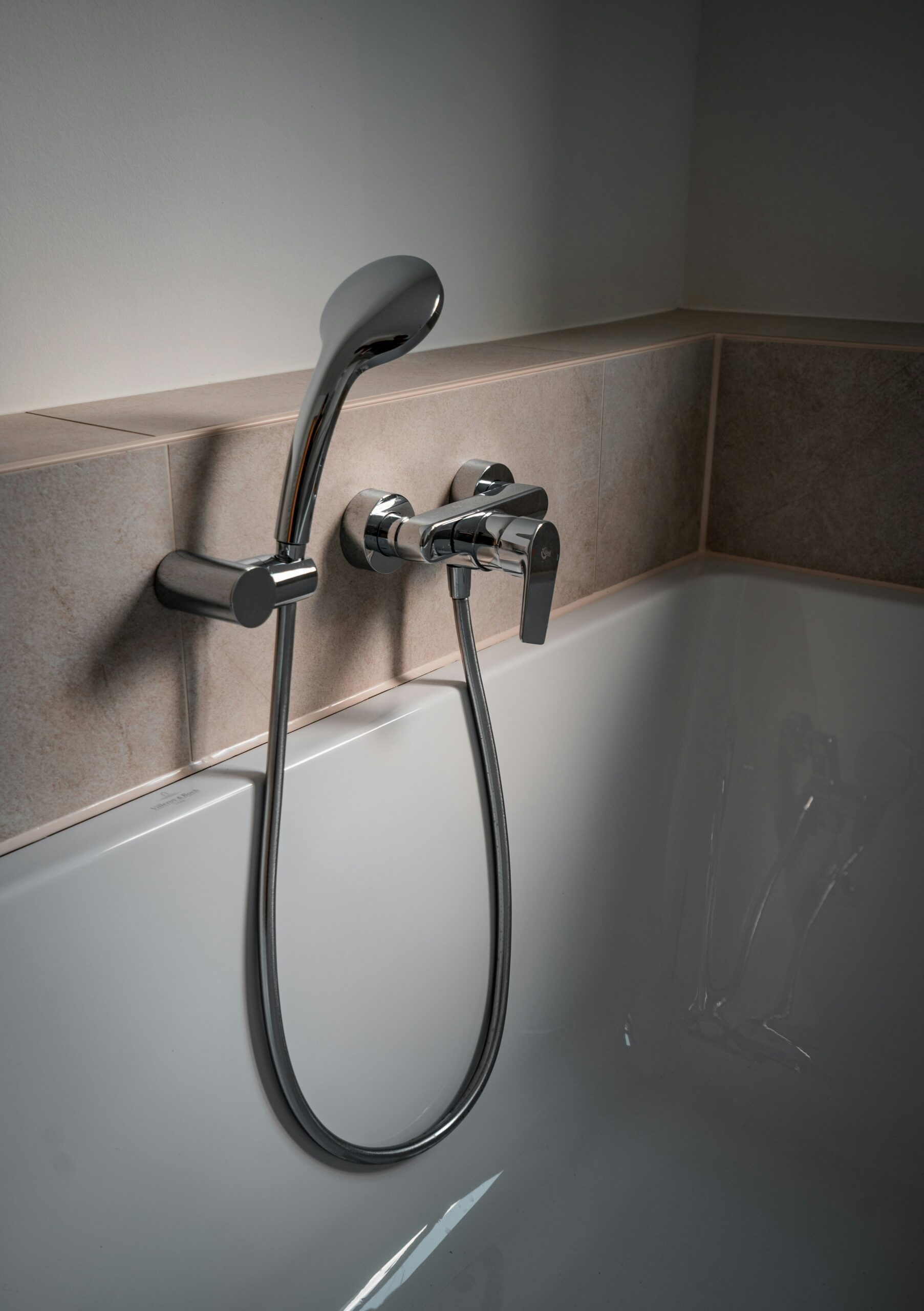
Quick Answer:
If your shower spray is pulsing or uneven, the most common causes are mineral buildup in the shower head, a clogged inlet screen or debris in the supply, air trapped in the pipes after a shutoff, or fluctuations in house water pressure. Start by testing the water with the head removed, clean the nozzles and inlet screen, and compare hot and cold to narrow the source.
Why This Happens
There are a few typical reasons for a pulsing or uneven spray:
- Mineral deposits or scale clogging the rubber nozzles or internal passages of the shower head.
- A clogged inlet screen or small debris caught between the supply and the head.
- Air in the pipes after a recent shutoff, which causes sputtering and pulsing until it clears.
- Supply-side pressure fluctuations from the municipal line, a private well pump cycling, or a pressure regulator issue. If the overall supply is unstable or water pressure is low at times, that can make the spray pulse.
- Internal valve or cartridge problems that restrict flow or cycle when partially blocked.
Step-by-Step What to Do
1. Observe and document the problem
- Note whether pulsing happens at all spray settings or just one. Check if it’s worse with hot or cold.
- See whether the pulsing is constant or occurs only when other fixtures run.
2. Test with the shower head removed
- Unscrew the shower head. Run hot and cold water separately from the exposed pipe for a few seconds. A steady stream here usually means the head is the issue; a sputtering or pulsing stream points to debris, air, or supply-side pressure problems.
- If you recently had a shutoff or plumbing work, run the water briefly to help clear air from pipes and flush any loose sediment out of the line.
3. Rinse the inlet screen
- Many shower heads have a small mesh screen where the head meets the arm. Remove the screen if present and rinse it under running water. Use a soft brush to dislodge stuck grit.
- Reinstall the screen and test again before doing more work.
4. Clean the shower head nozzles
- Soak the head in a vinegar solution or use a descaler as recommended by the manufacturer to remove mineral scale. For fixed heads, fill a plastic bag with vinegar, fit it over the head, and secure it while it soaks.
- After soaking, rub the rubber nozzles with a soft brush or your finger to break up deposits, then rinse and test.
- A clogged or scaled head often causes pulsing and is normally fixed by thorough cleaning.
5. Check for debris after a shutoff
- If pulsing started after a water shutoff or home plumbing work, check the pipe, screen, and head for bits of pipe scale or sediment—these can get dislodged and lodge in the head or cartridge.
- Flush the line with the head removed until the water runs clear, then reattach the head and test.
6. Verify pressure stability
- Run other fixtures (kitchen faucet, another shower) at the same time. If multiple fixtures show pulsing or pressure swings, the problem is likely in the main supply, pump, or pressure regulator.
- For well systems, watch the pump cycle. If the pump is short-cycling or pressure drops then spikes, that will create pulsing at fixtures.
7. Compare hot vs cold
- Test hot and cold separately and note differences. If only hot pulses, look at the water heater and any sediment or restriction on the hot side; if only cold pulses, the cold supply or municipal inlet is more likely.
- Differences between hot and cold help pinpoint whether the issue is the head, the valve, the heater, or the supply.
What Not to Do
- Do not drill out parts of the shower head or cartridge. That can damage the component and create more problems.
- Do not keep disassembling the valve if cleaning the head and screens fixes the issue—repeated disassembly can damage seals and void warranties.
- Do not ignore house-wide pressure swings. Intermittent low or fluctuating pressure affects many fixtures and may indicate a pump or supply problem that needs professional attention.
When to Call a Professional
- Pulsing continues after you clean the head, rinse the screen, and flush the line with the head removed.
- You see pressure fluctuations at multiple fixtures, a leaking valve, or signs of internal cartridge damage.
- Your well pump is short-cycling or the municipal supply shows unstable pressure—these issues often need specialized tools and diagnosis.
- If you’re uncomfortable working on the fixture or can’t identify whether the issue is the fixture or the supply, call a licensed plumber.
Safety Notes
- Turn off the water at the valve before disassembling any fittings if you are not just unscrewing the shower head from the arm.
- Be cautious when testing hot water—run it slowly and test temperature with your hand before fully exposing skin to avoid scalding.
- Avoid using power tools or excessive force on plated finishes and plastic parts; use hand tools and protect visible surfaces with a cloth.
Common Homeowner Questions
- Why does it pulse only when I use hot water? Often this points to sediment in the water heater or a restriction on the hot side—clean the head and test hot with the head removed; if the problem remains, have the heater and hot supply checked.
- Will soaking in vinegar damage the finish? Short vinegar soaks usually are safe, but avoid prolonged contact with decorative finishes; follow the manufacturer’s guidance or remove the trim pieces for cleaning when unsure.
- Can I fix this myself? Many cases are fixed by cleaning the head and screens and flushing the line; call a plumber if the pulsing persists, affects multiple fixtures, or if internal valve work is needed.