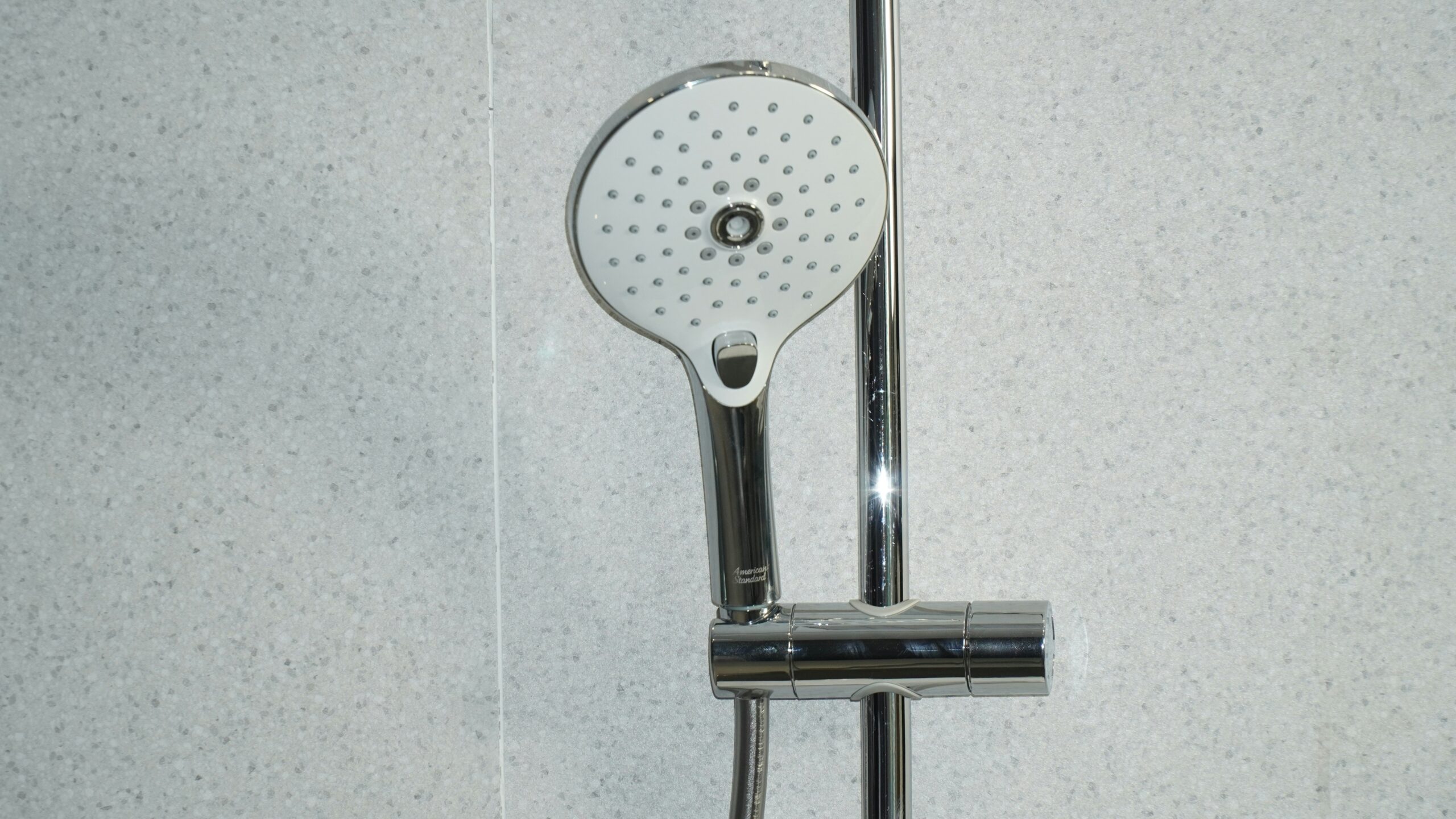
Quick Answer:
If your shower is sputtering and spitting air after the water was shut off and then turned back on, trapped air in the pipes is the usual cause. Open a lower faucet first (such as a basement or laundry sink), then run the shower cold and then hot for a few minutes to purge the air. Listen for banging while the water runs and stop when the flow and pressure stay steady.
Why This Happens
When water service is shut off and then restored, pockets of air can get trapped in the lines. As water pushes those air pockets through, you’ll see short bursts or spurts at fixtures. If the air moves quickly you may hear knocking or “water hammer” as pressure changes suddenly. This is common after planned shutoffs, repairs, or when a main is cycled back on.
For a deeper how-to guide beyond these basics, check the short notes on clear air from water pipes and troubleshooting similar symptoms like a faucet spitting air.
Step-by-Step What to Do
1. Open a lower faucet first
Start at the lowest point in your home — a basement hose bib, laundry sink, or lowest bathtub spout. Opening a low faucet first gives air a place to escape and helps pull it down through the system instead of forcing it into higher fixtures like upstairs showers.
2. Purge cold water, then hot
With the low faucet open, go to the shower and run the cold water first. Let it run until the flow is steady and the sputtering stops. Then switch to hot and do the same. Doing cold first helps push the large air pockets out; hot lines can collect different pockets and need their own purge.
3. Let water run a few minutes
Keep each fixture running for several minutes. Small systems may clear in under a minute; larger or multi-story systems can take 3–5 minutes. If multiple fixtures sputter, work from lowest to highest until all flows are steady.
4. Listen for banging
While purging, listen for knocking or loud banging. A little noise while air is expelled is normal. If the banging keeps happening after the water seems steady, that indicates a pressure or support problem that needs attention.
5. Confirm pressure stabilizes
After you stop the flow, open and close the shower a couple of times and check that the pressure feels steady and the spray is even. If pressure remains erratic or air pockets return quickly, note which fixtures are affected and consider a further inspection.
What Not to Do
- Do not keep snapping the valve on and off rapidly — that can worsen hammering and stress pipes or valves.
- Do not assume it’s dangerous if it clears quickly — brief sputters from trapped air are usually benign when they stop.
- Do not ignore loud banging that persists after purging — ongoing noise can mean a pressure issue, loose pipe supports, or a failed valve.
When to Call a Professional
Contact a plumber if:
- Air sputtering continues after you’ve purged multiple fixtures for a few minutes.
- Loud banging or tapping persists even when water is running steady.
- Pressure remains low or uneven across the house, or you notice leaks that began after the shutoff.
A pro can check pressure-reducing valves, expansion tanks, pipe supports, and the system layout to find why air or pressure problems keep returning.
Safety Notes
- When running hot water to purge, be careful of scalding. Test temperature briefly with your hand before placing it under the stream.
- Use a bucket or towels if you expect sputtering to spray water outside the shower area.
- If you smell gas or see signs of a major leak (continuous water pooling, visible pipe damage), shut off water at the main and call a professional immediately.
Common Homeowner Questions
- Why did this start after the shutoff? Trapped air entered the pipes when service was restored; it moves through and causes bursts until expelled.
- Can this damage my plumbing? Brief spurting is usually harmless, but repeated water hammer can loosen supports or stress fittings if not fixed.
- Will a pressure regulator cause this? Sometimes — a failing regulator or a closed valve can create pressure swings that trap air or cause hammering; a plumber can test it.