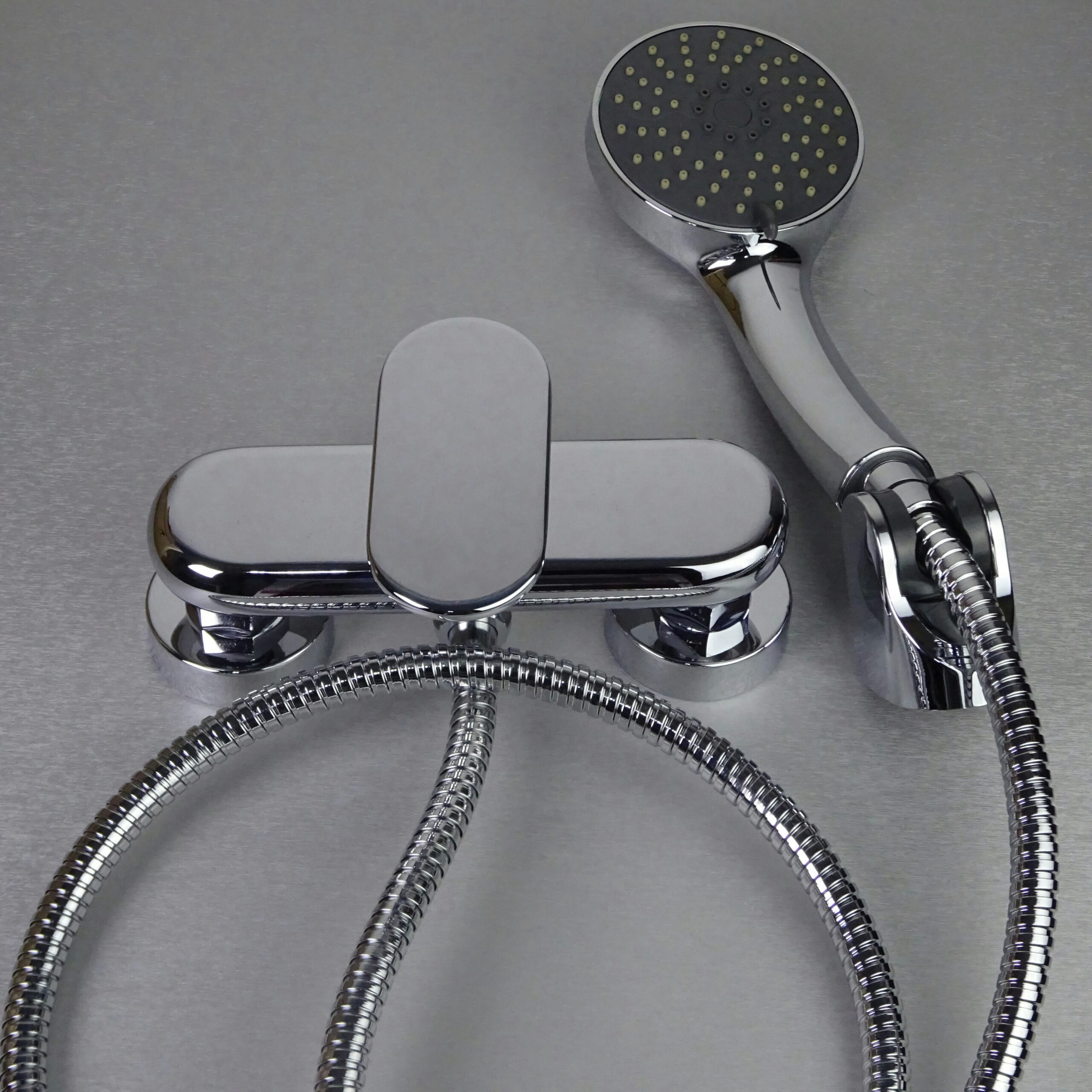
A loose, stiff or freely spinning shower handle needs an inspection of the actual engagement parts, not an automatic cartridge replacement. If flow or temperature cannot be controlled reliably, stop use and control the supply safely before attempting work.
Which interface may be damaged?
- A rounded screw head prevents normal tool engagement. It does not by itself establish that the mating threads are stripped.
- A screw that will not hold may involve the screw or its mating threads. A new screw alone cannot repair every damaged receiving thread.
- A separately replaceable adapter may have rounded engagement surfaces while the cartridge stem is intact. Conversely, a damaged stem needs its own specified repair.
- A stiff handle can involve the handle assembly, deposits or internal valve behavior. Force and a longer wrench are not a safe way to select the cause.
Identify before removing
Identify the installed valve and trim from its manual, invoice or safely visible markings. The head or handle brand alone may not identify the hidden valve. Volume control, temperature travel limit, source-isolating service stops and a transfer/diverter control do different jobs; do not turn an unidentified screw or assume nearby sink stops serve this fixture.
Find the actual handle-retention and service drawing. Not every cap is pried off, screw uses the same tool, adapter is splined or stem is pulled/rotated in the same direction. Moen’s cited 174329 adapter is an example for identified 3372/3375 transfer valves, not a universal part or method for a shower mixing valve.
For an approved handle task
- If the handle cannot reliably stop water, use known safe isolation and arrange repair; do not remove it while relying on quick access to a shutoff.
- Follow the exact model’s source-control and removal requirements. A cosmetic handle adjustment may differ from cartridge work, but an adjacent retainer can hold a pressurized assembly.
- Identify which interface is damaged and use the specified compatible screw, adapter or assembly. Do not tighten a random nut, force a stripped fastener or substitute adhesive to make a slipping handle hold.
- Refit to the actual operating orientation and retainers. Restored movement alone does not prove full closure, correct volume/temperature range or intact protection.
Low flow does not verify isolation
Before opening a cartridge retainer, bonnet, supply joint or other pressure boundary, identify and isolate every feed that can pressurize the segment, control temperature, relieve the actual segment through the appropriate controlled outlet and verify depressurization. A remote tap may not relieve a chamber beyond closed local stops or checks. Keep the work isolated while open. Use the correct parts, retainer, seals and complete reassembly before normal restoration. An approved service flush needs its exact source-on/captured-flow/source-off sequence before extraction or refitting; being ready to stop water is not isolation.
A partly closed upstream valve may reduce flow while static pressure remains available. If isolation is uncertain, leave pressure parts assembled; confidence or a low-pressure test does not make them safe to open.
Completion and escalation
Restore only after the actual assembly and leak test requirements are met, with safe temperature, drainage, access and attendance. If handle indexing or protective settings were disturbed, complete the model’s required measured temperature/protection verification before bathing. Reduced flow or partly closed supply is not proof of a safe static pressure, successful isolation or a completed repair.
Stop for ineffective shutoff, active concealed leakage, a stuck/corroded retainer or uncertain part identification. Do not keep using a handle that slips or fails to control water. Document the actual interface and work history for the installer rather than ordering a cartridge solely from the symptom.
Related guides
- shut off water to your house
- find the main shutoff
- Shower & Bathtub Water Delivery
- Why Your Shower Won’t Turn Off Completely
- Why Your Shower Temperature Keeps Flipping Hot and Cold
Safety sources
- Moen174329example: a separately serviceable adapter on identified3372/3375transfer valves
- Moen M-Core4example: handle calibration, retained pressure components and concealed leaks
- Moen: identify and turn off the appropriate supply before repair
- Moen PosiTemp example: refitted protective limit and measured temperature verification
- BrassCraft: water supply stop instructions