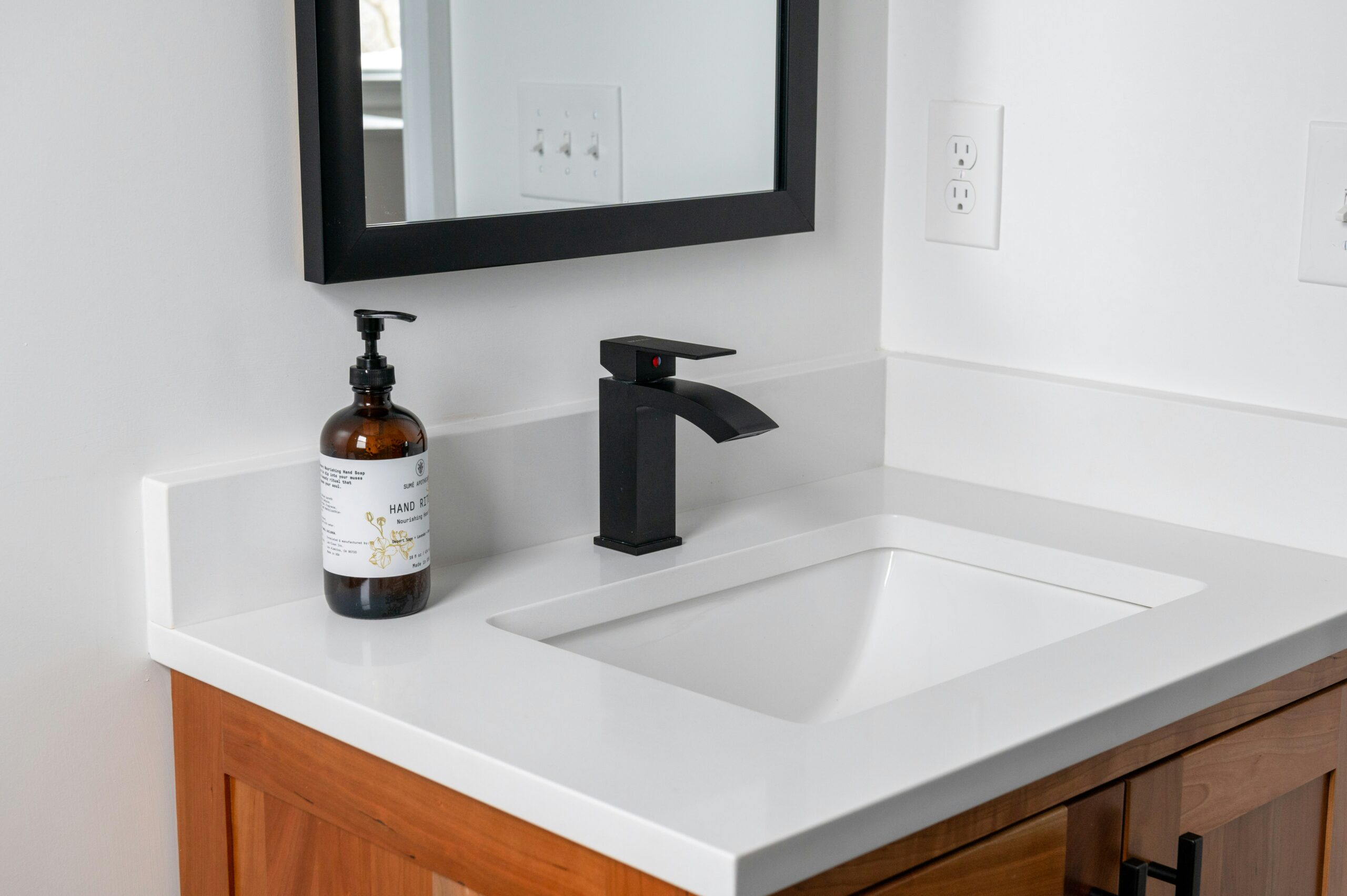
If water trickles out of your faucet instead of flowing normally, low water pressure can make everyday tasks frustrating. This problem often appears suddenly and usually affects only one sink, not the entire house.
In most cases, low faucet pressure is caused by a blockage or restriction close to the faucet itself.
Quick Answer:
A faucet has low water pressure when water flow is restricted by a clogged aerator, debris in the faucet, partially closed shutoff valves, or buildup in the supply lines. Cleaning or adjusting these components often restores normal pressure.
Why This Happens
Faucets rely on clear pathways for water to flow freely. When those pathways become restricted, pressure drops noticeably at the faucet.
Common causes include:
- A clogged aerator at the faucet tip
- Mineral buildup inside the faucet
- Partially closed shutoff valves under the sink
- Debris trapped in the supply lines
- Issues affecting only the hot or cold side
Low pressure at a faucet is different from a sink that drains slowly, which is a drainage problem rather than a supply problem.
Step-by-Step: How to Fix Low Faucet Water Pressure
Step 1: Check the Aerator
Unscrew the aerator from the end of the faucet.
- Look for sediment or mineral buildup
- Rinse thoroughly
- Soak in vinegar if buildup is heavy
Clogged aerators are one of the most common causes of low faucet pressure.
Step 2: Test the Faucet Without the Aerator
Turn the faucet on briefly with the aerator removed.
If pressure improves:
- The aerator was the issue
- Clean or replace it before reinstalling
If pressure remains low, the restriction is elsewhere.
Step 3: Inspect the Shutoff Valves
Look under the sink for the hot and cold shutoff valves.
- Make sure both valves are fully open
- Turn them counterclockwise until they stop
Partially closed valves can reduce pressure significantly.
Step 4: Check for Pressure Differences
Turn on hot and cold water separately.
If:
- Only one side has low pressure
…the issue is likely isolated to that supply line or faucet component.
This often overlaps with only one sink having low water pressure, which is a separate but related issue.
Step 5: Inspect Supply Lines
Check the flexible supply hoses under the sink.
Make sure they:
- Aren’t kinked or bent
- Aren’t leaking
- Aren’t crushed behind the cabinet
Restricted supply lines can reduce pressure at the faucet.
What Not to Do
- Don’t assume the entire house has low pressure
- Don’t ignore a sudden pressure drop
- Don’t overtighten faucet components
- Don’t disassemble the faucet without shutting off water
Most faucet pressure issues are localized and fixable.
When to Call a Professional
Call a plumber if:
- Pressure doesn’t improve after cleaning the aerator
- Multiple faucets have low pressure
- You suspect a supply line issue inside the wall
- Shutoff valves won’t open fully
These signs may indicate a broader plumbing issue.
Safety Notes
- Shut off water before disassembling faucet parts
- Place a towel under the sink to catch drips
- Avoid forcing stuck components
- Test for leaks after reassembly
Common Homeowner Questions
Why is my faucet pressure low but my shower is fine?
Faucet pressure problems are often localized to the faucet or its supply lines.
Can mineral buildup cause low pressure?
Yes. Mineral deposits commonly clog aerators and internal faucet parts.
Should I replace the faucet?
Only if cleaning and adjustments don’t restore normal pressure.